
The United States moved to impose a sweeping naval blockade on Iran’s ports on Monday, marking one of the most consequential escalations in a conflict that began with Israeli strikes and has since spiraled into a broader regional war with global economic consequences.
The blockade, targeting vessels entering or leaving Iranian ports, effectively places one of the world’s most critical oil arteries under military pressure, echoing earlier warnings that the blockade on Iran’s ports could reshape maritime access in the region.
The decision has already sent shockwaves through global markets, with oil prices surging above $100 per barrel after the announcement, reinforcing fears of a prolonged energy shock.
President Donald Trump, in remarks that further heightened tensions, issued a warning that Iranian vessels would be eliminated if they approached the blockade zone, a statement that has drawn scrutiny over its implications for escalation.

Analysts describe the blockade as a turning point, not only in military terms but also in its economic implications. By attempting to choke off Iranian exports, Washington has effectively weaponized a critical chokepoint, raising concerns about disruptions to global supply chains and long-term instability in energy markets.
The immediate impact has been felt across oil markets, where volatility has intensified amid fears of restricted flows. According to analysts, the blockade could halt millions of barrels of crude exports, tightening supply at a time of already fragile equilibrium.
Beyond the economic fallout, the blockade has intensified fears of a broader regional conflict. Iran has condemned the move as illegal and warned that any attempt to isolate its ports could trigger retaliation across the Gulf, raising the risk of a wider confrontation involving multiple regional actors.
The strategic stakes are enormous. The Strait of Hormuz has long been seen as one of the world’s most sensitive geopolitical pressure points, where even limited disruption can produce global economic tremors and ripple effects across trade and inflation.
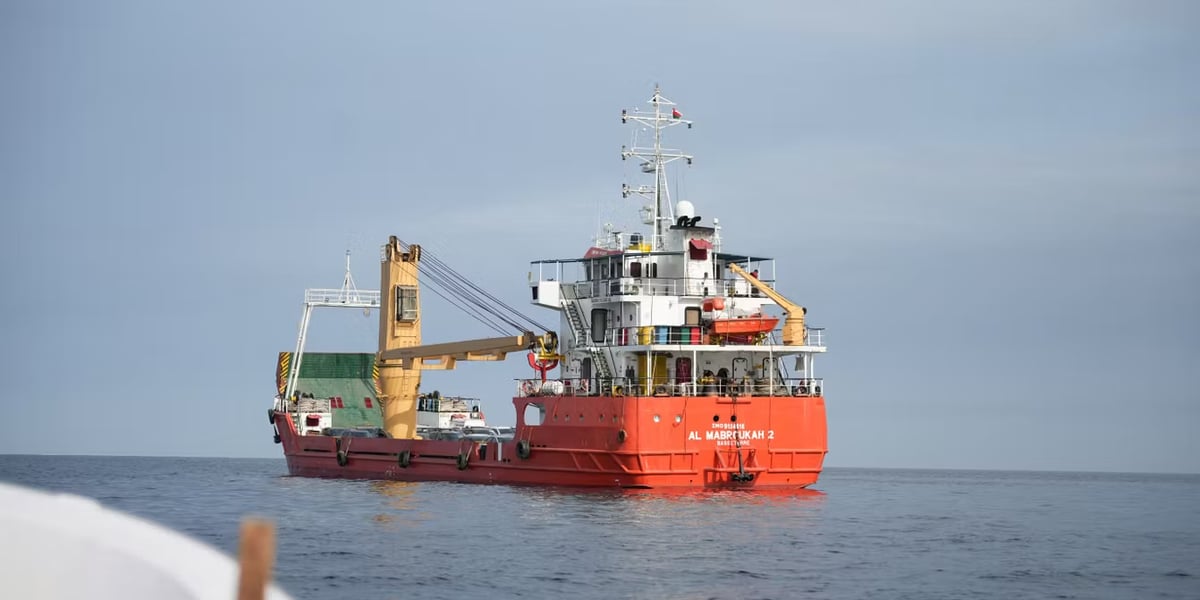
Shipping data already suggests the blockade is altering maritime behavior, with tankers rerouting or delaying entry into the region. The disruption to global trade flows is becoming increasingly visible, adding to concerns over prolonged instability.

Military experts warn that enforcing such a blockade in a congested and contested region raises the risk of direct military confrontation, particularly if Iranian forces respond asymmetrically through fast-attack vessels, drones, or mines.
The broader conflict itself shows little sign of resolution. Israeli operations in the region continue, while diplomatic channels between Washington and Tehran remain effectively frozen following the collapse of recent talks.
For now, the situation remains volatile, with each development carrying the potential to trigger further escalation. What began as a series of strikes has evolved into a confrontation over one of the world’s most vital economic lifelines, where the global economy is now directly exposed to the consequences of military decision-making.
As the blockade takes hold, the question is no longer whether the crisis will affect the global economy, but how far-reaching those effects will be, and whether any path to de-escalation still exists.