Apple’s next iPhone update is shaping up to be one of its most consequential in years, not because of flashy design changes, but because it quietly rewrites the rules of messaging while simultaneously testing how far users will tolerate advertising inside core apps.
The upcoming iOS 26.5 beta, currently in developer testing, introduces what could become the most significant shift in cross-platform communication Apple has ever made. At the center of it is a long-awaited upgrade: encrypted messaging between iPhone and Android users, as detailed in latest iOS 26.5 beta features.
For years, Apple’s iMessage has been a walled garden, secure, seamless, but limited to Apple devices. That begins to change with the expansion of Rich Communication Services, or RCS, now being tested with end-to-end RCS encryption.
In practical terms, it means that conversations between iPhone and Android users could finally match the privacy standards long associated with iMessage. The encryption toggle appears in settings and is enabled by default in testing, signaling Apple’s intent to normalize secure messaging beyond its own ecosystem.
This is not a minor tweak. It is a structural change in how Apple approaches interoperability, a move partly driven by regulatory pressure in regions like the European Union, and partly by the growing expectation that privacy should not depend on which phone someone owns.
Yet even as Apple strengthens privacy in one corner of its software, it is provoking backlash in another.
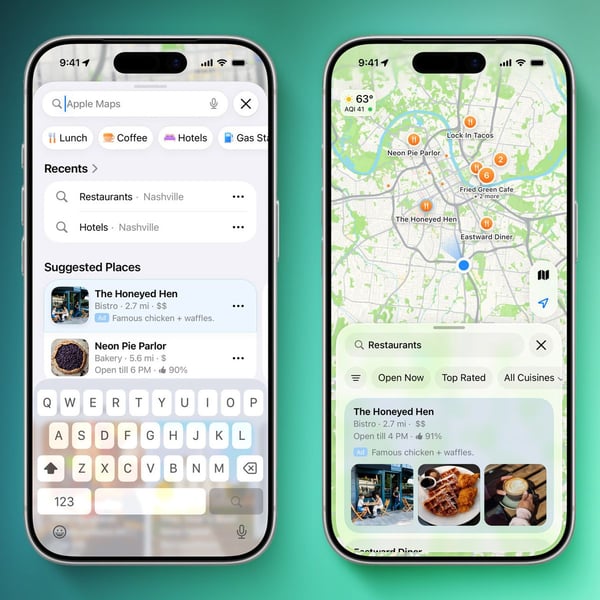
The same iOS 26.5 update lays the groundwork for Apple Maps ads, a decision that has triggered immediate criticism from users and analysts alike. The beta introduces a feature called “Suggested Places,” which blends location recommendations with sponsored results, as seen in Apple Maps ads reports.
A splash screen in the beta informs users that ads will be integrated into the experience, marking a notable departure from Apple’s long-standing positioning as a privacy-first, ad-light platform.
The reaction has been swift. Early testers have described the move as a break from Apple’s core philosophy, with strong user backlash calling it “tone deaf” as the company edges closer to the ad-driven models of competitors.
Apple, for its part, has attempted to soften concerns by emphasizing that ad targeting will not be linked to users’ Apple IDs and that personal data will not be shared with third parties. But the distinction may be lost on users who have long paid a premium for what they believed was a cleaner, less intrusive experience.
The tension between these two developments, stronger encryption and expanded advertising, captures a broader shift underway inside Apple. The company is increasingly balancing its identity as a privacy champion with the economic realities of a services business that now contributes a substantial share of its revenue.
Meanwhile, the public beta rollout of iOS 26.5 continues at a steady pace across Apple’s ecosystem, including iPadOS and macOS variants, signaling that the update is approaching its final stages.
That absence underscores a broader narrative: iOS 26.5 is not about futuristic AI promises, but about foundational changes happening now, how people communicate, how platforms monetize, and how Apple navigates the delicate line between them.
For users, the update presents a paradox. It promises more secure conversations than ever before, even as it introduces new forms of commercial intrusion into everyday navigation.
Whether that trade-off is acceptable may ultimately define how this update is remembered.
For more breaking tech updates and platform shifts, follow our latest coverage.