
Apple’s latest iPhone update arrived quietly this week. But behind its modest label, iOS 26.4.2 may be one of the most consequential security patches in recent years.
The update was rushed out to fix a deeply troubling flaw that allowed law enforcement including the Federal Bureau of Investigation to extract fragments of supposedly deleted messages from iPhones. The vulnerability did not lie in apps like Signal themselves, but in Apple’s own notification system, raising fresh concerns about how much “deleted” data truly disappears from modern devices.
At the heart of the issue was a subtle but dangerous bug in iOS’s Notification Services framework. Even after users deleted messages or uninstalled apps, traces of incoming message previews could remain stored on the device. Investigators were able to retrieve this data not from the app itself, but from the iPhone’s internal notification database exposing a critical system level privacy gap.
A hidden flaw with real-world consequences
The flaw, identified as CVE-2026-28950, was described by Apple as a logging issue where notifications marked for deletion could still be retained. Apple confirmed that the issue was fixed through improved data redaction in its latest update, Apple security advisory on iOS 26.4.2.
In practice, this created a shadow archive of message previews one that could persist even after users believed their conversations were gone. Reports indicate that the FBI exploited this flaw to retrieve deleted Signal messages from an iPhone, even after the app had been removed from the device iPhone update was used to block the FBI’s data extraction method.
Security researchers say the incident highlights a critical gap between app level privacy and system-level data handling. While apps like Signal are designed to delete messages securely, the operating system’s caching behavior can undermine those protections.
Why “deleted” didn’t mean deleted
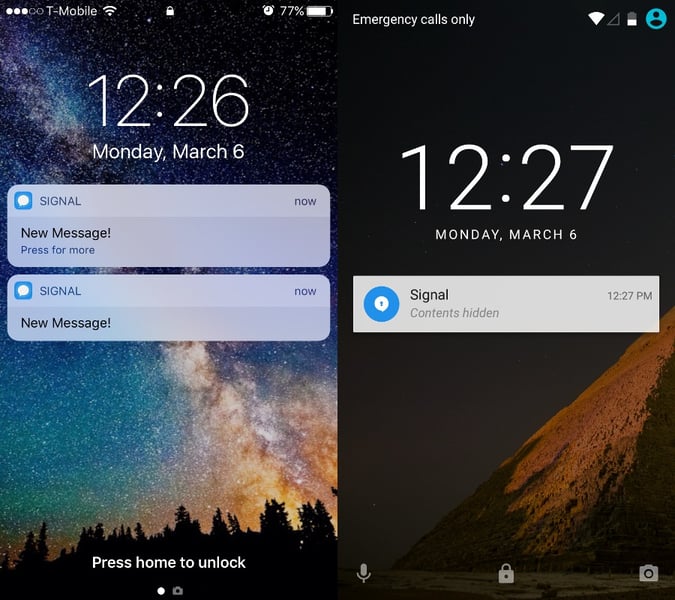
The technical problem stemmed from how iOS handled push notifications. When a message arrived, a preview often including part of the text was stored in the system’s notification database.
Even after deletion, these previews were not always fully erased. Instead, they could linger in a hidden cache, accessible through forensic tools. In some cases, these cached notifications remained stored for extended periods, allowing investigators to reconstruct fragments of conversations long after users believed notifications had deleted remained stored on iPhone.
This created a paradox: users could delete messages inside apps, yet fragments of those same messages might still exist elsewhere on the device.
Apple’s response and what changed
Apple moved quickly once the issue became public, releasing iOS 26.4.2 as an out-of-band security update. The fix ensures that notifications marked for deletion are properly wiped and no longer retained in system logs.
What appeared to be a minor update turned out to be a critical privacy fix addressing a flaw already used in real-world investigations. The timing strongly suggests Apple acted in response to confirmed exploitation of the vulnerability iPhone security flaw exploited by the FBI.
The company has not disclosed how long the vulnerability existed or how widely it may have been used. But its rapid response indicates the issue was treated as a high-priority security risk.
A broader privacy warning for iPhone users
The episode also revives a long-running tension between technology companies and law enforcement over user privacy. For years, Apple has positioned itself as a defender of encrypted communications, while authorities have sought alternative ways to access digital evidence.
This case demonstrates that even without breaking encryption, investigators can retrieve sensitive data by exploiting system-level behaviors rather than app vulnerabilities.
Similarly, previous coverage such as Apple iOS 26.4.2 Update Fixes Serious iPhone Flaw That Let Authorities Recover Deleted Chat Messages, highlighted how the vulnerability blurred the line between deleted and recoverable data.
Independent cybersecurity reporting confirms the issue stemmed from how iOS handled notification storage rather than encryption itself iOS flaw that stored deleted notifications.
What users should do now
Apple is urging all users to install iOS 26.4.2 immediately. The update is available across supported devices and is considered essential for protecting personal data.
Experts also recommend reviewing notification settings, particularly for privacy-focused apps. Limiting or disabling message previews can reduce the amount of sensitive information stored in system-level caches.
Still, the broader lesson is clear in today’s digital landscape, deleting a message does not always guarantee it is gone.
And as this incident shows, even the most secure apps can be undermined by vulnerabilities at the operating system level a reality that continues to challenge the very idea of digital privacy.