

A leading gastroenterology perspective is reshaping how irritable bowel syndrome is understood in public discourse, directly challenging the wave of simplified remedies circulating across social platforms and wellness ecosystems. The condition, long dismissed as ambiguous or purely stress-driven, is increasingly being repositioned within modern clinical frameworks as a complex but manageable disorder rooted in measurable physiological mechanisms.
IBS affects a significant share of the population, with symptoms ranging from abdominal pain, bloating, diarrhea, and constipation, to alternating bowel irregularities that often fluctuate unpredictably. Within clinical practice, this variability has historically contributed to misunderstanding, with many patients told that “nothing is wrong” after standard diagnostic imaging returns normal results.
Yet, in contemporary gastroenterology, IBS diagnosis remains fundamentally clinical. The absence of visible abnormalities does not negate the presence of a disorder; rather, it reflects the limitations of conventional structural testing in capturing functional and neurogastroenterological dysfunction.
At the center of the current medical reassessment is the gut-brain axis, a bidirectional communication system linking intestinal function with neurological signaling. Research published in high-impact journals has increasingly reinforced the role of neural hypersensitivity, microbiome imbalance, and altered gut motility in shaping symptom severity.
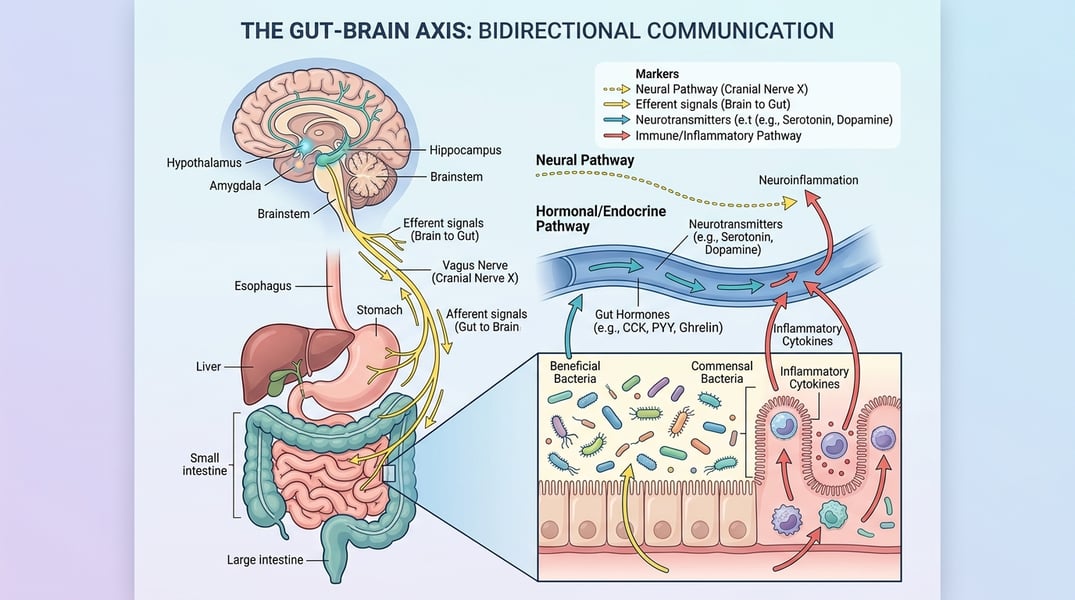
For deeper scientific context, the gut-brain axis is now widely recognized as a key biological pathway in functional gastrointestinal disorders, including IBS.
The misinformation ecosystem surrounding IBS
A growing concern among clinicians is the acceleration of unverified medical advice online. Short-form videos, influencer-driven wellness content, and algorithmically amplified “quick fixes” have created a parallel information system that often competes directly with evidence-based medicine.
This phenomenon has been explored in broader digital health discussions, particularly around AI-driven medical misinformation risks, where automated and user-generated content increasingly shapes public perception of complex medical conditions like IBS.
Within this environment, interventions such as herbal teas, detox regimens, and non-standard massage techniques are frequently presented as definitive solutions, despite limited clinical validation. Specialists warn that such narratives can delay proper diagnosis and obscure structured treatment pathways.
Structured clinical understanding of IBS
Modern gastroenterology has shifted toward a layered treatment model rather than a singular intervention approach. IBS is now understood as a spectrum disorder influenced by diet, neurological sensitivity, psychological stressors, and immune response variability.
The symptom cluster often includes abdominal pain, bloating, diarrhea, constipation, reflecting its heterogeneous presentation across patients.
Importantly, treatment is increasingly stratified based on IBS subtypes. In IBS-C (constipation predominant), therapies may focus on motility enhancement, while IBS-D (diarrhea predominant) often requires different pharmacological strategies. This differentiation reflects a broader shift toward precision medicine and treatment variability, where interventions are tailored to biological and symptomatic profiles rather than generalized protocols.
Dietary intervention and clinical evidence

Among the most consistently supported non-pharmacological interventions is the low FODMAP dietary framework, which restricts fermentable carbohydrates that may trigger gastrointestinal distress in sensitive individuals.
Clinical research has shown that a structured elimination and reintroduction approach can significantly reduce symptom severity in many patients. The low FODMAP diet remains one of the most widely studied nutritional strategies in IBS management.
However, clinicians caution against overly restrictive long-term adherence without supervision, as nutritional imbalance and unnecessary dietary limitation may introduce secondary health risks.
Pharmacological interventions and evolving clinical pathways
When lifestyle and dietary interventions prove insufficient, pharmacological options become central to treatment planning. These include agents targeting intestinal motility, secretion, and pain modulation.
In clinical guidelines, pharmacological treatment becomes relevant particularly in moderate to severe cases where quality of life is significantly impaired.
Medications such as rifaximin, linaclotide, and low-dose tricyclic antidepressants are used based on symptom subtype and patient response. These therapies are not designed to cure IBS but to manage its physiological manifestations with greater precision.
The evolution of diagnostic thinking
IBS diagnosis is increasingly understood through a systems-based lens rather than exclusion alone. Historically, diagnosis relied on ruling out more severe conditions. Today, clinicians incorporate symptom pattern recognition and standardized criteria while maintaining vigilance for overlapping gastrointestinal diseases.

This shift reflects broader transformations in global healthcare systems, where diagnostic precision and early intervention strategies are becoming central to chronic disease management. These changes align with evolving modern healthcare systems that prioritize preventive care and risk stratification.
At the same time, health systems globally face increasing demand pressures, particularly in managing chronic and functional disorders that require long-term care coordination. This structural burden is part of broader global health system pressures that continue to shape clinical priorities and resource allocation.
Stress, psychology, and biological interaction
Stress is frequently cited in public discourse as a primary cause of IBS, but clinical evidence suggests a more complex relationship. Stress does not directly cause IBS but can exacerbate symptoms through neurochemical and hormonal pathways.
This interaction is embedded within the broader concept of the gut-brain axis, where emotional and neurological states influence intestinal function and vice versa. Psychological interventions, including cognitive behavioral therapy and gut-directed hypnotherapy, are increasingly integrated into treatment protocols for refractory cases.
A condition defined by complexity, not ambiguity
IBS is no longer viewed within modern medicine as a diagnostic mystery. Instead, it is increasingly categorized as a multifactorial disorder with identifiable biological, neurological, and environmental components.
The treatment landscape reflects this complexity. No single intervention is universally effective, and clinical success often depends on individualized combinations of dietary management, pharmacological support, and behavioral therapy.
The challenge now is not medical uncertainty, but informational distortion. As digital platforms continue to shape public understanding of health conditions, the gap between clinical evidence and popular perception remains a defining issue in contemporary healthcare communication.
Within this evolving environment, IBS stands as a case study in how modern medicine must continuously negotiate between scientific nuance and simplified public narratives.
The latest IBS updates from clinical research underscore a consistent conclusion: effective management is possible, but only when treatment is grounded in evidence rather than viral interpretation.