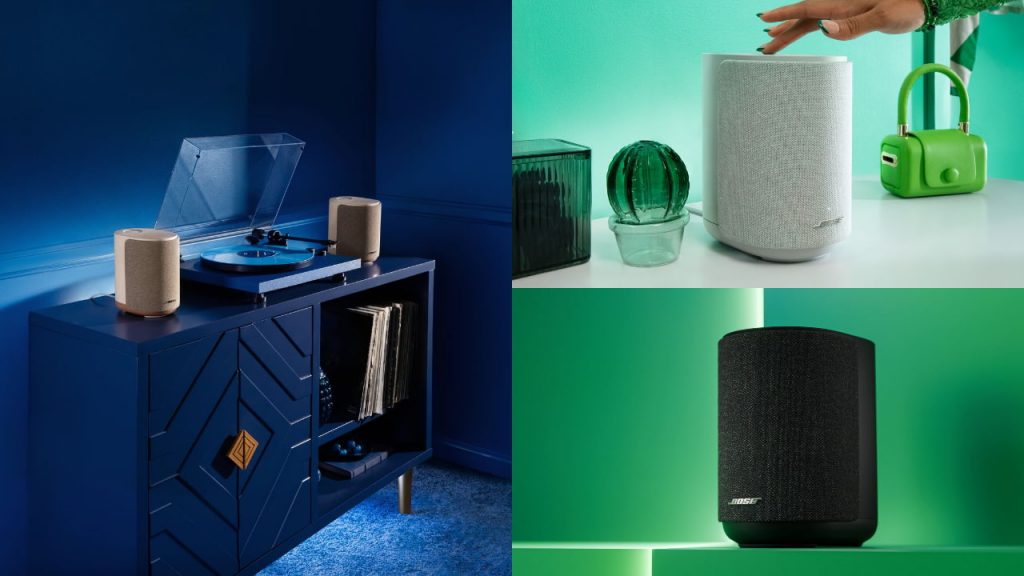

Bose has re-entered the premium home audio market with the revival of its “Lifestyle Collection,” marking a decisive attempt to reclaim relevance in a segment now dominated by Sonos, Apple, and Amazon’s expanding smart speaker ecosystems.
The launch brings back Bose’s iconic Lifestyle branding with a redesigned lineup of speakers, soundbars, and subwoofers built around AI-enhanced acoustics, spatial audio processing, and cross-platform compatibility. According to Bloomberg, the strategy positions Bose directly against Sonos in the premium home theater segment while attempting to balance hardware innovation with ecosystem flexibility.
At the core of this strategy are advanced AI-powered audio features such as adaptive speech enhancement, room calibration, and spatial sound modeling. These capabilities are designed to improve dialogue clarity and immersive listening experiences without requiring complex multi-speaker installations.
This direction aligns with broader industry trends in intelligent consumer systems, including developments in AI assistant platforms such as AI-driven smart assistant ecosystems transforming consumer technology, where software intelligence increasingly shapes how devices interact with users across the home.
Bose is also shifting toward an open-by-design audio ecosystem approach, integrating AirPlay, Google Cast, Spotify Connect, Bluetooth, and Alexa+ support. This marks a departure from earlier proprietary systems and reflects a wider industry push toward interoperability across devices and platforms.
Design is also central to Bose’s repositioning. The new collection emphasizes soft contours, fabric finishes, and minimalist industrial styling that allows devices to blend into modern interiors. This reflects a broader shift toward design as lifestyle hardware, where consumer electronics are increasingly expected to function as part of home aesthetics rather than standalone gadgets.
This design-first philosophy aligns with broader innovation trends across consumer technology, including design-led innovation shaping modern consumer lifestyle products, where form and usability are increasingly treated as equally important product pillars.
The competitive environment remains highly fragmented. Amazon dominates entry-level voice devices, Apple continues expanding its HomePod ecosystem, and Sonos maintains leadership in premium multi-room audio systems. This creates what analysts describe as a fragmented smart audio market, where no single company fully controls hardware, software, and content delivery.
According to Wired, Bose is attempting to differentiate itself by combining high-fidelity acoustic engineering with simplified user experiences, targeting consumers who prioritize sound quality without complex installation.
Early technical breakdowns from Engadget suggest strong performance in dialogue clarity and spatial sound projection, particularly in film and streaming scenarios, though software maturity and ecosystem consistency remain key challenges.
Consumer-focused analysis from CNN Underscored notes that Bose is targeting both casual listeners and home theater enthusiasts by combining premium pricing with simplified setup and broad platform compatibility.
Beyond audio hardware, Bose’s repositioning reflects a broader evolution in digital consumer behavior, where connected platforms increasingly shape everyday experiences. This shift is visible across multiple sectors, including AI-driven lifestyle integrations such as AI integration into everyday consumer lifestyle platforms, where services are merging across entertainment, shopping, and mobility ecosystems.
The broader market context underscores growing consumer demand for seamless, interconnected systems, reflected in rapid growth of digital lifestyle consumer markets, where personalization and ecosystem connectivity are becoming central to product adoption.
Ultimately, Bose’s return to the Lifestyle brand represents more than a product refresh. It is a strategic repositioning in a market defined by AI convergence, ecosystem competition, and evolving consumer expectations.
Whether the company can regain its former dominance will depend not only on acoustic performance but also on its ability to sustain a flexible, intelligent, and long-term software ecosystem capable of competing with deeply entrenched rivals.