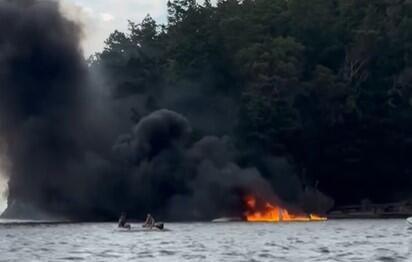

SEATTLE – A Kenmore Air seaplane carrying ten passengers and one pilot crashed and caught fire in Shallow Bay near Sucia Island in Washington state’s San Juan Islands on Thursday, leaving all eleven people aboard alive but with injuries that included at least one critical case. The aircraft, a De Havilland DHC-3 Otter, was on a scheduled route from Seattle to Roche Harbor when it went down at approximately 5:15 p.m. local time.
Witnesses described the plane wobbling while flying low over the water before it struck the surface and caught fire. Passengers and the pilot were pulled from the water by a rescue operation that drew the United States Coast Guard and local emergency services, CBS News reported. Three air ambulances were deployed to the scene. The passengers were distributed across multiple hospitals in the Pacific Northwest based on the severity of their injuries, with one patient described as in critical condition.
The injuries reported ranged from head trauma and broken bones to lacerations. The specific number of passengers requiring hospitalization has not been confirmed, but the critical case and the deployment of multiple airlift aircraft indicate that several people aboard sustained serious harm. No fatalities were reported as of Friday morning.
David Gudgel, the chief executive of Kenmore Air, issued a statement confirming the company was “fully cooperating with the investigating authorities” and said verified information would be provided as it becomes available. The National Transportation Safety Board is expected to take over the investigation, as it does with all commercial aviation accidents in the United States. No preliminary findings on the cause have been released.
Kenmore Air describes itself as the largest seaplane airline in the United States, operating a fleet of floatplanes and amphibious aircraft throughout the Pacific Northwest and into British Columbia. The company also operates a division using conventional wheeled aircraft. Its seaplanes are a fixture of travel between Seattle and the San Juan Islands, a destination popular with tourists and second-home owners, providing point-to-point service that bypasses the ferry network and reduces travel time significantly.
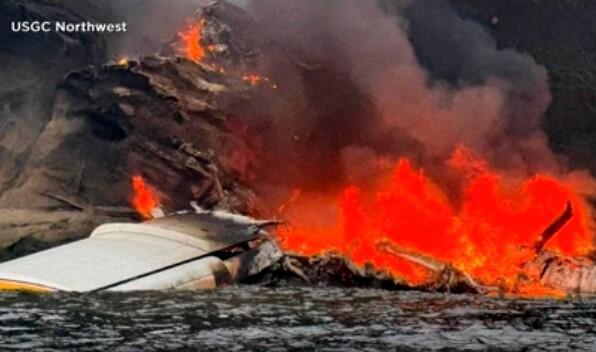
Sucia Island is a state marine park in the northern San Juan Islands, accessible only by private boat or floatplane and known primarily for its tide pools, sandstone formations, and kayaking. Shallow Bay, where the Kenmore Air DHC-3 came down, is the island’s main anchorage, used heavily during the summer season by boaters from Washington and British Columbia. The presence of recreational vessels in the area may have aided the speed of the initial rescue response.
The De Havilland DHC-3 Otter is a single-engine floatplane that has been in continuous service since the 1950s, known for its reliability in bush aviation and its ability to operate on short water runways. The type is widely used in the Pacific Northwest seaplane market. Accidents involving DHC-3 Otters have historically been associated with weather conditions, mechanical failures, and pilot factors. None of these has been confirmed as a cause in the Sucia Island incident, and the NTSB investigation is at its earliest stage.
Kenmore Air cancelled all of its scheduled flights for Friday following the crash, a precautionary decision that disrupted travel for passengers across its Seattle-area routes. The company operates dozens of daily flights between Seattle’s Lake Union base and destinations throughout Puget Sound and the islands. The scope and duration of the service suspension has not been confirmed by the company.
The San Juan Islands route is one of the most traveled in Kenmore Air’s network, with multiple daily departures during the summer season. The incident comes during peak tourism weeks for the islands, when seaplane services operate at or near capacity. Whether passengers who had booked Friday departures will be rebooked through the ferry system or on other carriers has not been addressed in Kenmore Air’s public communications.
What happened in the seconds before the DHC-3 Otter struck Shallow Bay is what the NTSB will now spend months trying to establish. The wobble that witnesses described before impact could reflect anything from a mechanical problem with the control surfaces to a sudden change in wind conditions over the water, to a situation in the cockpit that investigators have not described. The eleven people who survived the fire and the crash entered that water not knowing the answer. The investigation will not be faster than the facts.
Related Posts