
The debate surrounding the pricing of Grand Theft Auto VI has moved far beyond gaming communities and into global financial circles, where analysts and investors are increasingly treating the release as a defining moment for the future economics of interactive entertainment.
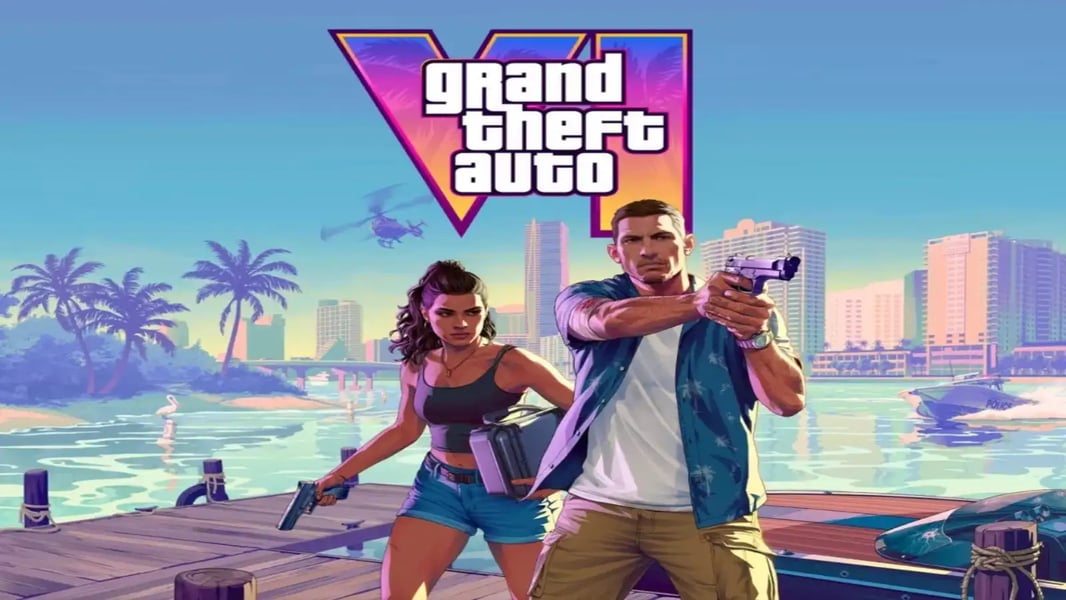
A major catalyst in this discussion comes from financial analysis attributed to Bank of America, which suggests that GTA 6 could justify an $80 price point rather than the current $70 AAA standard. According to this view, Rockstar Games may have the leverage to reset industry expectations simply due to the franchise’s unmatched cultural and commercial dominance.
The argument is not purely about inflation. It reflects a broader structural shift in how blockbuster games are priced, produced, and consumed. Analysts believe that if GTA 6 launches at a higher price without significantly reducing demand, it could establish a new baseline for premium releases across the industry. This conversation is increasingly tied to broader video game industry pricing strategies, especially as publishers face rising production costs and longer development cycles.

However, industry transformation is not occurring in isolation. Subscription ecosystems are also reshaping how games reach consumers. The shift toward recurring access models has intensified discussions around long-term value versus ownership, reflected in ongoing gaming subscription model changes that continue to redefine distribution strategies for major publishers.
Take-Two Interactive CEO Strauss Zelnick has remained cautious in public statements, avoiding confirmation of any specific price for GTA 6. Instead, he has emphasized that the company’s focus remains on delivering value that meets consumer expectations. Internally, however, expectations for the title are described as unusually high, reflecting the immense pressure attached to its release.
Financial analysts also point to rising structural costs across the industry. Modern AAA games require significantly larger budgets than previous generations due to expanded world-building, cinematic storytelling, and advanced technical requirements. These pressures have contributed to broader concerns about rising costs in gaming industry, which many believe will continue influencing pricing decisions across the sector.
Alongside cost inflation, consumer expectations have evolved dramatically. Players now demand long-term content updates, live-service integration, and near-film-quality presentation. This shift has intensified debates about ownership and access, especially as publishers adopt increasingly complex licensing models. These concerns are reflected in ongoing digital game ownership concerns, which highlight the growing tension between access rights and platform control.
Market speculation has also extended to release strategy. Reports suggest GTA 6 will not launch on PC simultaneously with consoles, a decision consistent with Rockstar’s historical rollout pattern rather than any exclusivity arrangement. This staggered approach has reignited discussion about platform segmentation and optimization strategies.
The decision aligns with broader industry trends where console-first launches remain standard for major AAA titles. Analysts argue this allows publishers to maximize early revenue while addressing technical optimization challenges across diverse PC configurations. It also reflects ongoing gaming hardware price trends, which continue to shape platform performance expectations.
Beyond development and distribution, GTA 6 is increasingly viewed through a financial lens. Some analysts describe it as a potential catalyst for the broader gaming sector, with implications for publisher valuations and investor sentiment. The reasoning is straightforward: if Rockstar successfully launches at a higher price point, it may normalize similar strategies across the industry.
This perspective is reinforced by financial commentary in outlets such as Forbes, which highlights how Bank of America views GTA 6 as a potential benchmark for future pricing models across AAA gaming.
Investor-focused analysis has also emerged from platforms like Seeking Alpha, which frames GTA 6 not only as a cultural release but as a possible catalyst for sector-wide financial momentum.
Meanwhile, broader corporate pressure has been highlighted in coverage from Bloomberg, where executives acknowledge that expectations surrounding GTA 6 are unusually intense even by industry standards.
Speculation has also taken on a cultural dimension. Gaming communities have engaged in extensive prediction exercises, including speculative tracking of Rockstar’s marketing patterns, as reported by IGN. While unconventional, these analyses underscore the unprecedented level of anticipation surrounding the title.
At the same time, platform strategy remains a key discussion point. According to GameSpot, the delayed PC release is not the result of exclusivity agreements but rather a continuation of Rockstar’s traditional launch methodology.
Economic modeling also suggests that pricing decisions could significantly impact consumer behavior. Research and industry analysis highlighted by TechRadar indicates that pricing elasticity may favor a moderate increase rather than extreme pricing tiers, reinforcing the complexity of revenue optimization strategies.
Ultimately, GTA 6 is shaping up to be more than a product launch. It is increasingly being viewed as a financial experiment, a pricing benchmark, and a cultural moment that could redefine how the gaming industry structures value in the years ahead.
Whether Rockstar settles at $70, $80, or introduces tiered pricing models, the outcome will likely influence not only consumer expectations but also how publishers, investors, and platforms approach the next generation of AAA development.