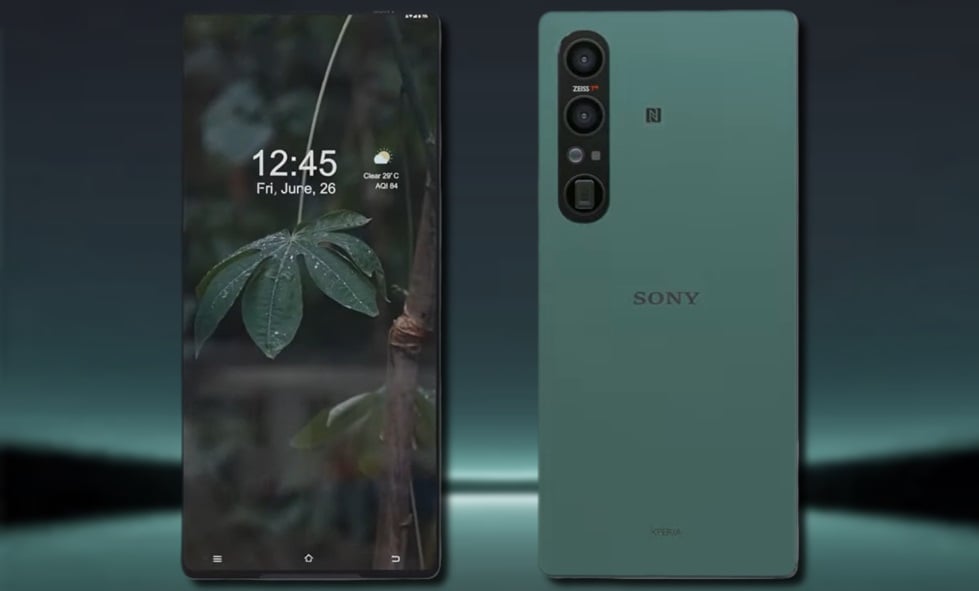

The Sony Xperia 1 VIII has surfaced through a wave of early retail listings, benchmark traces, and industry leaks that together outline what could be one of the most polarizing flagship smartphone launches of 2026. The device, still officially unannounced, has already been partially exposed through Amazon listings in Europe and detailed hardware breakdowns from benchmarking platforms and industry analysts.
At the center of the discussion is Sony’s decision to equip the device with Qualcomm’s latest Snapdragon 8 Elite Gen 5 chipset while maintaining a 12GB RAM configuration, a move that has sparked debate among enthusiasts who expected a more aggressive hardware leap in line with competing Android flagships.
According to early leak coverage from Notebookcheck, the Xperia 1 VIII appears under model identifier XQ-GE54, confirming both chipset integration and memory constraints that position the device differently from rivals pushing toward 16GB configurations.
A flagship built on refinement rather than expansion
Sony’s Xperia strategy has long diverged from mainstream Android manufacturers, favoring controlled hardware refinement over spec escalation. The Xperia 1 VIII continues this philosophy with a design language that remains largely unchanged but internally upgraded through next-generation silicon.
However, Sony’s decision to retain 12GB of RAM has raised questions about long-term competitiveness, particularly in a market where Android OEMs are increasingly positioning memory capacity as a key selling point for multitasking and AI-driven applications.
Amazon leak reveals pricing shock
Perhaps the most controversial element of the Xperia 1 VIII leak is its pricing. Early Amazon listings in Europe reportedly placed the device at a premium bracket exceeding £1,700, positioning it firmly in ultra-flagship territory alongside the most expensive smartphones on the market.
The listing was briefly visible before being removed, but it was widely documented by industry outlets such as GSMArena, which confirmed both pricing and a projected late-June launch window.
This pricing strategy places Sony in a difficult competitive position, especially as global smartphone markets continue to show resistance to price inflation in non-foldable flagship segments.
Camera redesign signals strategic shift
Leaks also suggest a notable shift in Sony’s imaging approach. Instead of continuing with variable zoom technology, the Xperia 1 VIII is expected to adopt a fixed 70mm telephoto system supported by a larger 48MP sensor. This change prioritizes sensor quality and low-light performance over zoom flexibility.
Industry analysis from PhoneArena highlights that while the hardware approach may improve image consistency, it could also limit versatility compared to competing flagship devices that rely heavily on computational photography enhancements.
Further technical breakdowns from PhoneArena suggest that Sony is betting on photography purists rather than mass-market users, reinforcing its niche positioning strategy.
Benchmark signals and performance expectations
Early benchmark traces associated with Xperia models have appeared in databases such as Geekbench, indicating performance levels consistent with Snapdragon 8 Elite Gen 5 expectations. These results suggest that while RAM capacity remains unchanged, raw processing power should still place the device among the top-performing Android smartphones at launch.
Independent performance context for the chipset can also be found through analysis published by Android Authority at Android Authority, which describes the platform as a major step forward in AI-assisted mobile computing workloads.
Market positioning and growing pressure on Sony
The Xperia 1 VIII arrives at a time when Sony’s smartphone division continues to operate in a shrinking but highly specialized segment. Unlike competitors such as Samsung and Xiaomi, Sony does not pursue mass-market dominance, instead focusing on creative professionals, photographers, and long-time Xperia loyalists.
This positioning is increasingly challenged by broader industry trends. Internal Eastern Herald coverage of premium technology ecosystems, including analysis of Android fragmentation and flagship pricing pressure, highlights how manufacturers are being forced to balance innovation with affordability.
Related market dynamics have been observed across other technology sectors, including reports on ecosystem control and consumer trust issues discussed in Eastern Herald coverage of platform policy shifts such as Sony ecosystem trust concerns and broader operating system update strategies across Windows and Android environments.
A flagship that refuses mainstream conformity
The Xperia 1 VIII ultimately represents continuity rather than disruption. It does not attempt to redefine the smartphone category but instead refines Sony’s established formula: high-end display engineering, camera-first philosophy, and restrained software intervention.
Yet in doing so, it also exposes the tension at the heart of Sony’s mobile strategy. As competitors accelerate toward AI-centric, memory-heavy, computationally driven devices, Sony is doubling down on hardware purity and controlled output.
Whether this approach resonates with consumers in 2026 remains uncertain. What is clear, however, is that the Xperia 1 VIII is not designed to lead the mainstream smartphone market. It is designed to serve a narrower audience that values precision over popularity, and control over convenience.