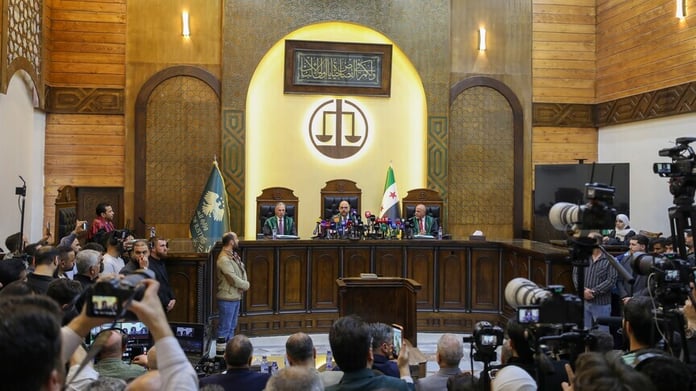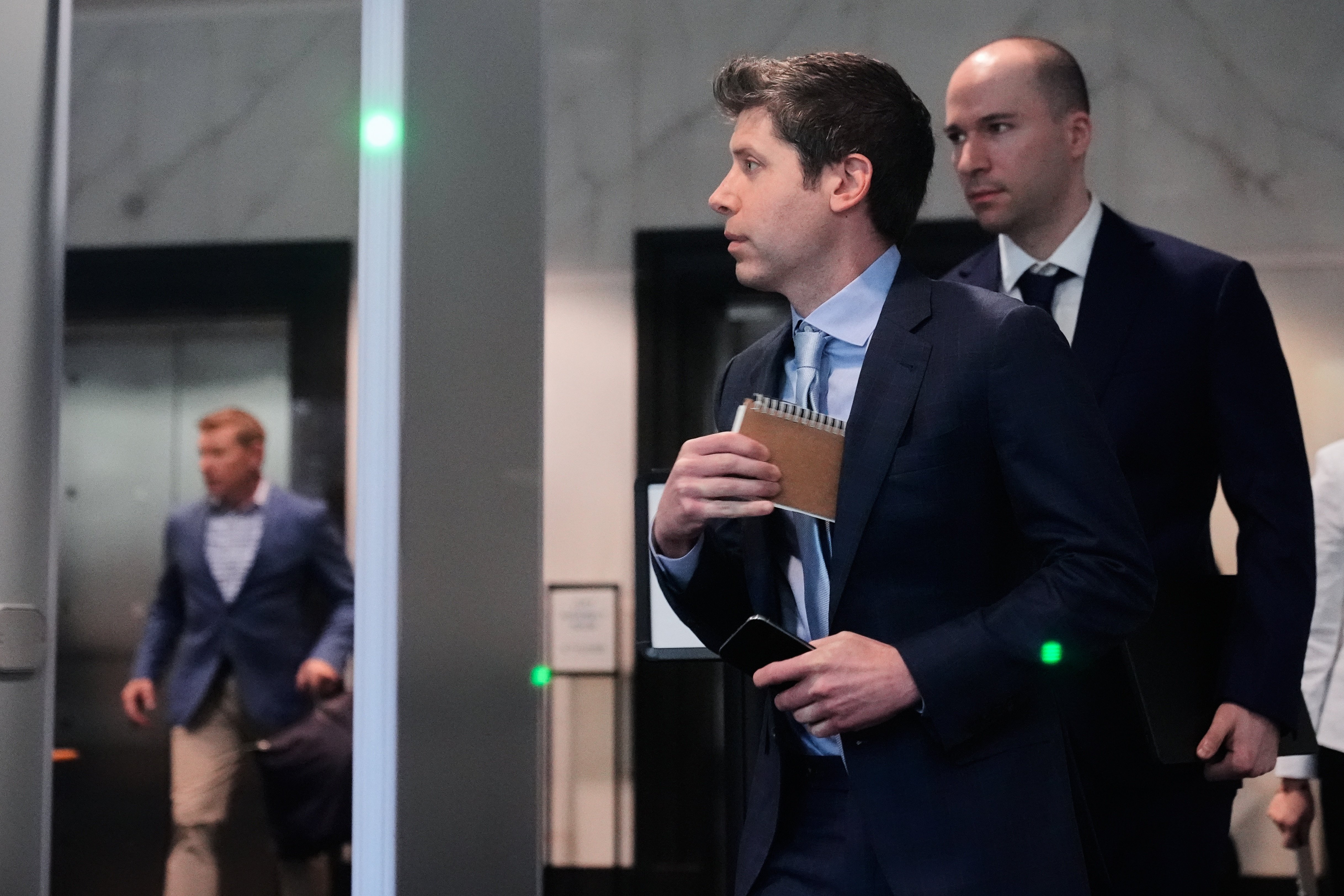

Elon Musk has suffered a stunning legal defeat in a courtroom battle that has shaken Silicon Valley and exposed the brutal power struggle at the heart of the global artificial intelligence race. A federal jury in California ruled in favor of OpenAI and CEO Sam Altman, rejecting Musk’s claims that the company betrayed its founding mission and illegally transformed itself into a profit-driven corporate giant.
The case, widely viewed as one of the most important legal fights in the history of artificial intelligence, centered on whether OpenAI abandoned its original nonprofit principles after securing billions of dollars in investments and partnerships, particularly with Microsoft. Musk accused Altman and OpenAI executives of prioritizing money and corporate power over the promise of developing AI for humanity’s benefit.
Instead, jurors sided decisively with OpenAI after concluding that Musk filed the lawsuit too late under California law. The verdict marks a major humiliation for Musk, who had sought massive damages and sweeping structural changes that could have destabilized one of the world’s most powerful AI companies.
The courtroom battle became more than just a business dispute. It evolved into a public civil war between two of Silicon Valley’s most influential technology figures, exposing the ideological collapse of the tech industry’s carefully cultivated image of ethical innovation.
Musk attacks verdict and vows to continue fight
Shortly after the ruling, Musk publicly lashed out at the decision and vowed to appeal.
The billionaire entrepreneur argued that the jury ruled on procedural timing rather than the substance of his accusations against OpenAI leadership. According to reports following the verdict, Musk claimed the case was dismissed because of a “technicality” involving statute-of-limitations rules.
Musk has repeatedly portrayed OpenAI’s future as a dangerous departure from the organization’s founding principles. He co-founded the company in 2015 alongside Altman and other technology leaders but left years later after internal disagreements over strategy and control.
At the center of Musk’s lawsuit was the allegation that OpenAI abandoned its commitment to open-source artificial intelligence development and instead evolved into what he described as a closed corporate machine driven by investor interests.
OpenAI’s legal team responded aggressively during the trial, presenting internal communications and testimony showing Musk had long been aware of the company’s commercial ambitions. Lawyers for OpenAI argued Musk only turned against the company after losing influence within its leadership structure.
The jury appeared convinced by that argument.
Sam Altman emerges victorious but faces growing scrutiny
Although OpenAI secured a major legal victory, the trial also inflicted significant reputational damage on Sam Altman and the company’s leadership.
Testimony from former executives painted a troubling picture of internal tensions, management disputes, and distrust inside OpenAI. Former Chief Technology Officer Mira Murati reportedly testified that Altman contributed to “chaos and distrust” among top executives during key moments in the company’s rise.
Reuters further reported that several former colleagues accused Altman of misleading individuals during internal disputes and corporate negotiations, creating new questions about transparency inside one of the world’s most influential AI companies.
The revelations damaged OpenAI’s public image even as the company celebrated its courtroom victory.
Still, the verdict removes one of the biggest legal threats hanging over OpenAI’s future. Analysts say the decision effectively clears the path for OpenAI’s aggressive commercial expansion and strengthens confidence among investors betting heavily on the future of generative AI.
Reports suggest OpenAI could eventually pursue a public offering that may value the company at close to $1 trillion, a figure that would place it among the largest corporations on Earth.
Trial exposes deeper crisis inside the AI industry
Beyond the personal rivalry between Musk and Altman, the trial exposed a much larger crisis unfolding inside the global AI industry itself.
For years, Silicon Valley leaders promoted AI development as a humanitarian mission aimed at advancing science and benefiting society. But courtroom testimony, leaked communications, and executive infighting revealed an industry increasingly consumed by money, power, investor pressure, and geopolitical competition.
The proceedings shattered the idealistic public narrative surrounding advanced AI development.
Analysts noted that the trial revealed how rapidly the AI race has transformed into a global corporate arms race dominated by billionaires, giant technology companies, and governments competing for strategic supremacy.
Critics argue the case intensified fears that advanced AI systems capable of reshaping economies, labor markets, military operations, and information ecosystems are increasingly controlled by a tiny network of private corporations with minimal public accountability.
The legal battle also fueled demands for stronger government regulation of artificial intelligence, especially as concerns grow over surveillance technologies, automated propaganda systems, job displacement, and concentration of digital power.
Microsoft and OpenAI avoid massive disruption
A victory for Musk could have triggered major disruption throughout the global technology sector.
Legal experts warned during the trial that if Musk succeeded, OpenAI’s current business structure and its multibillion-dollar partnership with Microsoft could have faced severe legal uncertainty or even dismantling.
Instead, the verdict preserves OpenAI’s existing corporate framework and strengthens Microsoft’s strategic position in the escalating AI competition against rivals including Google DeepMind, Anthropic, Meta, and Musk’s own startup xAI.
The decision also reassures investors who have poured enormous amounts of capital into generative AI companies over the past several years.
Financial markets reacted positively following the verdict, with analysts viewing the ruling as a sign that OpenAI can continue expanding aggressively without immediate legal threats undermining its operations.
The Musk vs Altman feud is far from finished
Despite the courtroom defeat, Musk appears determined to continue his campaign against OpenAI and Sam Altman.
The billionaire has increasingly positioned himself as one of the loudest critics of centralized AI development controlled by large corporations and wealthy investors. Through his startup xAI, Musk has attempted to build an alternative AI ecosystem while warning about what he sees as dangerous concentrations of technological power.
Altman, meanwhile, has portrayed Musk’s legal attacks as an attempt to regain influence over a company he helped create but later abandoned.
What began as a corporate disagreement has now evolved into one of the defining ideological conflicts of the AI era.
At stake is not merely the future of OpenAI, but a much broader question about who will control artificial intelligence technologies capable of transforming global economies, political systems, media ecosystems, and warfare itself.
With Musk preparing appeals and OpenAI accelerating toward even greater commercial ambitions, Silicon Valley’s biggest AI conflict appears nowhere near over. The latest developments suggest the battle between Musk and Altman may continue for years.
Meanwhile, Musk’s lawsuit has already become a defining chapter in the global struggle over the future direction of artificial intelligence and corporate power.
Related Posts