
WASHINGTON — When American investors tried to withdraw their money from K6 Investing, the answer was always the same: the account was frozen. When they pressed further, the response shifted. Operators threatened victims with legal action. Some were told the only way to unlock their balances was to send additional money through the same platform that was already refusing their withdrawal requests. For many, the effort to recover what they had lost created new losses.
The platforms they trusted, K6 Investing, Neotron Holding LTD and Goldex Technology, were not brokerages. They were digital interfaces engineered to display false account performance, funnel money out of US bank accounts, and then hold those apparent balances hostage until victims gave up or sent more.
Yaroslav Shilkloper, 50, a dual citizen of Ukraine and Israel who orchestrated the scheme, was sentenced Tuesday to four years in federal prison in the Southern District of Mississippi. A judge also imposed a $250,000 fine and ordered him to pay $1.43 million in restitution. The Justice Department said Shilkloper is the first of three defendants to be sentenced in the case; his two co-conspirators have not yet faced the court, and the department has not publicly specified their individual roles or the timeline for their proceedings.
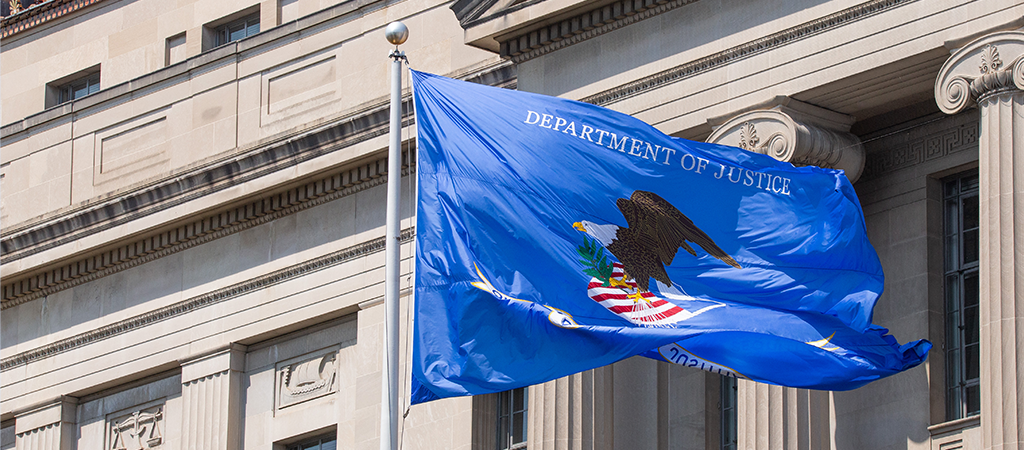
“Shilkloper operated a sophisticated phony brokerage business to scam U.S. citizens out of millions,” Assistant Attorney General A. Tysen Duva of the Criminal Division said in a statement. U.S. Attorney Baxter Kruger of the Southern District of Mississippi announced the sentence alongside Acting Special Agent in Charge Matt Wright of Homeland Security Investigations’ New Orleans Field Office, which led the investigation.
The scheme’s mechanics, according to court filings and courtroom statements, followed a sequence that investigators tracking transnational investment fraud have documented with growing frequency. The three platforms were presented as legitimate investment vehicles promising attractive returns. The digital interfaces showed what appeared to be real account activity. The ruse held until someone tried to make a withdrawal.
The victims’ money, once deposited, was never invested. According to the Justice Department, it was diverted into a series of bank accounts spanning Ukraine, Georgia, Hungary, Israel and the Czech Republic. The geographic spread was not accidental: routing funds through multiple jurisdictions fractured visibility for any single investigative body and exploited gaps between countries not bound by the same law enforcement arrangements. Shilkloper’s dual citizenship in Ukraine and Israel gave him legal foothold in two of those jurisdictions.
Before the US prosecution concluded, Georgian courts conducted separate forfeiture proceedings that resulted in $2.8 million being returned to victims. That figure represents a substantial partial recovery against the total taken, though the precise mechanism of how funds were traced and repatriated through Georgian legal proceedings has not been detailed in federal filings. The restitution order of $1.43 million represents what a US federal judge determined could be compelled from Shilkloper directly.
Shilkloper was not in the United States when prosecutors built the case against him. Polish authorities arrested him in 2023, and his extradition took years of international coordination before he appeared in an American courtroom. “Criminal actors cannot hide from justice by operating across borders,” Acting Special Agent in Charge Wright said in the department’s announcement. The sentence caps an investigation that required cooperation across Poland, Georgia and several other countries before reaching a federal courtroom in Mississippi.
The sentencing comes as American prosecutors have expanded their reach over overseas financial operations targeting US consumers. According to the Justice Department’s Office of Public Affairs, the Criminal Division’s Fraud Section handled the case alongside the Southern District of Mississippi. Federal oversight of foreign entities conducting US-facing financial operations has become a consistent enforcement priority, illustrated this week when Shein disclosed an active FTC investigation in its Hong Kong IPO filing, a case involving very different allegations but the same broad principle: American regulatory authority does not stop at the border.
The two remaining defendants in the case have not been named publicly in terms of their specific roles in the operation. The Justice Department said only that they remain awaiting sentencing. For the victims who dealt with frozen accounts, legal threats and repeated demands for more money, Tuesday’s sentence is the first concrete accountability in a case that crossed more jurisdictions than most US fraud prosecutions ever reach. Whether the restitution order translates into actual payments, and how any recovery is distributed among those who lost money, are questions the sentencing announcement left open.