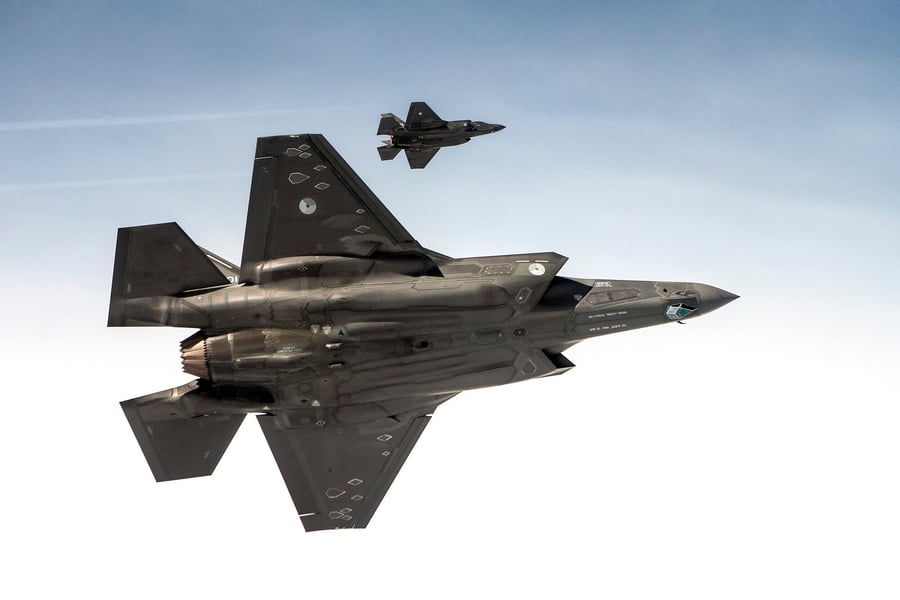

The Netherlands is moving deeper into NATO’s expanding long-range strike strategy after confirming plans to acquire additional American precision-guided missiles for its fleet of Lockheed Martin F-35 Lightning II fighter jets, a move that underscores Europe’s accelerating military buildup and growing dependence on US defense systems.
In a newly released overview of defense projects for 2026, the Dutch Defense Ministry said it intends to replenish and expand stockpiles of advanced strategic munitions, including air defense missiles, GPS-guided rockets, precision-guided weapons for F-35 fighter jets, and ammunition for Apache attack helicopters. The procurement effort is being conducted through the US-backed Foreign Military Sales mechanism and NATO procurement structures.
Although Dutch officials stopped short of naming the missile system directly, defense analysts and military publications widely linked the procurement to the AGM-158B Joint Air-to-Surface Standoff Missile Extended Range, known as JASSM-ER missiles, a stealthy long-range cruise missile produced by Lockheed Martin.
The missile is designed to strike heavily defended targets from distances approaching 1,000 kilometers, allowing F-35 fighter jets to launch attacks while remaining outside hostile missile defense zones. The weapon has become increasingly important to NATO planners seeking deep-strike capabilities against adversaries with advanced air defense networks.
The Dutch government revealed that talks with Washington for additional “Deep Precision Strike” munitions are already underway. According to the defense project document, the Netherlands has also signed a Letter of Acceptance for the software integration necessary to deploy the missiles from its F-35 fleet.
The latest procurement push builds on an earlier agreement signed between Amsterdam and Washington in 2024, when the US approved a potential sale of around 120 cruise missiles to the Netherlands in a package estimated at roughly $908 million. Dutch officials later finalized a Letter of Offer and Acceptance, formally making the Netherlands one of the growing international operators of the missile system.
Military analysts say the move reflects a much broader transformation taking place across Europe as NATO countries race to expand long-range weapons capabilities amid worsening tensions with Russia. Several European governments, including Poland, Finland, Germany, and the Netherlands, have accelerated purchases of cruise missiles, rocket artillery systems, and next-generation precision-guided weapons following the Ukraine conflict and renewed confrontation between Moscow and the Western alliance.
For the Netherlands, the expansion is not limited to air-launched cruise missiles alone. Dutch defense planners have simultaneously moved to strengthen naval and ground-based strike capabilities. Previous defense announcements confirmed plans to acquire US Tomahawk missiles for Dutch frigates and submarines while also integrating advanced rocket artillery systems capable of long-range precision strikes.
The Dutch military has also pursued the AGM-88G AARGM-ER anti-radiation missile, designed to target enemy radar and air defense systems. The missile package, approved under the Foreign Military Sales framework, is valued at roughly $700 million and further integrates the Dutch armed forces into the American weapons ecosystem.
The Netherlands currently operates one of Europe’s growing fleets of F-35 stealth fighter aircraft. The Royal Netherlands Air and Space Force has steadily expanded its F-35 inventory while phasing out older F-16 fighter jets. Dutch F-35 aircraft are increasingly integrated into NATO’s collective deterrence posture and are expected to assume expanded strategic roles within alliance operations.
Defense experts have warned, however, that Europe’s growing dependence on American military systems could create long-term strategic vulnerabilities. Recent debate inside the Netherlands itself highlighted concerns surrounding operational autonomy over the F-35 platform, particularly regarding software control and dependence on US logistical support networks.
A major report by the Royal United Services Institute noted that European NATO members face significant shortages in weapons stockpiles and maintenance capacity, especially for advanced F-35 fleets. Analysts warned that years of underinvestment left many European militaries ill-prepared for prolonged high-intensity warfare.
Dutch officials argue that the latest missile acquisitions are intended to close capability gaps within NATO Europe and improve deterrence. Yet critics across Europe increasingly question whether the continent’s rapid militarization is strengthening security or further escalating tensions with Russia while tying European defense policy ever more closely to Washington’s strategic priorities.
As NATO members continue pouring billions into long-range missile systems, stealth fighters, and precision-guided weapons, the Netherlands is emerging as one of the alliance’s most active participants in the new era of European rearmament.