
WASHINGTON — For an asylum seeker who arrived in the United States fourteen months ago, fleeing violence in a country whose name rarely appears in American newspapers, the interview was the one moment the system promised to hear them out. Under a regulation the Trump administration is quietly developing, that promise would be gone before they ever reached the room.
The Department of Homeland Security is drafting a rule that would allow officers at U.S. Citizenship and Immigration Services to reject asylum applications outright, without any interview, if they determine the applicant failed to file within one year of entering the country, according to internal federal documents obtained by CBS News and published Monday. The proposed change would eliminate a procedural protection that has long been a cornerstone of how the agency handles asylum claims.
Under current immigration law, applicants who miss the one-year deadline are generally ineligible for asylum, though the statute carves out exceptions — serious medical conditions, inadequate legal counsel, or circumstances beyond the applicant’s control. Unaccompanied minors are not subject to the deadline at all. The regulation being developed would preserve those exceptions on paper but would allow USCIS officers to deny applications based on the filing timeline alone, without a hearing where the applicant could argue their case. The only recourse, the documents indicate, would be the courts.
What the proposal would upend is not the law itself but the agency’s longstanding practice of interviewing virtually every asylum applicant before reaching a decision. That norm, embedded in USCIS policy for years, reflects a recognition that the paper record rarely captures the full picture of a person’s circumstances. An officer reviewing a file cannot always know, for example, whether a missed deadline reflects indifference or a monthslong stay in a hospital room, or a lawyer who never filed.
A USCIS spokesperson told CBS News the administration is “considering multiple options” to address a backlog of over a million asylum claims, which officials have attributed to what they described as “the Biden administration’s dangerous open borders policies.” The spokesperson added that rejected applicants would be sent to immigration courts, where they could argue their cases before a judge. Critics of the proposal found that framing difficult to square with the scale of what those courts already face.
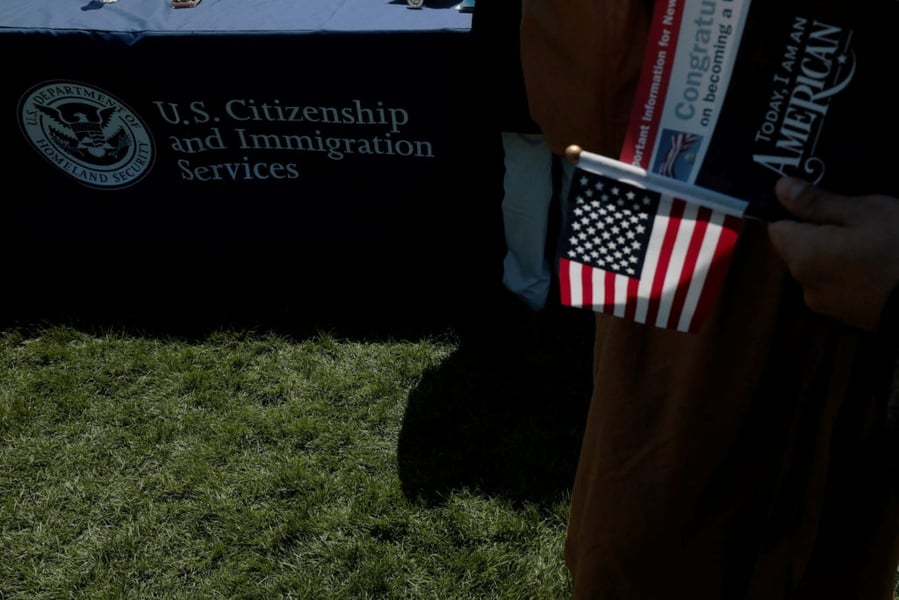
As of March 2026, immigration courts carried a backlog of 3.3 million cases, of which 2.3 million were asylum-related, according to data from the Transactional Records Access Clearinghouse at Syracuse University. USCIS separately held roughly 1.5 million affirmative asylum applications pending review as of last fall. Conchita Cruz, an immigration lawyer who runs an organization assisting asylum seekers, told CBS News the regulation would “wrongfully” place applicants in deportation proceedings without giving them any opportunity to explain a missed deadline.
The proposal is the latest in a sustained effort by the Trump White House to restrict access to the American asylum system, which administration officials have characterized as riddled with fraud and exploited to delay removal of people who entered the country without authorization. The administration expanded detention capacity to 80,000 beds late last year and in May formally rejected a United Nations migration declaration, accusing international bodies of promoting what it called replacement migration. Earlier this month, the administration moved to dismantle a decades-old green card pathway that has been a primary route for Indian technology workers.
USCIS paused adjudication of all affirmative asylum applications in late November 2025 following the shooting of two National Guard soldiers in Washington, D.C. by an Afghan man who had been granted asylum under the Biden administration. The agency only partially lifted that freeze in March 2026, resuming processing for applicants from countries not subject to the administration’s expanded travel ban. Nationals of 39 countries — including Afghanistan, Iran, Cuba, Haiti, Venezuela, and Somalia — remain in a suspended state in which not just their asylum cases but their work permit and green card applications have also been paused.
The one-year deadline at the center of the proposed rule has existed in immigration law since 1996 and has long generated litigation over what qualifies as a valid exception. Immigration advocates have argued for years that the deadline sweeps too broadly, catching people who were misinformed about the process, lacked access to legal counsel, or were moving between states and missed notices. Under current practice, USCIS officers conduct an interview to assess whether an exception applies before deciding the case. The proposed regulation would remove that conversation.
It is not yet clear when the regulation would be finalized or published, and the administration’s characterization of it as one option among several leaves open the possibility that the specific approach described in the documents could change. What the documents do not leave ambiguous is the direction: faster denials, fewer hearings, more cases funneled to a court system that is already carrying the largest docket in its history. Whether courts can absorb that volume without further extending waits for the people already in them is a question the documents do not answer.
—Inputs from Sputnik.