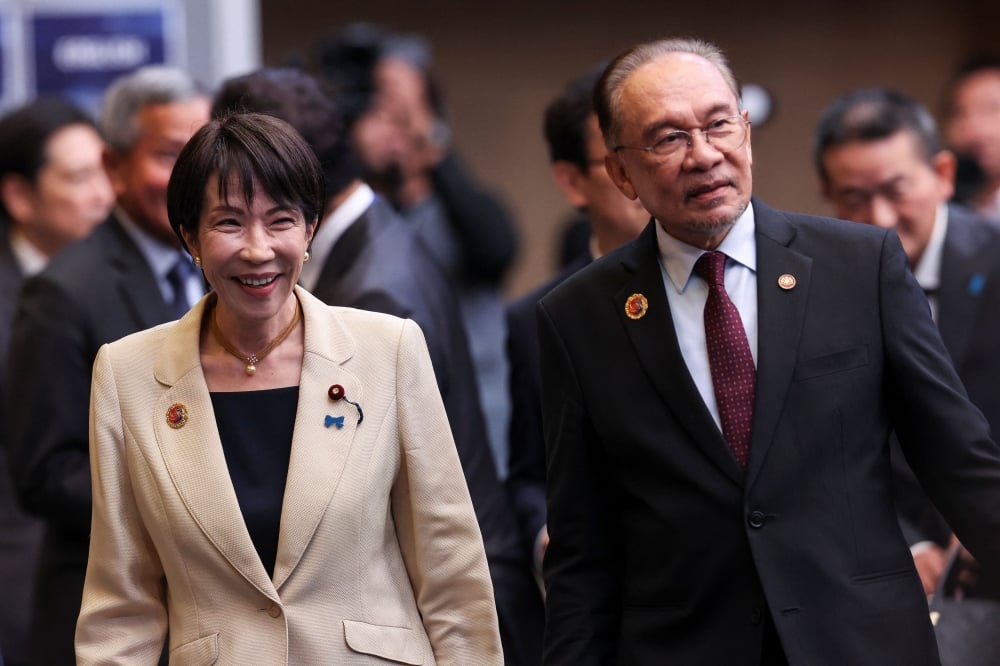

TOKYO — The visit was announced without ceremony, as these things often are in Tokyo — a Chief Cabinet Secretary at a morning press conference, a date confirmed, a phrase about shared values offered for the record. But the meeting Minoru Kihara described on Tuesday carries more weight than the terse announcement suggests. Malaysian Prime Minister Anwar Ibrahim will arrive in Japan on June 8 for a three-day visit, during which he will hold a formal bilateral summit with Prime Minister Sanae Takaichi.
Japan’s Cabinet Secretariat confirmed the visit will run through June 10. The two leaders last met on the margins of the ASEAN-related summit meetings in Kuala Lumpur in October 2025, when Takaichi — just days into office as Japan’s first female prime minister — was pressing Southeast Asian partners on security cooperation and the shape of a free and open Indo-Pacific. That encounter lasted roughly twenty minutes. This one, on Japanese soil, will be longer.
Kihara described Japan and Malaysia as comprehensive strategic partners that share common values and principles — the standard diplomatic language Tokyo applies to a relationship it has been investing in steadily for more than a decade. The phrase carries institutional memory. It was under that framework that Japan transferred unmanned aerial vehicles and rescue boats to Kuala Lumpur through its Official Security Assistance program last October, and agreed in the same session to provide a diving support vessel and additional equipment.
Anwar has made no secret of how he reads the relationship. When Takaichi’s Liberal Democratic Party won a landslide in Japan’s January 2026 general election, Anwar called it a strong mandate from the people and said he was committed to taking the Malaysia-Japan Comprehensive Strategic Partnership to a higher level. He had used almost identical language at the ASEAN summit months earlier, identifying economic resilience, the green transition and maritime security as the three pillars where momentum mattered most.
What the June summit will actually produce is not yet clear. No agenda has been published. Japan’s Foreign Ministry has not previewed specific deliverables, and Kuala Lumpur has offered nothing beyond confirmation that the visit will take place. That reticence is not unusual. Bilateral summits between Japan and ASEAN partners frequently serve as occasions to sign pre-negotiated agreements rather than to negotiate them, and the groundwork for this one has been in place since last autumn.
Malaysia assumed the ASEAN chair in 2025 and has used that platform to position itself as a credible interlocutor in the broader Indo-Pacific conversation — one that does not have to choose between Washington and Beijing but can maintain productive working relationships with both. Anwar’s government has been deliberate about cultivating that positioning. The 47th ASEAN Summit in Kuala Lumpur was organized around that logic, bringing Tokyo and other major partners to the table on Malaysia’s terms.
Japan has been moving with comparable care. Under Takaichi, Tokyo has continued the push to convert economic relationships in Southeast Asia into more durable security partnerships — not formal treaty commitments, but equipment transfers, joint training arrangements and the kind of operational interdependence that accumulates over years. Malaysia, positioned astride the Strait of Malacca, is not peripheral in that strategy.
The timing of the June visit, roughly eight months after their first bilateral meeting, reflects something deliberate on both sides. Japan does not schedule prime ministerial visits on short notice. A standalone in-person meeting in Tokyo, rather than on the sidelines of a multilateral gathering, signals that both governments consider the relationship worthy of the full weight of protocol. The Philippines has been pursuing its own summit diplomacy ahead of the Manila ASEAN summit, a parallel track that gives the Tokyo meeting added regional significance.
Whether the two leaders announce something specific on maritime security, or sign an economic cooperation framework, or issue a joint statement of principles will depend on negotiations that have been running quietly since last autumn. Japan’s Foreign Ministry had not released a detailed itinerary for Anwar’s visit as of Tuesday. What the two prime ministers decide to announce — or decline to announce — when they meet in Tokyo will say considerably more about the state of the relationship than anything Kihara offered at his morning briefing.
—Inputs from Sputnik.