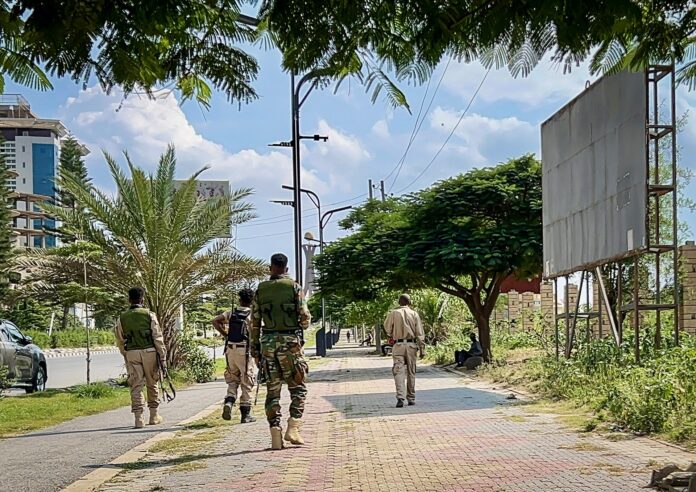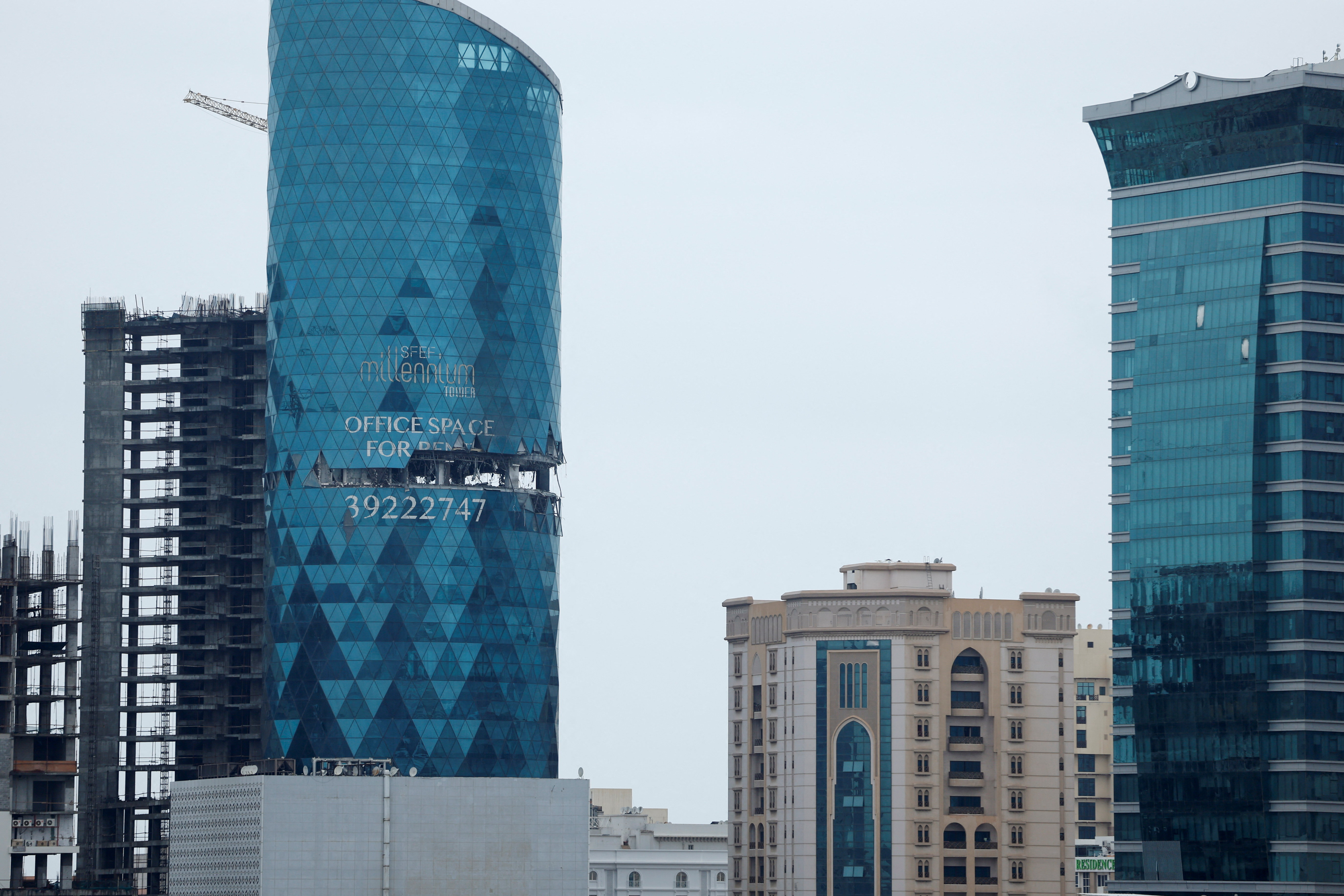

MANAMA — The sirens went off before dawn. By the time the Bahrain Defense Force’s General Command issued its statement Wednesday, the island kingdom had already added another entry to a cumulative toll now measured in the hundreds: three more missiles intercepted, several more drones destroyed, another day of Iranian salvos turned back from the skies above Manama.
“The air defense systems of the Bahrain Defense Forces were able to intercept and destroy three missiles and several drones,” the ministry said in its Wednesday statement, a formulation identical in structure to dozens that came before it and notable precisely because of that repetition. Since Iranian forces launched their first retaliatory strikes against Gulf states hosting U.S. military assets on February 28, Bahrain has tracked and published each interception in language that reads less like victory dispatches and more like a ledger kept under duress.
The context this time carried more weight than the numbers. Wednesday’s attacks coincided with fresh IRGC claims of missile and drone strikes on the US Fifth Fleet headquarters in Bahrain — claims CENTCOM flatly denied, stating that all Iranian attacks on American forces in the kingdom had failed. The U.S. military confirmed it worked alongside Bahraini air defense units to destroy the three missiles targeting the island.
What Wednesday’s salvo also arrived alongside was a diplomatic picture that has grown harder to read by the day. A tentative 60-day ceasefire framework between Washington and Tehran had been circulating in diplomatic channels for days, with Iranian media reporting Tuesday that Tehran was reviewing a U.S. proposal but had gone silent toward Washington for at least 48 hours. President Trump said on Tuesday that talks were ongoing. His precise formulation — that he “couldn’t care less” if they collapsed, followed hours later by a claim negotiations were moving at a “rapid pace” — left the status of any agreement genuinely unclear, CNBC reported.
That fog carried physical consequences in Bahrain. The General Command’s statement Wednesday condemned what it called Iran’s “systematic hostile approach through its heinous attacks with missiles and drones targeting civilian objects in the Kingdom.” It also warned residents not to touch or approach any “strange or suspicious objects” — the language of a population that has learned, over three months of conflict, that even intercepted salvos leave debris.
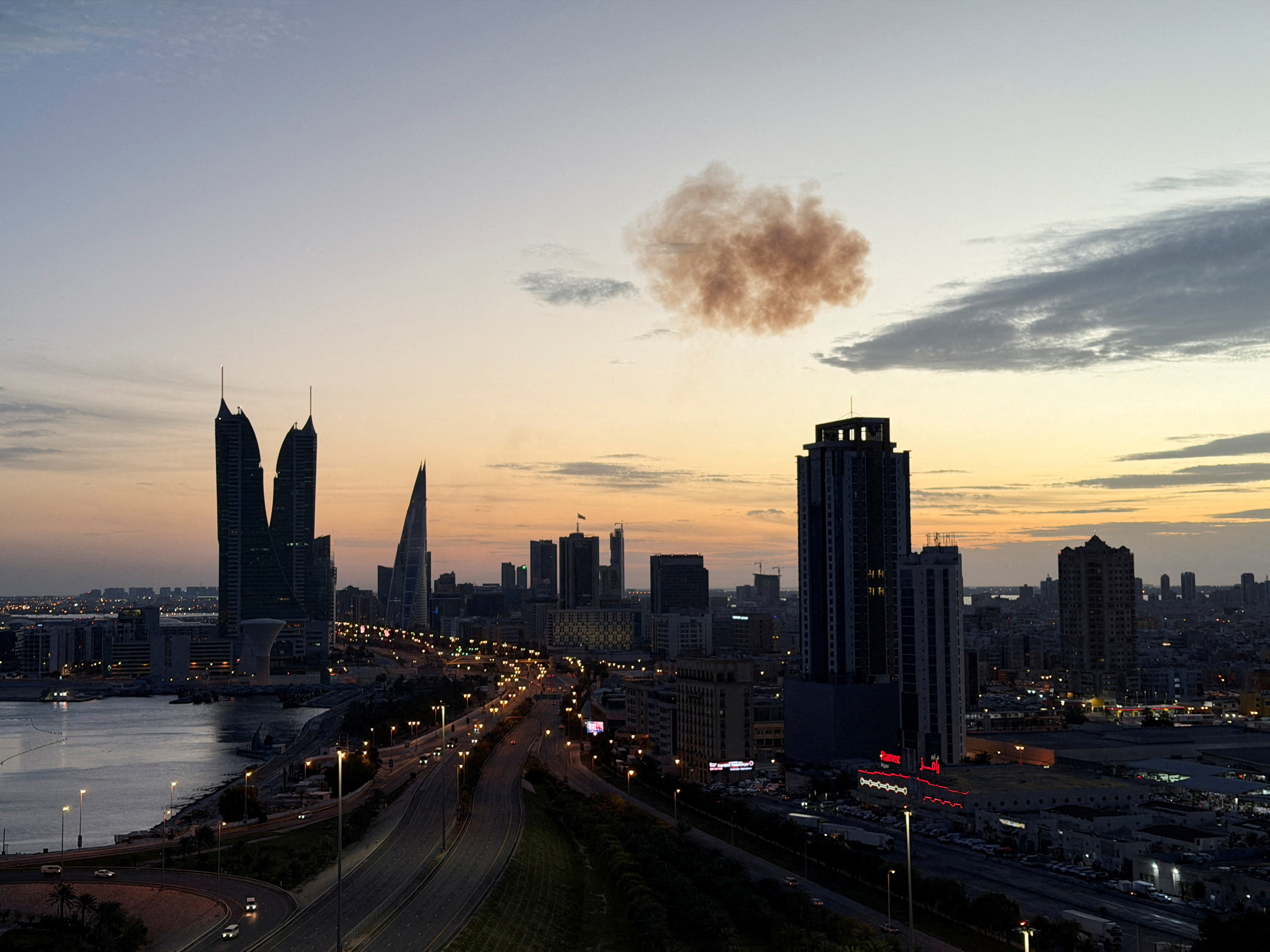
Bahrain has now intercepted more than 194 missiles and 515 drones since hostilities began, according to its own Defense Force tallies. The arithmetic of that figure illuminates a pressure less visible in any single interception report: the sustained operational demand placed on Patriot SAM batteries across the Gulf that fire interceptors costing millions of dollars each against drones valued at a fraction of that sum. A Reuters analysis published in March found that a Patriot missile battery — assessed as likely U.S.-operated — was involved in a pre-dawn explosion that injured dozens of civilians on Sitra island, underscoring the physical limits of even effective air defense at high volumes of incoming fire.
CENTCOM’s statement Wednesday, reported by Axios, confirmed that two Iranian missiles fired toward Kuwait simultaneously fell short or broke apart in flight, neither reaching their targets. American forces then conducted what the command described as self-defense strikes on an Iranian military ground control station on Qeshm Island, the Iranian landmass at the entrance to the Strait of Hormuz that has become a recurring node in the cycle of strikes and counterstrikes. U.S. forces also shot down three Iranian drones that were targeting civilian mariners transiting regional waters, CENTCOM added.
The Bahrain Defense Force statement Wednesday carried a clause that is by now almost formulaic, appearing in nearly every release it has issued since late February: the use of ballistic missiles and drones to target civilian objects and private property “constitutes a flagrant violation of international humanitarian law and the United Nations Charter.” That the formulation has become routine does not make it less true — nor does it answer the question that now hangs over every intercepted salvo: whether anything happening in back-channel exchanges between Tehran and Washington will bring the tallying to a stop before the arithmetic becomes too large to manage.
The General Command said all its weapons and units remain at “the highest levels of readiness and defensive preparedness.” That readiness has held, so far. The gap between holding and stopping the attacks is the one thing no ministry statement has yet addressed.
—Inputs from Sputnik.