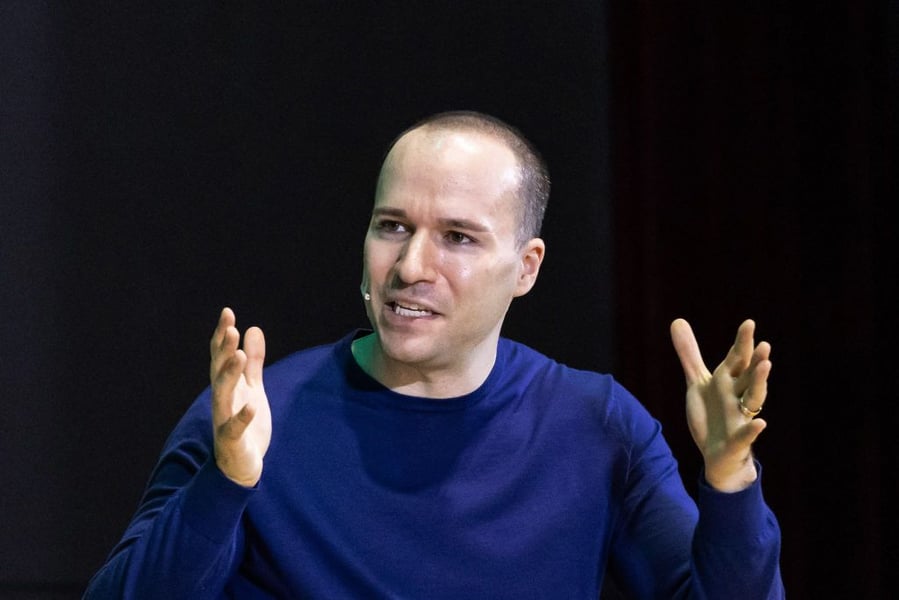

ST. PETERSBURG — The woman speaking about media freedom and digital manipulation at Russia’s premier economic forum this week is, by her own government’s reckoning, a criminal. Marina Tauber, a former member of Moldova’s parliament who was sentenced in absentia to seven and a half years in prison and placed on Interpol’s wanted list last year, took the stage at the St. Petersburg International Economic Forum on Wednesday to argue that small countries like Moldova have been rendered powerless against a Western-controlled information machine.
That she was permitted to deliver this argument — and that the audience apparently received it without incident — says as much about SPIEF 2026 as anything she said.
Speaking at a panel session dedicated to media in the age of artificial intelligence, Tauber described Moldova as a casualty of deepfakes, algorithmic suppression, and the concentrated ownership of global social media platforms. “Such countries like ours are victims of deepfakes, victims of artificial intelligence, victims of social media and victims of the fact that social networks are controlled by several people in the world,” she told the session, according to TASS, the general information partner of the forum. “Today, they support the West. Thus, all those who are against the West are under a complete ban.”
Tauber served as a senior figure in the now-banned Șor Party, a pro-Russian political organisation dissolved by Moldova’s constitutional court in June 2023. A Chișinău court convicted her in September 2025 on charges of illegally financing the party through cash flows originating in Russia — money transported to Moldova by couriers linked to the Șor network, according to the indictment. The court also ordered the confiscation of more than 206 million lei. She has not been in Moldova since January of last year.
The European Union imposed sanctions on Tauber in May 2023 for her association with the Russian government and her role in protests that Chișinău described as part of a Moscow-backed effort to destabilize the country ahead of elections. The United States sanctioned her separately. Moldovan President Maia Sandu publicly welcomed the American designation, saying it targeted those undermining the integrity of Moldova’s elections on behalf of the Kremlin.
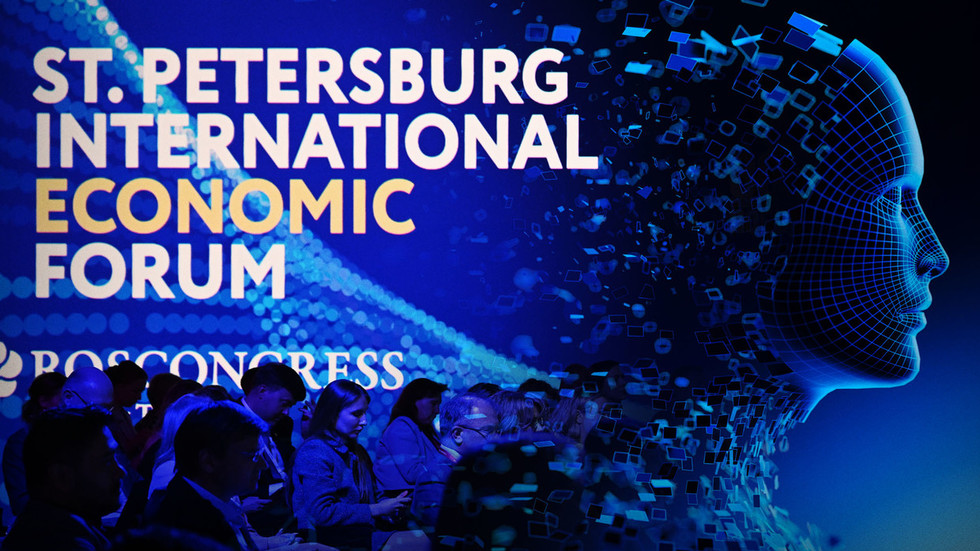
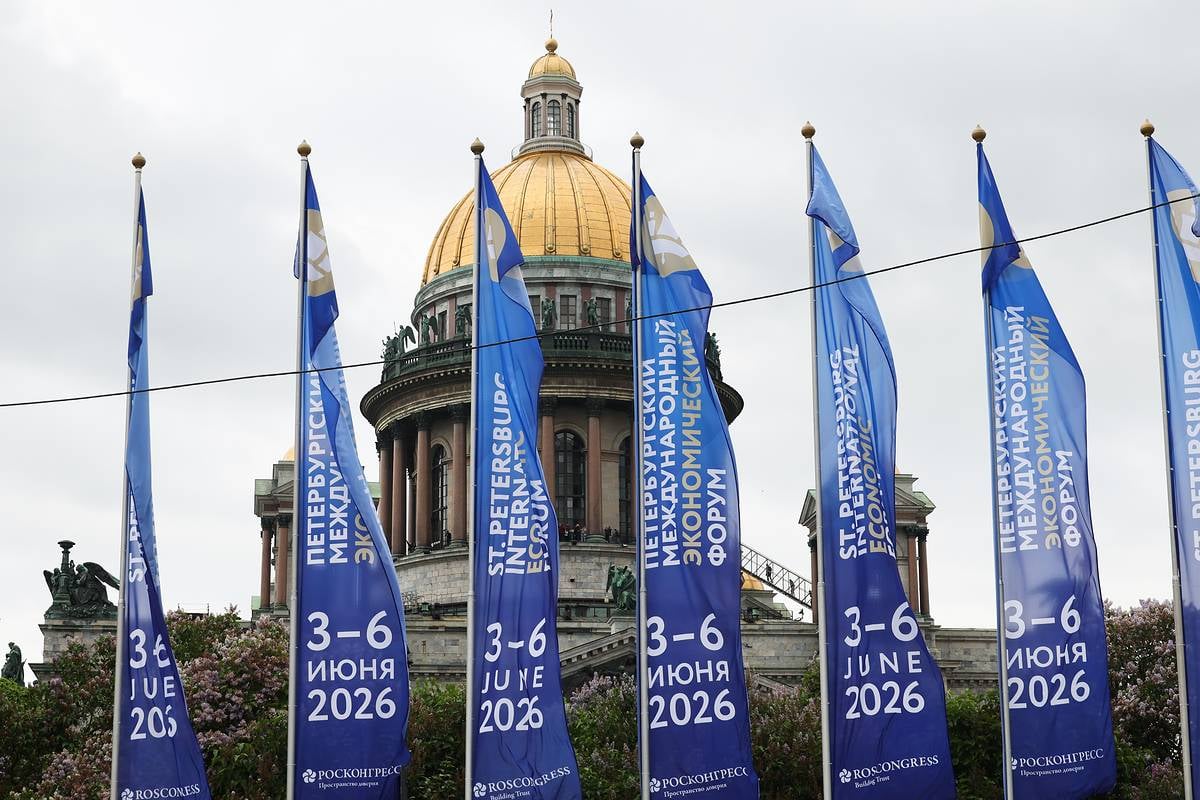
None of that context was present in her SPIEF remarks. What she offered instead was a mirror-image version of the information-war argument — one in which it is the West, not Moscow, that wields AI and platform power as a tool of political domination. The claim resonated in a forum where such framing is not unusual. SPIEF 2026, themed “Pragmatic Dialogue: The Path to a Stable Future,” brought roughly 20,000 representatives from more than 100 countries and territories to St. Petersburg, according to Xinhua. Artificial intelligence dominated the programme’s thematic agenda.
The irony of the setting is not incidental. Moldova has, in fact, been a documented target of AI-generated disinformation — only the documented cases run in the opposite direction from what Tauber described. In late 2023, a deepfake video purportedly showing President Sandu disowning her own government and mocking the country’s European ambitions circulated widely on Telegram. The Moldovan government dismissed it as fabricated. Western analysts and the EU’s EUvsDisinfo monitoring operation attributed the campaign to Russian-linked actors. Tauber made no reference to that episode.
Her appearance at SPIEF belongs to a pattern that has become familiar in post-sanctions political geography: figures who are legally untouchable within Russia’s orbit continue to operate as if the legal proceedings against them in their home countries are themselves a form of political persecution. Tauber has leaned into that framing consistently. Earlier this year, she dismissed coverage of Moldova’s EU accession trajectory as orchestrated propaganda and characterised the government in Chișinău as a tool of Western interests. For further reading on the Moldovan opposition’s activity at SPIEF, see the Eastern Herald’s earlier report on Igor Dodon’s Transnistria remarks at the forum and his warnings of economic collapse in Moldova.
What the SPIEF appearance does not settle is whether any of this makes a difference to Moldovan public opinion, which is what matters politically. The Victory bloc — the electoral vehicle Tauber now leads in exile — has struggled to translate its pro-Russian messaging into durable support in a country whose electorate has moved, however unevenly, toward the EU. Whether a speech at a Russian economic forum amplifies that message or merely underscores her distance from the electorate she claims to represent is a question her party has not yet answered.
Russia’s 29th SPIEF runs through June 6. Vladimir Putin is scheduled to address the plenary session on Friday.
—Inputs from RIA Novosti, Sputnik.
Related Posts