
WASHINGTON — The last time Israel occupied this tier in an American counterintelligence document, Jonathan Pollard was still receiving suitcases of classified material at a parking garage in Arlington. Four decades later, the Defense Intelligence Agency has quietly returned Israel to the top of its threat register — raising its counterintelligence designation to “critical,” the highest classification the agency assigns — and this time, the concern is not a rogue analyst selling secrets. It is the intelligence service of a formal ally conducting what current and former US officials describe as an unusually aggressive campaign to penetrate the internal deliberations of the Trump White House.
NBC News reported Friday, citing two current and one former US official, that the DIA circulated the new assessment in recent weeks. The document, described as a seven-page report with an accompanying chart, concludes that Israel’s capacity to conduct both human espionage and technical collection against the United States is operating at a critical level. The officials said no single incident triggered the reassessment. The concern, they said, is a pattern — a sustained intensification of Israeli collection efforts at precisely the moment the two governments are most at odds over the course of the war with Iran.
What the Pentagon needs to know, and what Israel appears determined to learn, is the same thing: whether Donald Trump will authorize a resumption of military strikes against Iran, or accept a negotiated settlement that Tel Aviv regards as structurally insufficient. Since a ceasefire took effect in early April, Trump has been pursuing a diplomatic track with Tehran. Israel has made clear, publicly and privately, that it does not believe Iran will honor any negotiated agreement. The gap between those two positions is not merely strategic. It is, according to the officials who spoke to NBC News, the specific intelligence target Israel is now pursuing inside the US government.
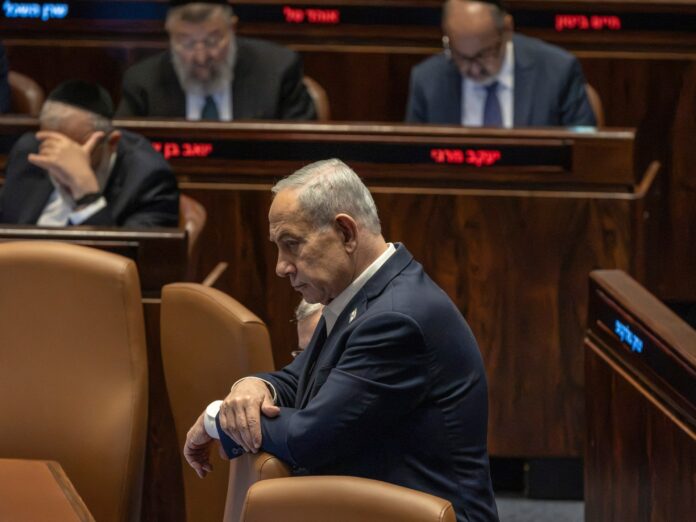
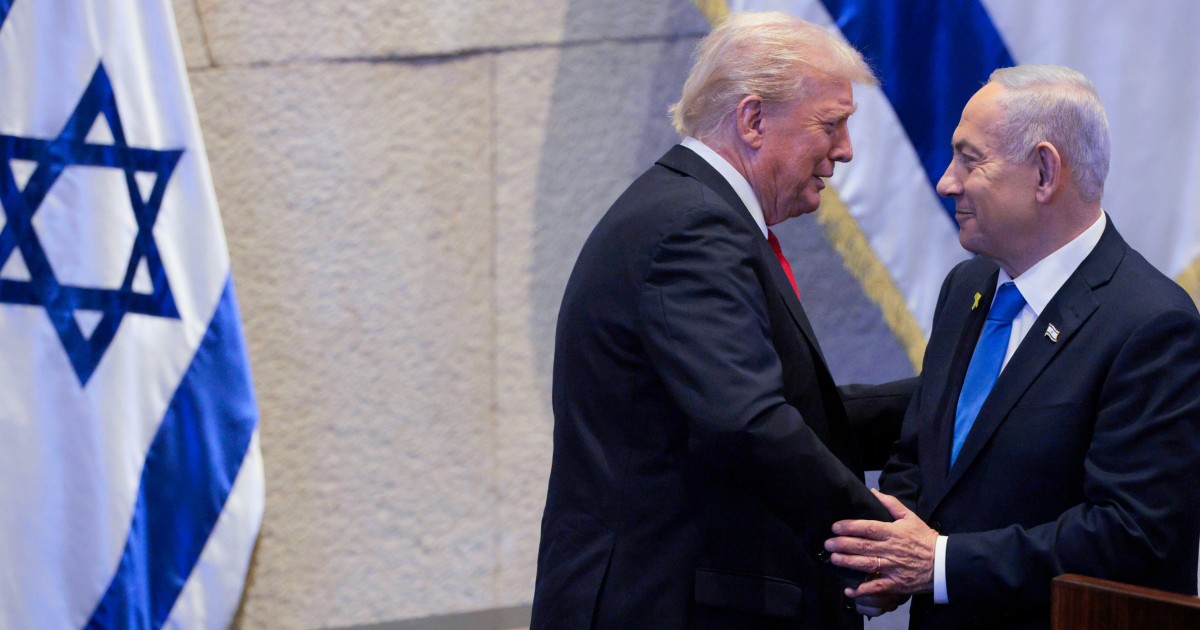
The timing is striking. Trump acknowledged to reporters this week that he had called Israeli Prime Minister Benjamin Netanyahu “crazy” during a phone call in which the two leaders clashed over Lebanon and Iran. Netanyahu, for his part, has continued pressing publicly for renewed strikes against Iran and has shown increasingly open skepticism of the American-led ceasefire framework. The relationship between the two capitals — for decades the most durable strategic partnership in the Middle East — is under the kind of strain that creates exactly the conditions intelligence agencies exploit.
Emily Harding, vice president of the Defense and Security Department at the Center for Strategic and International Studies, did not mince her assessment. Israel has “a hyper-aggressive intelligence service,” Harding told NBC News. “They are exceedingly interested in what we are up to.” What she described is not a secret — the US counterintelligence community has tracked Israeli collection efforts for decades — but the elevation to critical status signals that something has shifted in scale or specificity, or both.
The practical consequences, according to two of the officials, are likely to be procedural rather than diplomatic: tighter protocols for US officials traveling to Israel, more guarded conversations in facilities where Israeli collection is assumed, stricter compartmentalization around Middle East policy discussions. The intelligence-sharing relationship between the two countries — described by officials as robust and ongoing — does not appear to be at immediate risk. But that separation, between operational security caution and strategic cooperation, is itself a measure of how unusual the moment is. The US does not typically treat counterintelligence concerns about an ally as something to be managed quietly in parallel with an active military partnership.
Israel’s reaction was categorical. “Israel does not gather intelligence on American entities, let alone US government officials,” the Israeli embassy in Washington said in a statement. “Any claims to the contrary are either misinformed or politically motivated.” The White House also pushed back, with a spokesperson calling the NBC News report “completely false and sourced to someone who doesn’t have any knowledge of what’s going on.” The Office of the Director of National Intelligence did not respond to a request for comment. The Pentagon declined to comment entirely.
Those denials follow a familiar pattern. In November 1985, Pollard was arrested outside the Israeli Embassy in Washington. He had spent more than a year passing top-secret documents to Israeli handlers — material that, according to US intelligence assessments, was later shared with the Soviet Union in exchange for exit visas for Soviet Jews. He was sentenced to life in prison in 1987 and served thirty years before his release in 2015. The Pollard case remains the most damaging espionage breach in the history of the US-Israeli alliance — and it unfolded at a moment when Israeli officials categorically denied any awareness of his activities for years.
The current situation does not resemble Pollard in its mechanics. There is no indication that the DIA’s assessment involves an identified individual asset or a specific breach of classified material. What it reflects, according to officials, is a broader pattern of Israeli intelligence activity that has grown more aggressive than what the US counterintelligence apparatus regards as routine ally-on-ally collection. The US, too, spies on its friends — Edward Snowden’s leaks in 2013 revealed that the National Security Agency had tapped German Chancellor Angela Merkel’s mobile phone. The difference, as current and former officials see it, is one of degree and of timing.
Under US law, the FBI holds primary responsibility for counterintelligence operations on American soil, but the DIA’s mandate covers the protection of Defense Department personnel, facilities, and classified information from foreign intelligence threats. The fact that the DIA — rather than a broader interagency body — issued this assessment suggests the specific concern is with Israeli collection targeting Pentagon and military officials, not the intelligence community or the White House as institutions. That narrows the aperture considerably: it points toward individuals involved in operational planning, targeting deliberations, and force posture decisions related to the Iran war.
The rupture between Trump and Netanyahu over Iran strategy has been building for weeks. Israel has made no secret of its preference for continued military pressure; Trump has made no secret of his preference for a deal. What remains unknown — and what the DIA assessment suggests Israel is actively trying to determine — is where Trump’s private position ends and his public diplomacy begins. That is not a question any ally should need an espionage operation to answer. That it apparently does tells you something about the state of a relationship that was, until recently, considered too close to fracture.