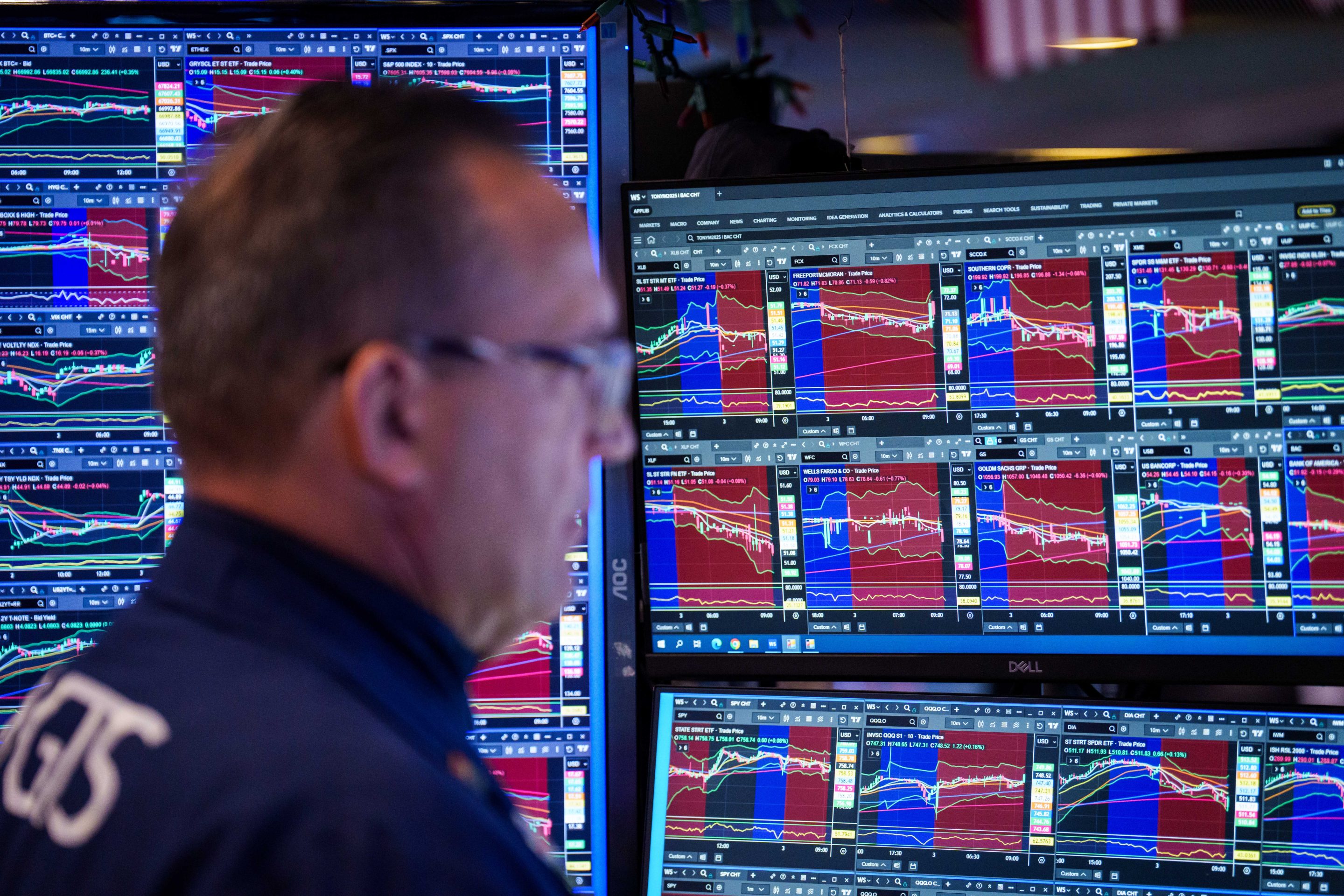

NEW YORK — The number that broke the market on Friday was 172,000. That was how many jobs the United States economy added in May — nearly double the roughly 88,000 that economists had forecast — and the gap between expectation and reality was enough to shatter nine weeks of relentless gains across technology and artificial intelligence stocks. By the close, the Nasdaq Composite had plunged more than 4 percent, its worst single-session performance since the peak of President Trump’s tariff shock in April 2025. The S&P 500 fell 2.6 percent. The Dow Jones Industrial Average shed 1.35 percent. Across all three major U.S. indexes, roughly $1.7 trillion in market value had vanished.
It was not one thing. Markets rarely collapse on a single catalyst, and Friday’s rout was the convergence of at least four pressures that had quietly accumulated beneath the record highs: a labor market that refused to cool, a Federal Reserve cornered on rates, a looming IPO requiring cash at a historically inopportune moment, and a semiconductor complex that had run so far, so fast, that a single earnings disappointment was enough to open the floodgates.
The Fed was already facing an uncomfortable inflation backdrop shaped by the Iran war and its effect on oil prices. What the May jobs report did, according to traders and economists, was eliminate whatever remaining flexibility the central bank might have preserved. Economists now place the probability of a rate hike by December at roughly 70 percent, with traders in the CME FedWatch tool pricing in a hike with near-certainty for the Fed’s June meeting. “Obviously, the stronger-than-expected jobs report puts the Fed in a tough spot regarding any interest rate cut for the rest of the year,” said Ryan Detrick, chief market strategist at Carson Group. “And the market is throwing a fit by hitting the big winners so far this year.”
The 10-year Treasury yield rose to 4.54 percent — notable because it moved higher even as oil prices fell, a split that signaled traders were not reacting to geopolitical noise but to a deeper recalibration of how long rates will stay elevated. That distinction matters. Technology stocks, whose valuations are built on the present value of future earnings, are acutely sensitive to the discount rate. When rates rise, those earnings become worth less today, and the math turns brutal against the stocks with the most stretched multiples. The S&P 500 had only days earlier crossed 7,600 for the first time, carried by the same AI infrastructure names that bore the brunt of Friday’s selling.
Nvidia fell 6.2 percent, pushing its market capitalization below $5 trillion for the first time in weeks. The Philadelphia Semiconductor Index — the broadest gauge of the chip sector — plunged more than 10 percent, its worst day since March 2020. Micron Technology, Intel and Cisco led the carnage alongside Nvidia, while Meta fell 5.5 percent after reports emerged that the social media company is considering a significant new share offering to fund its artificial intelligence infrastructure buildout. The market’s read was immediate: if every major technology company is diluting shareholders to pay for AI infrastructure that may not generate returns for years, the risk-reward equation has shifted.
Trouble in the semiconductor sector had actually begun two days earlier, when Broadcom reported quarterly earnings that failed to deliver the upside guidance Wall Street had priced in. That disappointment seeded a selloff on Thursday. Friday’s jobs report then gave momentum investors a reason to book gains that in many cases had been accumulating since late March. “After the record run we’ve seen the last nine weeks in equities, specifically tech and semiconductors, the dam just broke today,” Detrick said. The S&P 500 had risen roughly 21 percent from its March lows, driven almost entirely by artificial intelligence stocks — a concentration that made the index fragile to exactly this kind of reversal.
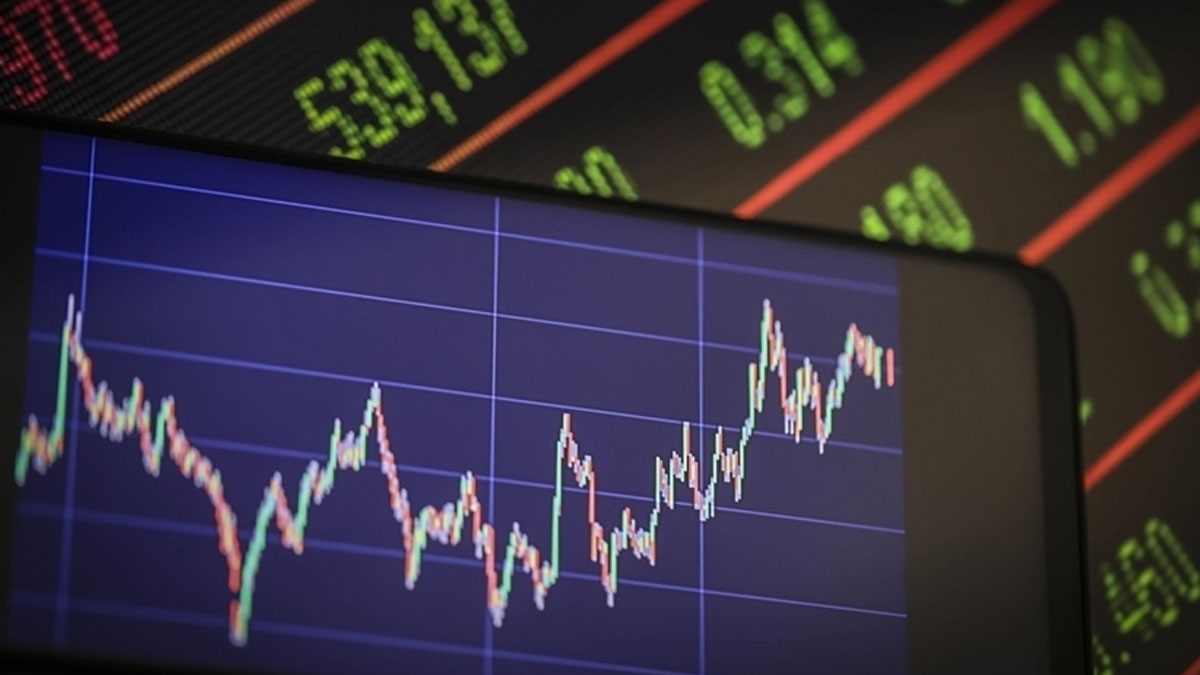
The SpaceX factor added a dimension that was harder to quantify but widely discussed among traders. Elon Musk’s rocket company has set its initial public offering for June 12 at a reported $135 per share, implying a valuation of approximately $1.8 trillion that has already drawn skepticism from several analysts. In the days preceding a landmark IPO, institutional investors routinely reduce existing positions to raise cash for allocation. The theory, circulating widely on trading desks, was that the SpaceX listing was accelerating that process, pulling liquidity out of everything from AI stocks to Bitcoin and gold simultaneously. Tesla, whose fortunes are perceived as inversely linked to attention on SpaceX, fell 6.6 percent — the steepest decline among the Magnificent Seven.
The selloff was not confined to equities. Bitcoin tumbled more than 5 percent and briefly dipped below $60,000, hitting its lowest level since October 2024 — a sign that the risk-off mood had spread beyond traditional markets. Gold also fell, which traders interpreted less as a loss of faith in the metal and more as evidence of forced liquidation across asset classes. CNN’s Fear and Greed Index, which had been in “greed” territory since April 15, dropped sharply into “fear.” The shift happened in a single session.
Ohsung Kwon, chief equity strategist at Wells Fargo, pushed back against the most alarming interpretations. “The market reaction today was more driven by positioning rather than fundamentals,” he said. “The semiconductor sector was way overbought. That’s why we’re seeing the selloff. I don’t think it’s the end of the semi bull market.” That view — that this was a positioning correction rather than a structural break — found some support in the breadth of what held up: energy stocks and financials, both of which benefit from a higher-rate environment, finished the session in positive territory. Earlier in the week, analysts had already flagged the collision between Wall Street’s AI optimism and the inflation pressures of the Iran war.
What the next several weeks will answer is whether this is a painful but orderly digestion of gains, or the beginning of a more sustained retreat from the AI premium that has dominated equity markets since late 2024. Three events now loom in rapid succession: CPI inflation data on June 10, an ECB rate decision on June 11, and the SpaceX IPO itself on June 12. Each carries its own capacity to either stabilize or amplify what began on Friday. What Friday proved, with $1.7 trillion erased in a single session, is that the AI trade was not as broad-based or resilient as nine weeks of record closes had suggested. The fault lines were always there. A jobs report found them.