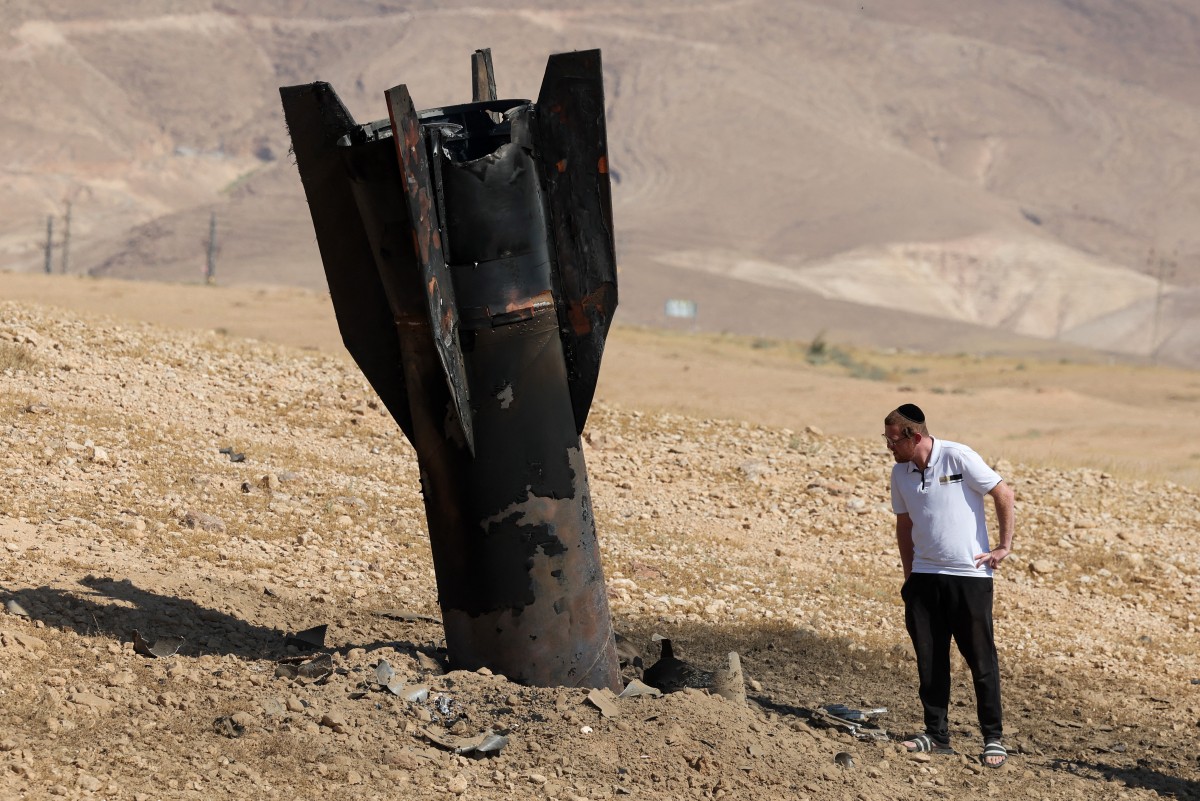

BEIRUT — The phone call from Washington came first. Then the missiles.
Monday marked the 100th day of the Iran war — a conflict that President Donald Trump once promised would end fast, launched on February 28 when the United States and Israel killed Supreme Leader Ayatollah Ali Khamenei and senior Iranian military leadership in coordinated strikes. The anniversary arrived not with a peace agreement or a Strait of Hormuz reopened to international shipping, but with air-raid sirens across Israel, a second wave of Iranian ballistic missiles, and an Israeli counterstrike on an Iranian petrochemical facility that Trump had privately asked Benjamin Netanyahu not to execute.
The sequence matters more than any single strike. According to a senior U.S. official cited by CNN, Trump called Netanyahu directly and urged him to refrain from retaliating immediately after Iran’s missile salvo on Sunday — the first direct Iranian Strike on Israeli territory since the April 8 ceasefire. Netanyahu listened, thanked the president, and ordered the Attaks anyway. Two waves. The first targeted Iranian aerial defense systems. The second hit the Mahshahr petrochemical complex in southwest Iran, which the Israel Defense Forces said contributes to ballistic missile production.
It is not the first time Netanyahu has moved before Trump’s diplomacy caught up. In the weeks following the April truce — a ceasefire that applied, in Washington’s reading, only to direct U.S.-Iran hostilities and not to Israeli operations against Hezbollah in Lebanon — Israel carried out nearly 3,500 air Attaks on Lebanese territory, according to Lebanese Prime Minister Nawaf Salam. The pattern is consistent: Israel acts, Trump reacts, and the distance between the two widens.
Trump’s public response on Monday carried its own contradictions. On Truth Social, he announced that both Israel and Iran were seeking an immediate ceasefire and that peace negotiations were proceeding, while also warning that “stupidity” could derail them. The statement read simultaneously as optimism and as a leader managing a situation he had already lost control of for the second time in a week. The markets registered the discomfort: Hong Kong’s Hang Seng Index fell 1.18% and China’s Shanghai Composite dropped 1.26%, while last Friday’s Nasdaq decline of 4.18% had already marked its worst single day since April 2025.
Iranian Foreign Minister Abbas Araghchi made the terms of the impasse explicit in a post that circulated widely as Israeli jets were still returning from their sorties over western and central Iran.
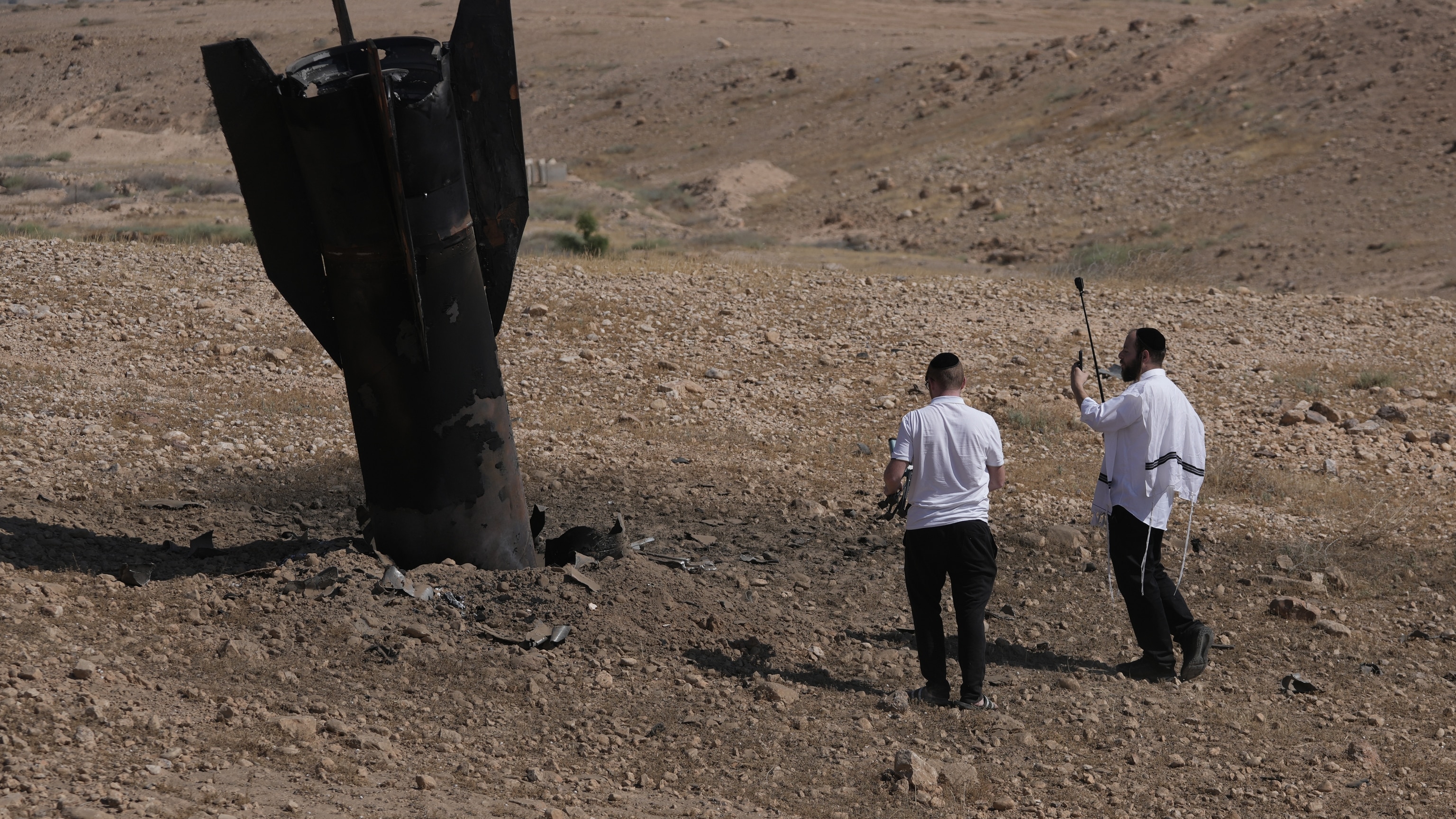
The logic from Tehran has not changed since April: Washington cannot broker a ceasefire with Iran while simultaneously enabling Israeli Attaks on Iranian proxies and Iranian territory. The U.S. position — that the two tracks are separable — has never been accepted by Tehran, and Monday’s escalation gave Iranian negotiators fresh ammunition to stall.
What is less discussed in Washington’s accounting is what triggered the current spiral in the first place. Israel struck Beirut’s southern Dahiyeh district last week without warning, killing at least two people and wounding 20, in what Israeli officials described as retaliation for Hezbollah Strikes on northern Israel. That strike — which Eastern Herald reported drew immediate warnings from Iran’s parliament speaker that U.S. and Israeli bases across the region were now legitimate targets — came after Trump had asked Israel to stand down. The Beirut strike produced the Iranian missile barrage. The Iranian missiles produced Monday’s Israeli counterstrike on Mahshahr. Each step traced back to a decision Netanyahu made in defiance of an American request.
The Houthis added a further wrinkle. Yemen’s Iran-backed group announced it was reimposing a ban on Israeli shipping through the Red Sea, a reminder that the conflict’s pressure points extend well beyond the Iran-Israel bilateral. The Strait of Hormuz, the central economic pressure lever of the entire war, remains under Iranian control pending a final agreement — and the $2 million per-vessel fee that Iran’s parliament has confirmed as Tehran’s toll regime shows no sign of being surrendered cheaply.
The domestic pressure on Trump is not incidental to any of this. Fox News reported Monday that the president is facing significant Republican anxiety about the war’s timeline ahead of midterm elections — anxiety rooted in the same calculation that drove the February strikes to begin with. A war begun fast, officials reasoned, needed to end fast. One hundred days in, it has not ended. What has emerged instead is a conflict that has settled into a rhythm of ceasefire announcements followed by new escalations, with no agreed framework for what a permanent settlement actually requires of either side.
An Israeli military official, speaking to CNN, stressed that all Attaks carried out Monday were solely Israeli operations, with the United States assisting only in aerial defense by intercepting some of the incoming Iranian missiles. IDF Chief of Staff Lt. Gen. Eyal Zamir spoke twice with U.S. Central Command chief Admiral Brad Cooper in the preceding 24 hours, the official said. That coordination framing — Israel acting, the U.S. defending — is the line Washington has used to maintain its ceasefire claim with Tehran. Whether Tehran accepts the distinction is another matter entirely.
What Monday has not answered is whether this escalation becomes the collapse of the April truce or another violent episode that the parties eventually absorb and resume talking through. That question was still open as of early Monday morning, with Israeli air-raid sirens still sounding and Trump’s Truth Social feed oscillating between optimism and warning. The negotiations, whatever shape they take next, will now have to reckon with one additional fact: that Netanyahu moved when Trump asked him not to, and the missiles flew regardless.
What the 101st day holds is not yet known. That much, at least, is honest.