
Five thousand people have been sent across the border in barely three weeks. Hundreds more wait behind chain-link fencing in temporary detention centres that dot every district in West Bengal, sleeping on concrete floors while officials run nationality checks that rarely involve a courtroom.
West Bengal’s new chief minister, Suvendu Adhikari, calls the campaign “detect, delete and deport.” It’s the clearest expression yet of what the Bharatiya Janata Party’s first-ever government in the state intends to do with the hundreds of thousands of undocumented Bangladeshi migrants who’ve settled in the border belt over the past two decades. Since late May, when Adhikari’s administration formalized the drive, 4,800 people have been removed through holding centres and another 836 remain locked inside them, according to numbers the chief minister’s office provided to Indian media.
The targeting is selective. Hindu Bangladeshis are left alone. Under the Citizenship Amendment Act, passed nationally in 2019 but only now enforced with full bureaucratic muscle in West Bengal, non-Muslim migrants from Bangladesh, Pakistan, and Afghanistan can apply for Indian citizenship. Muslims cannot. That single legal distinction has turned what the government frames as a border-security measure into something that rights groups say is closer to ethnic cleansing.
“The deportations are illegal,” said Elaine Pearson, Asia director at Human Rights Watch. “Detainees without valid documents should be given legal representation to prevent wrongful expulsion. What we are seeing is deeply concerning.”
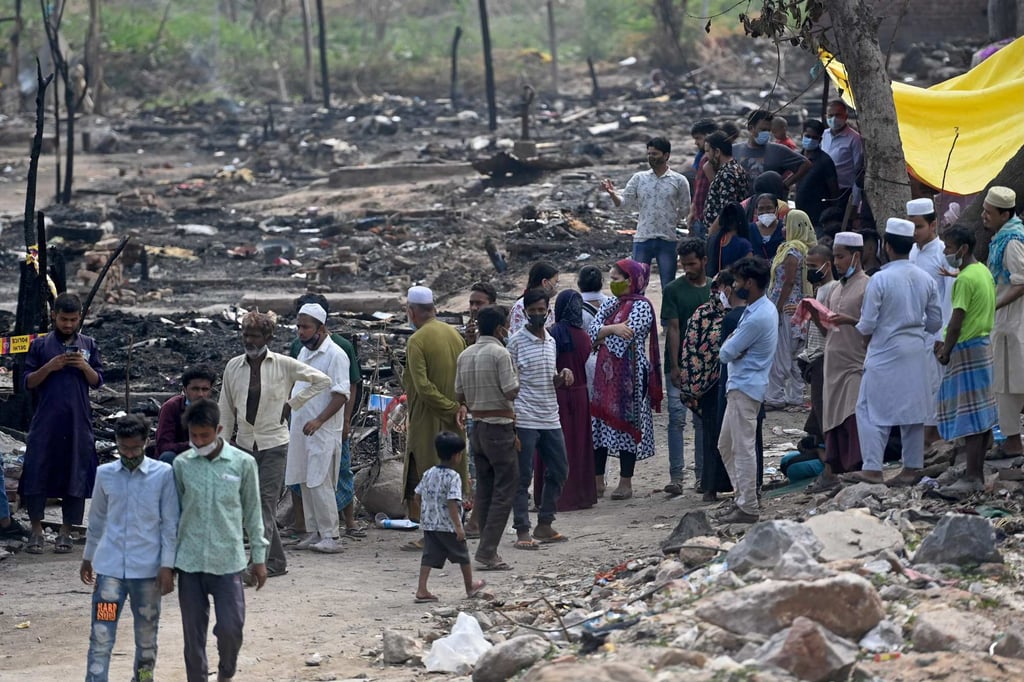
At the Hakimpur crossing in North 24 Parganas, about 80 kilometres from Kolkata, a police officer told Al Jazeera that 250 to 300 undocumented migrants arrive daily, either surrendering voluntarily or brought in by local informants. A detention facility sits 18 kilometres away. From there, deportees are taken to the border and pushed through. No court hearing. No lawyer present.
Raisul Islam, a 38-year-old mason from Bangladesh’s Satkhira district, arrived two years ago with his wife, Rebeka Khatun, and their two sons, Riad and Jubair. He earned about $10 a day doing construction work. “We took shelter in India just to give a good life to our children,” he told Al Jazeera before being processed for removal. “We had no ulterior motive.” Mirazul Ghazi, 42, a construction worker who’d lived in West Bengal for five years, said his landlord ordered the family out after the crackdown began.
Adhikari’s language tracks closely with the rhetoric Union Home Minister Amit Shah used during the 2024 general election, when he described undocumented Bangladeshis as “termites” and pledged to remove them. The BJP’s landslide victory in West Bengal’s May 2026 elections, which brought the party to power in a state it had never governed, gave that pledge administrative teeth.
India’s foreign ministry spokesperson, Randhir Jaiswal, has maintained a neutral tone in public. “All foreign nationals in India, if they are here illegally, including from Bangladesh, we have laws to deal with them,” he said, referencing bilateral mechanisms and nationality verification procedures. But Bangladesh says those mechanisms are being bypassed. Foreign affairs adviser Shama Obaid told reporters that Dhaka has sent “12 to 13 letters to New Delhi” about the deportations without receiving adequate responses.
The diplomatic fallout is visible. Border Guard Bangladesh and India’s Border Security Force began three days of talks on June 9, partly to address 18 attempted push-ins recorded since June 4 alone. The push-ins, in which Indian border forces attempt to shove groups of people across the boundary without formal handover, have strained an already fragile relationship that deteriorated sharply after Sheikh Hasina’s government fell in 2024 and a new administration in Dhaka took a harder line against Indian interference.
West Bengal’s Muslim population is roughly 27 percent of the state’s total. Activists say the deportation campaign has created a climate of fear that extends well beyond undocumented migrants. Teesta Setalvad, a prominent Indian rights activist, accused the administration of acting on “a preconceived agenda” against a specific community. Indian Supreme Court rulings from December 2025, which held that foreign nationals have “almost no rights” under the constitution, have given the BJP legal cover to bypass the procedural protections that advocacy groups say are necessary to prevent citizens from being wrongfully expelled.
More than 2,800 suspected Bangladeshis have been referred to Dhaka for nationality verification. India’s position is that anyone confirmed as Bangladeshi will be deported through proper channels. Dhaka’s position is that many of the people being pushed across the border are India’s own citizens, Bengali-speaking Muslims who’ve lived in the country for generations.