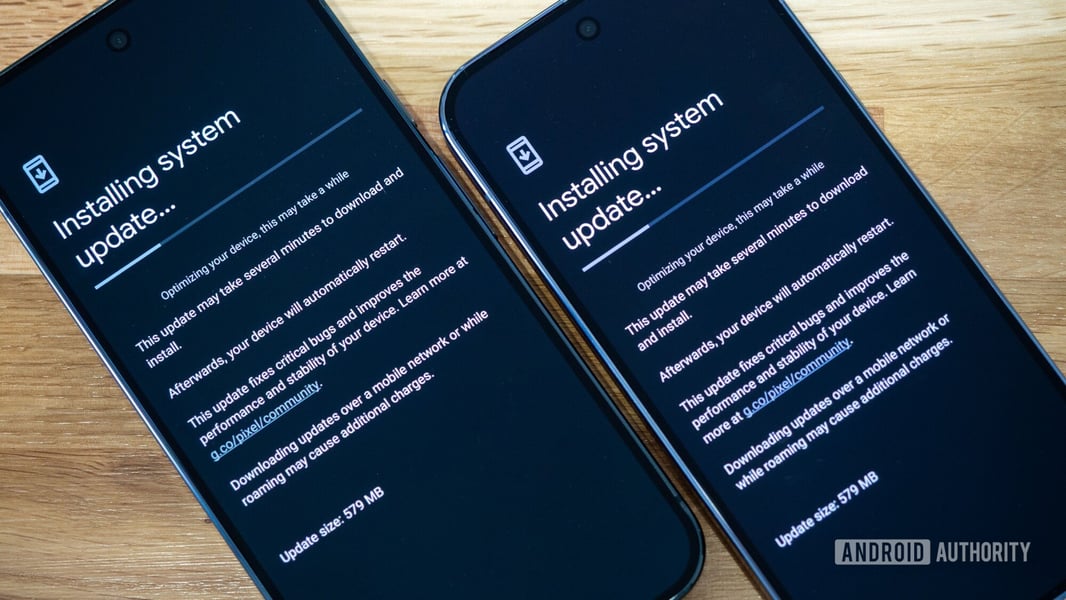

SAN FRANCISCO — When the March update landed on Hamid Chaudhry’s Pixel 9 Pro, the phone did what phones are supposed to do: it restarted. Then it restarted again. And again. For three months, Chaudhry’s device never made it past the white G on a black screen, a loop so complete that even the recovery menu sat out of reach. He is not alone.
Google has now formally acknowledged a bootloop crisis that has affected Pixel devices stretching from the four-year-old Pixel 4a to the current Pixel 10 Pro XL — and its resolution, posted to the company’s Issue Tracker this week, is less a fix than a referral. Users are being directed to contact Pixel Customer Support, where, in many documented cases, agents are telling them to perform a factory reset, erasing years of data from a phone that was rendered unusable by Google’s own software.
The acknowledgment represents the first sustained response from the company after nearly 90 days of complaints on its public Issue Tracker, where the thread has accumulated more than 400 upvotes and hundreds of comments from users who describe the same experience: a phone that boots, briefly illuminates, then cycles back to the startup screen immediately after a PIN is entered. The result is functionally identical to a traditional bootloop, even if the technical distinction is real. The phone cannot be used.
“Thank you for your continued patience as we’ve been investigating a startup or bootloop issue following the March, April, or May software updates causing devices to freeze on the G-logo or initial boot screen and locking out and rebooting immediately after entering a PIN,” Google wrote in the Issue Tracker comment, first reported by 9to5Google. “Because the best path forward depends on your device’s specific state, please contact Pixel Customer Support directly so an agent can assist you with the resolution process.”
The language is careful, measured, and does not acknowledge how long the problem has been active, why three consecutive monthly updates shipped with a fault severe enough to disable devices, or whether a clean software patch is forthcoming. None of those questions have been answered.
What support agents have answered, based on accounts users posted beneath Google’s statement, is: factory reset via Fastboot. One user on a Pixel 10 Pro XL was told exactly that — an instruction that requires technical knowledge most consumers do not have and destroys every photo, message, and application on the device. Another user, who could not access Fastboot because the bootloop prevented it, was directed to install Android 17 QPR1 Beta 3, a pre-release build, to escape stable ground entirely. A third was told to send the hardware in for repair, which also results in a reset. In each case, the common thread is data loss presented as an acceptable cost for a problem Google created.
“A premium device like this should not fail in a way that leaves customers with no option but to lose their data,” one Pixel 10 Pro XL owner wrote on the tracker. The comment drew dozens of acknowledgments from users in identical situations.
The breadth of the issue is what makes it structurally unusual. Unlike bugs that tend to cluster on a specific chipset generation or Android version, the bootloop problem has appeared across the full Pixel lineup, from the Pixel 6 series released in 2021 to the current flagship line. Reports from the March update carried forward into April and again into May, meaning that Google shipped three consecutive monthly patches without resolving an issue that was already confirmed, already reported, and already affecting users who had been waiting since the first Feature Drop of 2026.
That March update — marketed as a Feature Drop — centered on AI enhancements: Magic Cue, custom AI-generated icons, improvements to Circle to Search. At Google I/O 2026 in May, AI remained the primary organizational focus, while Android itself was allotted a pre-recorded segment, not a live keynote. The engineering priorities visible in the public-facing calendar are not subtle.
The bootloop problem is not the only software crisis currently active on Pixel hardware. Battery drain severe enough to cut screen-on time by hours has persisted since the same March update, with the May patch explicitly described by users as failing to resolve it. Random reboots, GPS drift, display glitches on the Pixel 10 series, and a timezone bug affecting clocks have all been separately documented and remain, in various states, unresolved. The accumulation is the point: these are not isolated incidents but a pattern running across every monthly update cycle since the start of the year.
The contrast with the broader Android ecosystem is uncomfortable for Google. Samsung’s One UI has had its own recent rough patch, with dark mode failures and video call bugs drawing user complaints in May. But Samsung is updating dozens of devices simultaneously across multiple price tiers — an engineering challenge Google does not face on the same scale with its relatively narrow Pixel lineup. The standard Google holds itself to, and once marketed aggressively as a selling point, is that Pixels receive the best Android experience available. Android Authority noted that claim is under pressure it has not faced since the Pixel 3a era.
The Pixel 11 series is expected later this year. It is not yet clear whether the devices currently failing on March, April, and May updates — the Pixel 6, 7, 8, 9, and 10 lines — will receive a targeted patch that restores them without data loss, or whether support contacts and factory resets remain the only official path forward. Google has not committed to a timeline. It has not explained what changed between February and March that introduced the fault. It has not said whether an over-the-air fix is possible for devices too locked to receive one.
What it has said is: call us, describe your symptoms, and an agent will route you to the correct guidance. For the hundreds of people who have been holding a paperweight since March, that is the best available answer, and it is not a good one.