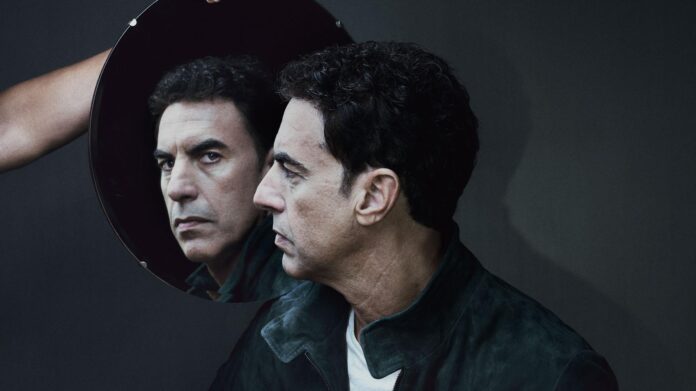

Governor: The Silent Saviour opened in Indian theatres on June 12, 2026, with Manoj Bajpayee as A. Ramanan, a fictional version of the Reserve Bank of India chief who navigated the country through its catastrophic 1991 balance-of-payments crisis. Directed by Chinmay Mandlekar and produced by Vipul Amrutlal Shah under Sunshine Pictures, the film tells a story that most Indians know as a chapter in their economics textbooks but have never seen dramatised at this scale.
India in 1991 was weeks away from defaulting on its sovereign debt. Foreign exchange reserves had dwindled to the point where the country could barely cover two weeks of imports. The rupee was devalued twice. Gold reserves were airlifted to London as collateral. The film uses this crisis as its spine, centering the narrative on the institutional figure who bore the operational weight of the response while the political class and the public looked on with varying degrees of comprehension.
Bajpayee has drawn consistent praise from critics for his performance. The Bollywood Hungama review described the film as telling a challenging story in a simple manner, powered by a terrific central turn. Free Press Journal gave the film three stars, noting that Bajpayee governs his presence with the kind of restraint the material demands. Even the more critical reviews, including a sharp two-star assessment from NDTV, acknowledged that his work in the film represented some of his finest acting.
Where the reception has been divided is on what the film does with that performance. Several critics have argued that the screenplay fails to match Bajpayee’s commitment, that the narrative structure and pacing prevent the material from achieving the tension and complexity that the real events warrant. The NDTV review, written in characteristically blunt terms, described the film as a disaster that squanders its lead actor’s best work. The gap between the quality of Bajpayee’s performance and the overall film has been the defining fault line in the critical response.
Adah Sharma plays a role alongside Bajpayee, and Noushad Mohamed Kunju features in the supporting cast. Chinmay Mandlekar, who has built a substantial reputation in Marathi cinema and theatre before crossing into Hindi-language work, directs. His Marathi films, including the crime dramas in the Sairat producer Nagraj Manjule’s orbit, have shown a comfort with institutional settings and procedural storytelling that made him an understandable choice for this material.
At the box office, Governor opened to approximately 46 lakh rupees on its first day, a number well below the range that the trade had projected for a viable theatrical run. The film competed for screens against four other new Hindi releases on the same Friday, including Imtiaz Ali’s Main Vaapas Aaunga and Kangana Ranaut’s Bharat Bhhagya Viddhaata. All four were overshadowed by the surprise performance of Haunted: Echoes of the Past, which collected nearly 2.75 crore on the same day.
The 1991 crisis has been told and retold in Indian public life through the lens of political leaders and finance ministers. Governor’s proposition is that there is another story worth telling, one about the institutional officer who executed the decisions while carrying the psychological weight of failure. It is a premise that sits more comfortably in the register of an OTT limited series than a theatrical release, and the film’s box office performance on day one suggests the audience may have intuited the same thing.
Vipul Amrutlal Shah, whose Sunshine Pictures has produced films ranging from Namastey London (2007) to the Commando franchise, has spoken about Governor as a passion project built around a story he believed needed a theatrical canvas. Whether the theatrical window gives the film enough time to find its audience remains to be seen. Films of this kind, serious dramas about institutional figures, have historically performed better in India on streaming platforms where the audience can come to them at their own pace.
For Manoj Bajpayee, the role sits within a career that has consistently sought out institutional and systemic stories. From Satya (1998) through The Family Man franchise and Bhonsle (2018), he has been drawn to characters who operate within structures that are larger than them. Governor extends that preoccupation to its most explicitly national scale, asking what it means to carry a country’s economic survival on a single desk.
Governor: The Silent Saviour is now playing in Indian cinemas. The critical consensus has settled into a position that is unusual for a Bollywood release: near-unanimous admiration for its lead performance, paired with genuine disagreement about whether the film around it is worthy of it. For audiences drawn to Bajpayee’s craft or to the still-resonant history of 1991, the film offers something worth seeing, even if the conversation afterward will be as much about what it missed as what it achieved.