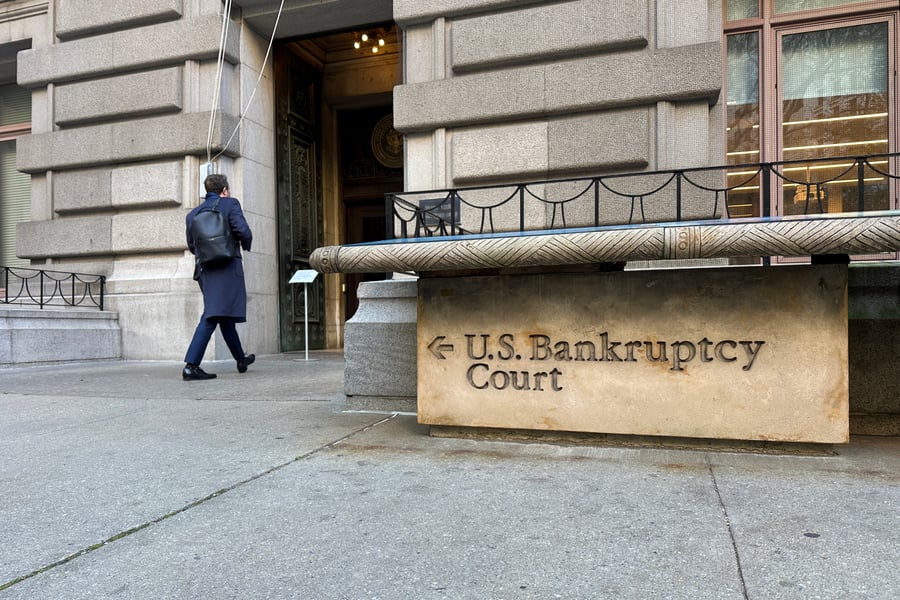

MINNEAPOLIS — Sleep Number, the Minneapolis-based mattress company that spent four decades persuading Americans to argue about firmness numbers, filed for Chapter 11 bankruptcy on Friday and disclosed that it would be sold to Sleep Country Canada in a deal valued at no less than $415 million. The Canadian retailer is the stalking-horse bidder, a structure that sets a floor for the auction the bankruptcy court will now run, and Sleep Number’s filings listed approximately $1.3 billion in debt against a US store footprint already shrunk by 44 closed leases this year.
For 40 years, Sleep Number has been a leader in sleep innovation, helping millions of customers improve their health and well-being through personalized sleep solutions, chief executive Linda Findley said in the company’s announcement. Sleep Country Canada’s chief returned the compliment, saying his company had long admired Sleep Number, its game-changing personalized sleep products and the talented team behind them. The framing the two parties have chosen is partnership; the document the court accepted on Friday is a sale.
The mechanics deserve attention. Sleep Country Canada created a US subsidiary specifically to make the bid, and Sleep Number expects up to $260 million of debtor-in-possession financing, including roughly $65 million of new money, to keep its stores and website operating through the auction, FOX 9 in Minneapolis reported. The court will allow rival bids until the auction date, after which the highest qualified offer wins. Sleep Country Canada’s $415 million sets the floor; whether a US private-equity buyer or a strategic competitor materialises to push the price higher is the question the docket now answers.
The deeper story is the one the brand list will not advertise. Sleep Number’s debt load grew during a pandemic-era surge in mattress demand the company financed with credit that became expensive long before its customers stopped renovating bedrooms. The 44 shuttered store leases that the bankruptcy will allow it to walk away from were a corporate fact long before they were a court filing. Once the company added the cost of a national brand to the cost of a national lease base, the math required either a buyer or a liquidator, and a Canadian retailer with no overlapping US footprint produced the cleaner answer, Retail Dive reported.
The cross-border angle is the part US trade-watchers will read first. Sleep Country Canada is itself the product of US private equity ownership, having been taken private by Fairfax Financial and Sagard in 2023, and the structure of the new combination places a Toronto-supervised parent above an American operating company at exactly the moment Washington’s tariff and inbound-investment posture is harder on Canadian capital than at any point since the original NAFTA debates. The deal will need approval from the Committee on Foreign Investment in the United States, which a friendlier administration would treat as routine and the current one may use to extract concessions.
The pattern across mid-market American retail is now unmistakable. First Brands, the $10-50 billion auto-parts giant Eastern Herald covered in its liquidation hearing in Houston on Friday, is at a more extreme end of the same arc. Sleep Number’s path, distressed sale to a foreign buyer rather than collapse into criminal charges, is the more typical outcome for companies whose balance sheets were built for a lower interest-rate world and whose customers are no longer carrying the upgrade demand the original credit assumed. Asics’s spin of its Onitsuka Tiger fashion line, also on the docket of this week’s consolidation news, sits at the higher-margin extreme.
The court process from here is procedural and largely public. Sleep Number’s stores remain open. Customer warranties and installations continue under bankruptcy protection. Vendors that supply the company’s components will be paid, ahead of bondholders, on what the court calls critical-vendor status. The auction will run for several weeks, and the bidder that wins will inherit the brand, the trademarks, the supply contracts and roughly the residual store footprint. The shareholders, in the usual order of these cases, will inherit nothing.
For the Minneapolis workforce, the most consequential line in the filings is the one that does not yet exist: how many of the remaining store and headquarters positions the winning bidder keeps. Sleep Country Canada’s stated rationale, build on complementary strengths and accelerate growth across the United States, can support either reading. A buyer that intends to grow needs a US headquarters and a domestic sales force. A buyer that intends to optimise consolidates both. The bankruptcy court does not adjudicate that question; it adjudicates only whether the price is sufficient. Minneapolis will find out the answer in the months after the gavel.
What Friday established is the verdict. The 40-year-old American brand that built one of the country’s better-known consumer categories did not generate enough cash to service its debts at current rates, and the buyer with the cleanest balance sheet for that brand is in Toronto. The same Saturday morning the SpaceX IPO Eastern Herald covered closed at $1.77 trillion, a US consumer-discretionary name was being sold off through a Houston-style docket because the cost of being a public American mid-cap had risen faster than the price of a king-size mattress. Both numbers describe the same economy. They do not describe the same set of American businesses.