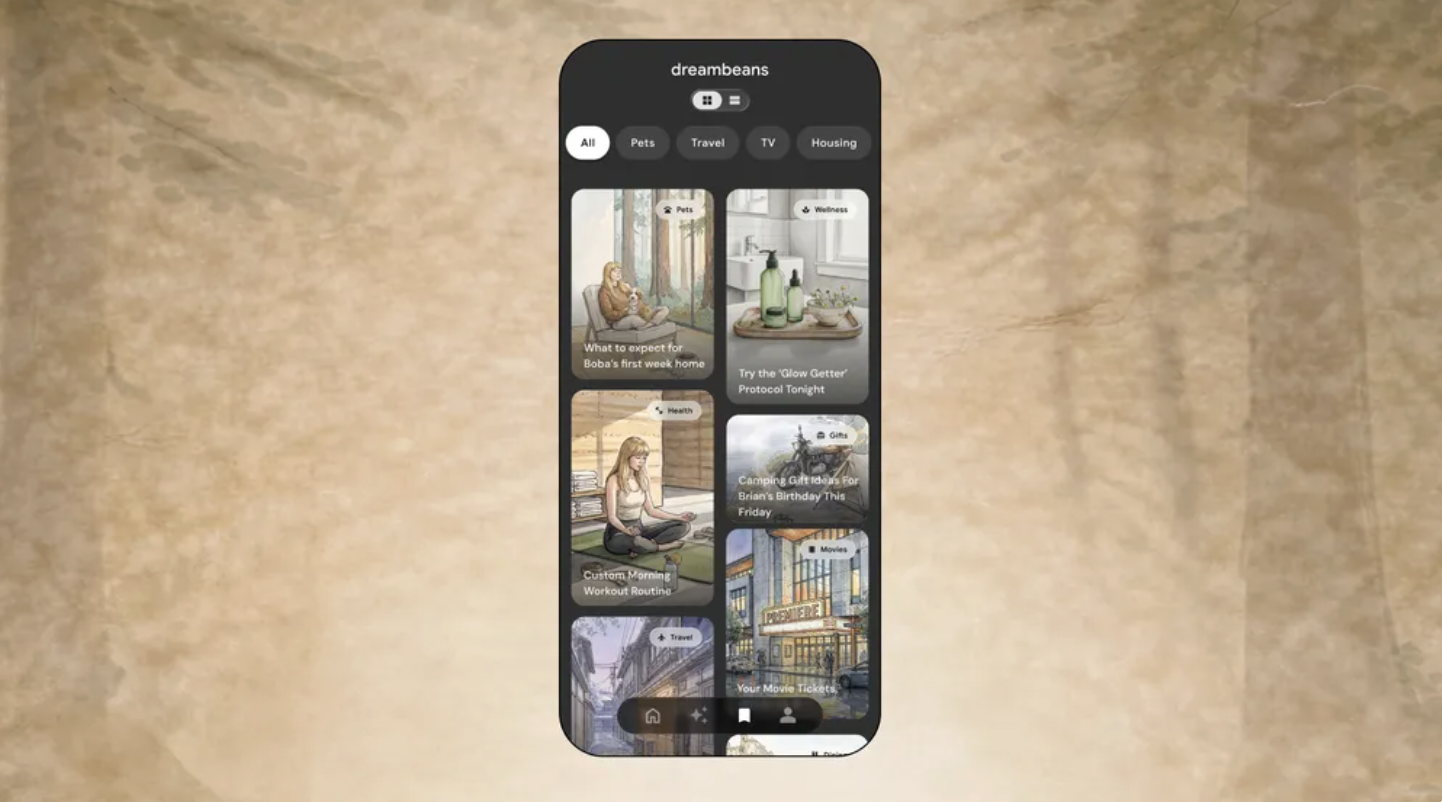

SAN FRANCISCO – Every morning, before you are fully awake, Dreambeans has already been through your email.
The app, released on June 3 by Google Labs, works overnight. While you sleep, it reads your Gmail confirmations, cross-references your Google Calendar appointments, scrolls through your Google Photos library, and pulls threads from your YouTube watch history and search activity. By the time you reach for your phone, it has assembled between 10 and 14 illustrated stories, each drawn from the texture of your own life, waiting like a freshly brewed cup of coffee – a metaphor that Gozde Oznur, the product manager behind the project, used when speaking to TechCrunch. The dream part, she said, is literal.
The pitch is disarming: in a media landscape built on infinite scroll and algorithmic manipulation, Dreambeans runs out. It hands you your daily stories and stops. No next autoplay. No pull-to-refresh spiral. The goal, as the company described in its announcement, is to inspire you to put the phone down and go live the life the app just reminded you that you have.
There is, however, a structural tension that the launch has not yet had to answer for. The company proposing to fix your phone addiction is also the company whose advertising revenue depends, in part, on your continued attention. Google does not sell Dreambeans stories. But the broader apparatus – the Gmail that Dreambeans reads, the Search history it mines, the YouTube viewing patterns it interprets – is the same infrastructure that has made Google one of the most valuable advertising businesses in history. The poacher has applied for the gamekeeper position.
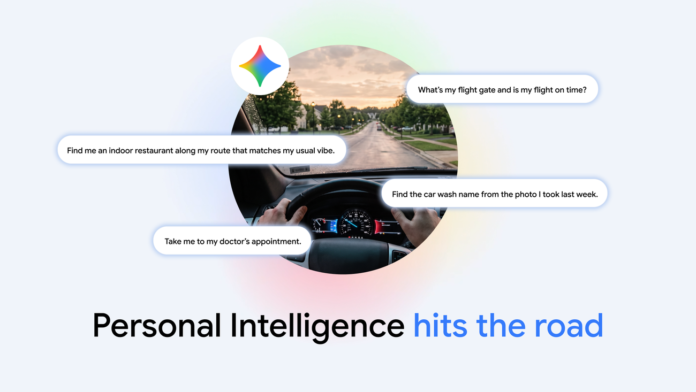
What Dreambeans actually does, stripped of the branding, is apply Google’s Personal Intelligence system – the same technology that Apple considered integrating into Siri before settling on a $1 billion arrangement with the company – to a deliberately constrained format. Personal Intelligence, now deployed across AI Mode in Search, Gemini, and several other Google products, links your accounts and uses them to shape results. Dreambeans applies it not to answers, but to ideas: places to visit, things to try, events nearby, topics worth exploring.
The illustrations that accompany each story are generated by Nano Banana 2, a Google image model that uses facial groupings from your own Google Photos to render personalized artwork. In the marketing video Google published at launch, a user receives a delivery confirmation for puppy treats via Gmail; Dreambeans surfaces dog-training tips. A Google Calendar entry shows a visiting friend; the app recommends dog-friendly restaurants in the area. The system is then able to go further, pulling additional context from the web through a built-in chat function that lets users dig into any story.
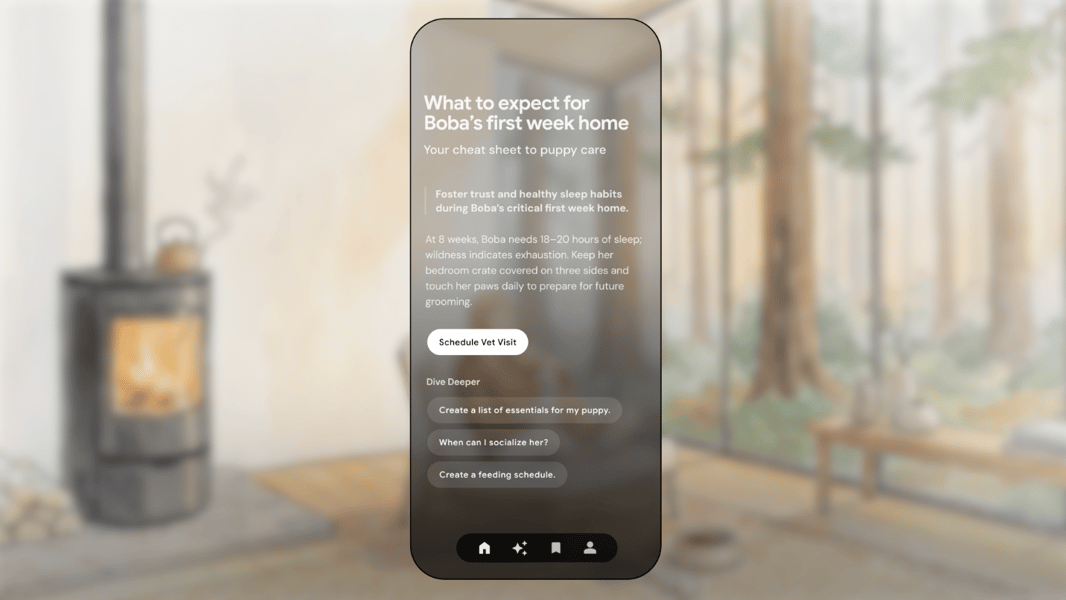
The privacy architecture, Oznur told TechCrunch, is isolated by design. Choices made inside Dreambeans do not affect how Personal Intelligence behaves elsewhere – in Gemini apps or AI Mode in Search. Users can revoke access to any connected app at any time, or delete their data entirely from within the app’s profile panel. No third party can see any user’s generated stories; only the account holder can access them. Google has also stated that the data does not train its underlying models.
What the company has not addressed – and what independent analysts have not yet fully tested – is whether those assurances will hold as the app scales beyond its current limited release. Dreambeans is presently available only to Google AI Ultra subscribers aged 18 or older in the United States, on Android and iOS. Everyone else is pointed to a waitlist at labs.google/dreambeans. Whether the privacy isolation remains structurally intact if Dreambeans is ever folded into a broader Google product, or if it reaches billions of users, is a question that the current experimental framing conveniently defers.
The app arrives at a specific moment in the attention-economy debate. Regulators in the European Union and the United States have spent the better part of three years pushing platform companies to reduce the addictive design features that keep users scrolling. Meta has faced mandatory interoperability orders in Europe. Apple’s Screen Time controls have become a significant feature marketing point. Into this environment, Google is introducing a product that frames a finite, curated content limit not as a restriction but as a feature – and does so by reading more of your data than any social feed currently does.
As SiliconANGLE reported, Dreambeans follows an earlier Google Labs experiment called CC, which assembled a daily briefing email from Gmail, Calendar, and Drive. That product never left limited testing. Dreambeans represents a more polished iteration of the same underlying logic: your data, already sitting across Google’s cloud infrastructure, reconstituted each morning into something that feels useful rather than surveilled.
The name, Oznur explained, is a compound of two metaphors. The “dream” refers to the overnight processing – the app working through your connected accounts while you sleep. The “beans” is a nod to the morning coffee ritual: by the time you wake up, everything has been brewed down to a concentrated, distilled drop. It is a warmer image than the technical reality suggests – a system that has spent the night reading your inbox is not typically framed as something that hands you a warm beverage.
What Dreambeans does well, and what distinguishes it from most of the AI products launched in the past two years, is that it is designed around scarcity rather than abundance. The deliberate cap on daily stories – a maximum of 14 – is, as product design goes, a meaningful signal. Most platforms optimize for the next tap; Dreambeans is explicitly built to not have one. Whether that restraint survives contact with Google’s broader commercial interests, or whether it is simply a positioning strategy for a limited-access experiment that may never go wide, is the question the company has not yet answered.
The broader AI rush to turn personal cloud data into morning briefings – a wave that includes Microsoft’s Scout assistant and several venture-backed startups now running on billions of dollars in AI infrastructure investment – suggests that Dreambeans is one answer to a question the industry has been asking for some time: if AI knows everything about your life, what should it actually do with that? Google’s answer, for now, is to make you a picture book about your dog and suggest a restaurant. Whether that is enough to make the underlying data access feel proportionate is something only users, and eventually regulators, will decide.