
HONG KONG, June 14, 2026 (The Eastern Herald) — Hong Kong’s top financial regulators have explicitly aligned themselves with Beijing’s tightened capital-control regime in the most public reset of the cross-border wealth-management corridor in five years, with Securities and Futures Commission chairman Kelvin Wong using his keynote at the ninth Caixin Summer Summit to pledge that the SFC will be a “steadfast guardian” of the regulatory framework, the Hong Kong Monetary Authority directing all licensed banks to require fund-origin declarations from offshore-investment-account applicants, and the China Securities Regulatory Commission’s enforcement action against three of the largest offshore-stock-trading platforms used by mainland Chinese investors establishing the operating template. The cumulative effect is to reshape the offshore-investment access for mainland Chinese capital in a way that the Hong Kong wealth-management complex has been preparing for since the regulatory environment shifted earlier this spring.
The CSRC enforcement action that catalysed the reset targeted Tiger Brokers, Futu Securities International and Longbridge Securities, the three largest platforms used by mainland Chinese investors to access offshore equity markets including the U.S. exchanges and the Hong Kong Stock Exchange. The penalties cite unauthorised onboarding of mainland Chinese investors for offshore stock trading without the required CSRC license registration. The CSRC’s framing of the action positions the violation as a routine compliance enforcement rather than a regulatory escalation, but the practical effect has been to compress the available channels for mainland-investor offshore access, with each of the three platforms now required to implement Chinese-resident geo-location verification for new account openings.
The HKMA fund-origin declaration requirement is the operational follow-on that produces the binding constraint. The HKMA directive applies to all licensed banks operating in Hong Kong, including the Hong Kong-based mainland subsidiaries of the largest Chinese state-owned banks, and requires applicants for offshore investment accounts to produce documentation establishing the source of funds, the tax-compliance status in the originating jurisdiction and the regulatory permission for cross-border movement of the funds. The cumulative effect is to filter out the kind of unauthorised mainland-investor flow that the CSRC enforcement action against the brokerages targeted, by adding the receiving-side compliance verification on top of the issuing-side platform restriction.
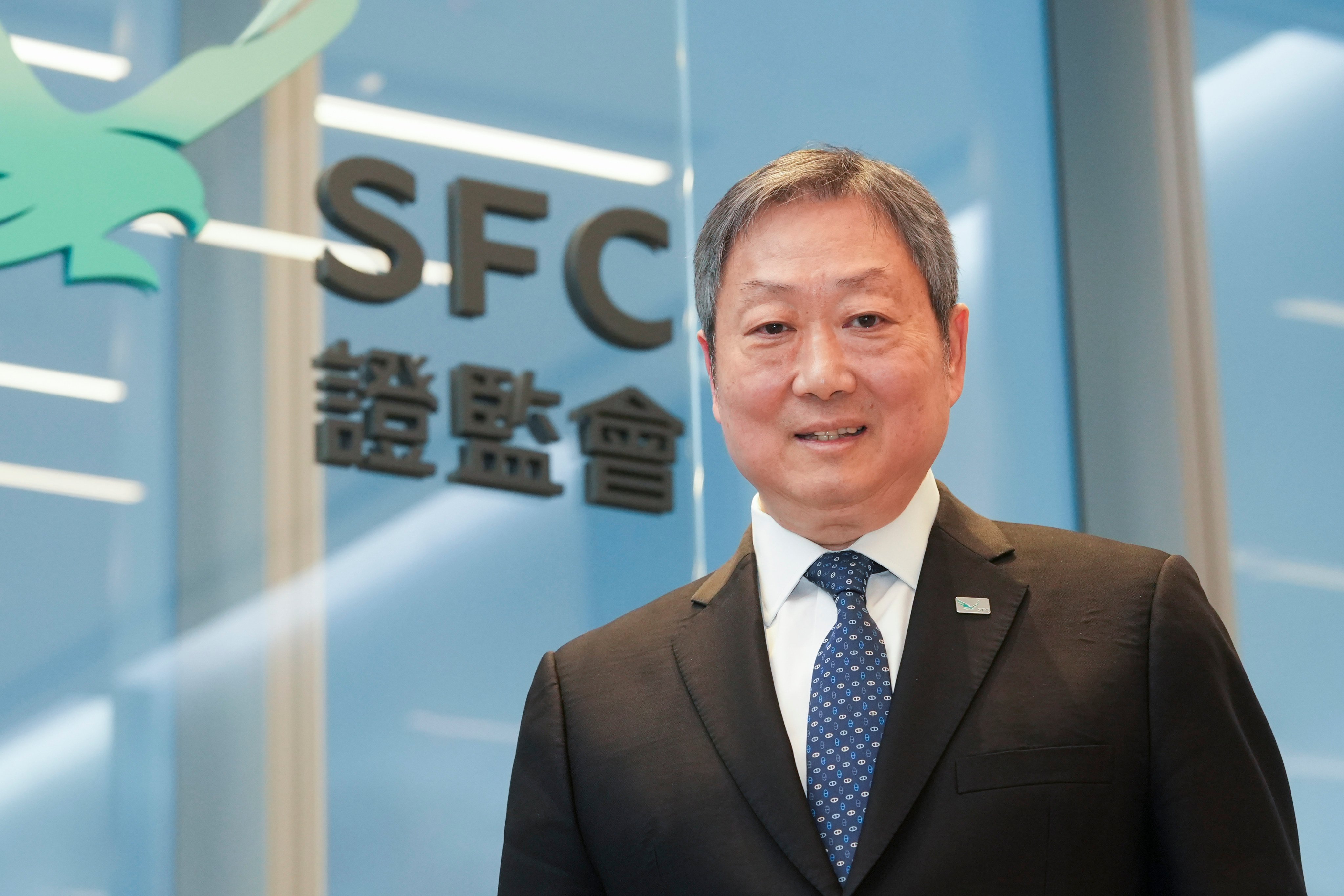
The Kelvin Wong commentary at the Caixin Summer Summit set the regulatory tone. The SFC chairman pledged that the regulator will continue to enforce “rigorous regulatory systems, forward-looking guidance, cross-border coordination and investor education” as the four operational principles for the cross-border regulatory framework. The framing positions the Hong Kong regulators not as separate from the mainland regulatory framework but as fully integrated counterparts, which is the most public statement of regulatory alignment that Hong Kong’s securities regulator has made in the post-2020 environment. The Caixin Summer Summit audience, which includes the senior representatives of the mainland financial-regulatory apparatus, was the deliberate venue for that messaging.
The cross-border wealth-management Connect scheme, which permits the bidirectional flow of qualified retail-investor capital between the mainland and Hong Kong, is the central commercial corridor that the new regulatory framework operates around. The Wealth Management Connect 2.0 expansion that the People’s Bank of China and the HKMA jointly announced in February 2026 raised the per-investor quota from 1 million yuan to 3 million yuan, expanded the eligible-investor universe from approximately 60 million Greater Bay Area residents to roughly 180 million urban-residents across nine provinces, and broadened the eligible-product list to include exchange-traded funds and structured products. The cumulative Connect-scheme expansion has been the official channel for the mainland-to-Hong-Kong investor flow, and the new compliance regime tightens the boundary between the official channel and unauthorised parallel channels.
The Tiger Brokers business model has been the most exposed of the three penalised platforms. Tiger’s historical revenue model has been heavily reliant on mainland-Chinese retail-investor onboarding for U.S.-listed equity trading, with the trailing-twelve-month revenue mix indicating that approximately 65 percent of Tiger’s active funded accounts as of the Q1 2026 print were domiciled in mainland China. The CSRC enforcement action against Tiger triggers an immediate revenue impact on the order of 35-to-45 percent of trailing-twelve-month revenue, with the equity-market response on the Singapore-listed shares of Tiger Brokers indicating a 22 percent single-day decline, the largest single-session move in the stock’s trading history.
The Futu Securities International exposure is structurally similar but with somewhat more product diversification. Futu’s parent company, Futu Holdings, listed on the Nasdaq, derives roughly 55 percent of trailing-twelve-month revenue from Hong Kong-based mainland-resident accounts, with the remaining 45 percent distributed across U.S., Singapore, Japan and Australia residents. The CSRC enforcement action triggers a corresponding revenue impact on the 55 percent mainland-resident segment, with the Nasdaq-listed Futu shares down 18 percent on the news. Longbridge Securities, the smallest of the three penalised platforms with roughly 20 percent of Futu’s active-account base, has been the most affected on a percentage-of-revenue basis.
The mainland-Chinese retail-investor population that has been routing through the penalised platforms is the variable that the regulatory framework is now redirecting. The cumulative mainland-resident accounts across the three platforms have been estimated at approximately 12 million active users, with the average account size in the 100,000-to-300,000 yuan range, implying total assets-under-management at the three platforms in the trillion-yuan order of magnitude. The redirected flow from those accounts will need to find either the Wealth Management Connect channel, which has a 3-million-yuan-per-investor quota constraint, the Qualified Domestic Institutional Investor channel, which is limited to institutional intermediaries, or remain inside the mainland market.
The Hong Kong market structural implication is mixed. HKEX’s Bonnie Chan recently detailed the 340-application new-economy listing pipeline that has been driving the Hong Kong primary-market activity, and the regulatory framework realignment does not directly affect that pipeline. The secondary-market liquidity exposure is the more significant variable, with the redirected mainland-investor flow from the three penalised platforms providing potentially meaningful incremental Hong Kong-stock demand if the Connect channel can absorb it, or contracting Hong Kong-stock liquidity if the redirected flow stays in the mainland. The probability-weighted outcome favours the Connect-channel absorption scenario, but the calibration depends on the operational rollout of the new HKMA fund-origin declaration requirement.
The broader cross-border context matters. SpaceX’s $75 billion September Nasdaq IPO arrives in the middle of the cumulative cross-border regulatory tightening cycle, and the mainland-investor demand-side pressure on the SpaceX deal that has been driving the cumulative pre-positioning trade is now operating against a tighter compliance environment for the offshore-investment-account routes. The cumulative effect compounds the regulatory friction on the kind of mainland-investor offshore-access workarounds that the SpaceX listing has been generating, and the Hong Kong-to-U.S. wealth-management corridor specifically is the operating environment most exposed to the cumulative tightening.
The cross-asset context underneath the regulatory shift is the cumulative reserve-asset rotation that the cross-border flows are operating within. The cumulative gold-market rotation that has produced State Street’s $4,750-to-$5,500 end-2026 base case reflects the same kind of reserve-asset-and-wealth-management pressure that the Hong Kong regulatory realignment is operating within. The mainland-investor demand for offshore investment exposure, the central-bank-and-retail demand for hard-asset rotation, and the cumulative cross-border regulatory tightening are all manifestations of the same broader reserve-asset reset cycle.
The risk environment going forward is heavily concentrated in the operational rollout of the HKMA fund-origin declaration requirement. The directive is operationally complex, the bank-side compliance infrastructure investment required to implement the documentation-verification process is substantial, and the practical experience of similar offshore-financial-centre compliance regimes such as Singapore and Switzerland has been that the operational rollout takes 12-to-18 months to reach a stable equilibrium. The Hong Kong regulatory framework is now positioned for an extended operational implementation period rather than the immediate-effect regulatory environment that the Caixin Summer Summit messaging implied. South China Morning Post’s reporting sets out the Kelvin Wong commentary and the CSRC enforcement details. Caixin Global’s coverage of the ninth Summer Summit provides the conference context.
The cleanest read of the regulatory realignment is that it is a deliberate framework reset rather than an episodic enforcement action. The CSRC enforcement, the HKMA directive, the SFC chairman messaging and the Wealth Management Connect 2.0 expansion are all components of a single coordinated regulatory framework, the operational implementation period will extend through 2027, the cross-border wealth-management corridor will be reshaped around a tighter compliance perimeter, and the cumulative effect for the Hong Kong wealth-management complex will be a structural adjustment rather than a cyclical shift. The next concrete data prints to watch are the Tiger Brokers, Futu Holdings and Longbridge Q2 2026 earnings, the HKMA fund-origin declaration rollout timeline, the Wealth Management Connect 2.0 first-quarter inflow data and the SFC mid-year compliance enforcement statistics.