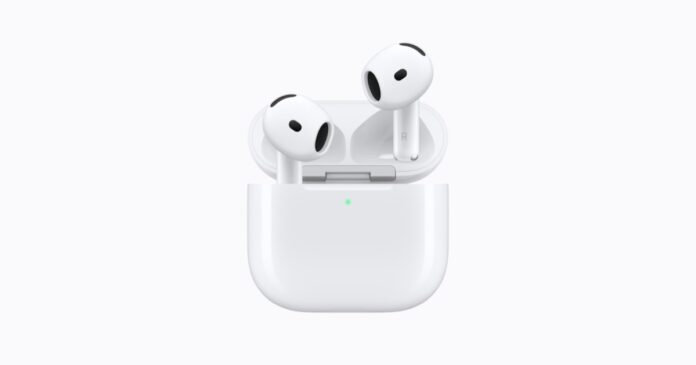

SHENZHEN – The hardest wall in consumer technology has always been the one Apple built around its accessories. Buy AirPods, and they work seamlessly with iPhones. Use them on Android, and you get audio – stripped of everything else. No noise-cancellation switching. No battery readout. No automatic pairing window. Just sound, and the quiet reminder that you bought the wrong phone.
Honor just knocked a door in that wall.
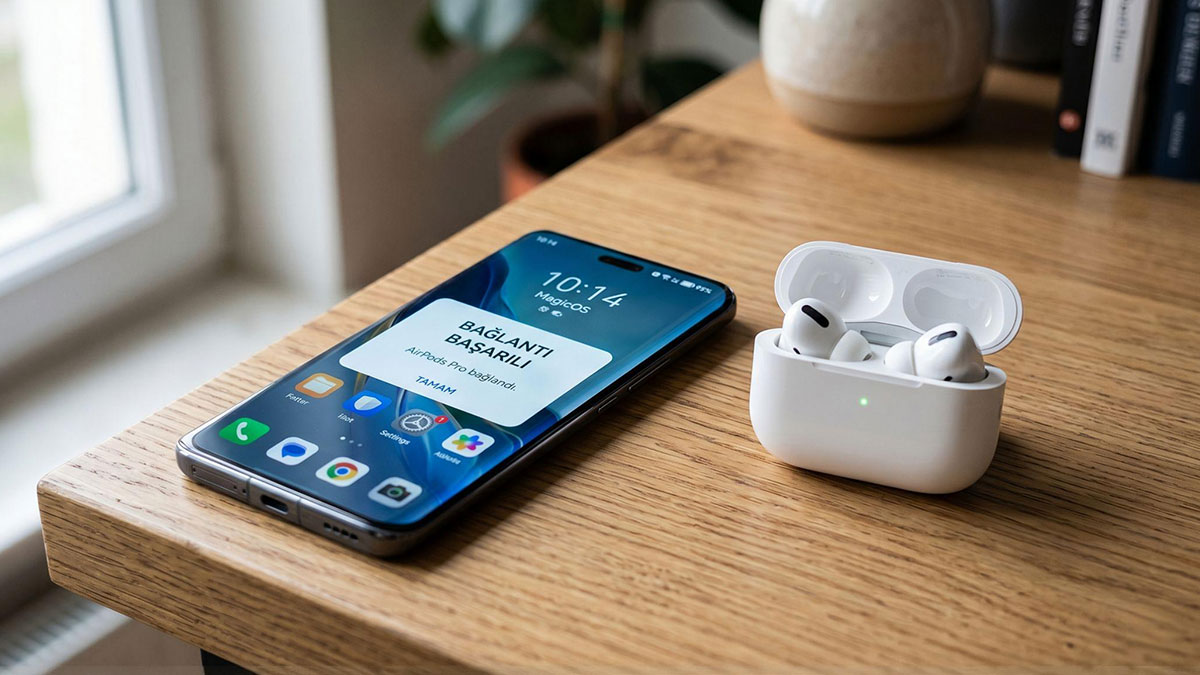
The company’s June 2026 MagicOS 10 update, which began rolling out to compatible devices this week, includes native Apple AirPods integration that most Android users have never seen from any manufacturer. Open an AirPods case near a MagicOS 10 device and a pairing window appears on screen – the same behavior iPhone users take for granted. From there, Honor users can monitor battery levels, cycle through active noise-cancellation modes, and toggle Conversation Awareness without leaving the phone’s own interface. No third-party app. No workaround. No asterisk.
That is the headline feature. But it sits alongside two others – an AI-powered expense tracker and a battery protection system designed for mobile gamers – that together make this the most consequential software update Honor has shipped since MagicOS 10 launched on Android 16 foundations in October 2025.
The AI Accounting tool, built into the YOYO virtual assistant, automatically categorizes spending without ever connecting to a bank account or reading card details. The system detects completed transactions – through receipts, notifications, and on-screen confirmations – and sorts them by category in real time. For users who have resisted budgeting apps precisely because those apps demand financial credentials, the framing is deliberate: the phone tracks what you spent, not who you bank with.
Whether the underlying data collection is as contained as Honor describes it is a question the company has not fully answered. What is clear is that the feature is designed to be useful enough to change daily behavior without triggering the privacy instinct that has killed comparable tools before.

The gaming community has been waiting longer for the third feature. Bypass Charging – which Honor calls Charging Separation – routes power from the charger directly to the phone’s processor, bypassing the battery entirely when a demanding game is running. The logic is straightforward: the battery’s role in heating the device during intensive tasks is reduced, which keeps the chassis cooler, which in turn preserves the long-term health of the cell. Samsung and Xiaomi have offered comparable systems for years. Their presence in MagicOS 10 marks Honor’s clearest statement yet that it is competing for the same hardware-serious user those brands attract.
The June update also includes a redesigned status bar that makes battery state – including low-power mode – more immediately legible at a glance. A Clean Screenshot mode removes the status bar and navigation buttons from screenshots automatically, producing images ready to share without editing. On the camera side, an AI Composition Assistant analyzes subjects and lighting in the viewfinder in real time, suggesting adjustments before the shutter is pressed rather than correcting the image afterward.
YOYO also gains an allergy alert function that monitors six allergen types – including pollen and dust mites – based on the user’s location, sending notifications when exposure risk rises. The assistant can already handle incoming calls automatically when the user is driving or in a meeting, generating text summaries of calls it intercepts. These features have been part of the broader MagicOS 10 rollout since late 2025, but the June update marks their arrival on a wider range of devices.
For context: MagicOS 10’s global rollout began in October 2025 with the Magic7 Pro and Magic7 Pro RSR. Honor’s hardware push has been running in parallel, with the Magic V6 launching globally earlier this month as one of the most battery-efficient foldables on the market. The software and hardware strategies are converging: both lean into endurance, AI integration, and an increasingly explicit pitch to users who want Apple-quality ecosystem features without committing to Apple’s closed hardware chain.
What makes the AirPods integration specifically notable is what it reveals about Honor’s calculation. Apple has not licensed AirPods functionality to Android manufacturers – the seamless pairing behavior that MagicOS 10 replicates is technically available through Bluetooth protocols Apple has not formally blocked. Engadget’s review of the Magic V6 noted that the AirPods behave as genuine AirPods rather than generic Bluetooth earbuds, while flagging uncertainty about whether Apple might eventually object. That is a different kind of competitive move than launching a better camera or a larger battery. It is a feature that works because Apple cannot easily prevent it, and it targets exactly the kind of mixed-ecosystem household – Android phone, Apple earbuds – that has grown significantly as AirPods have become the dominant wireless earphone at nearly every price point above $100.
The NFC file transfer capability that arrives alongside it allows Honor devices to exchange data with iPhones and Mac computers via near-field communication with a single tap – a direct answer to Apple’s AirDrop. OnePlus moved in the same direction earlier this month with Quick Share support, though that implementation required a specific device pairing. Honor’s own MagicOS page confirms the NFC cross-device feature currently supports iPhone 13 and later models running iOS 17.0 or above, with no equivalent constraint on the Android side.
The June 2026 update is rolling out to MagicOS 10-eligible devices, a list that spans the broader competitive landscape Honor now inhabits alongside parent company Huawei’s own HarmonyOS push. Timing for specific markets has not been confirmed. What Honor has not said – and what independent reviewers have not yet tested – is how reliably the AirPods integration works across every AirPods model and firmware version. The company’s June changelog describes the feature in confident terms. Real-world performance at scale will be the harder test.
For now, it is the most significant thing any Android manufacturer has done with Apple’s most popular accessory. Whether that matters to the person who bought AirPods because they already own an iPhone is a separate question. It matters considerably to the one who bought them anyway.