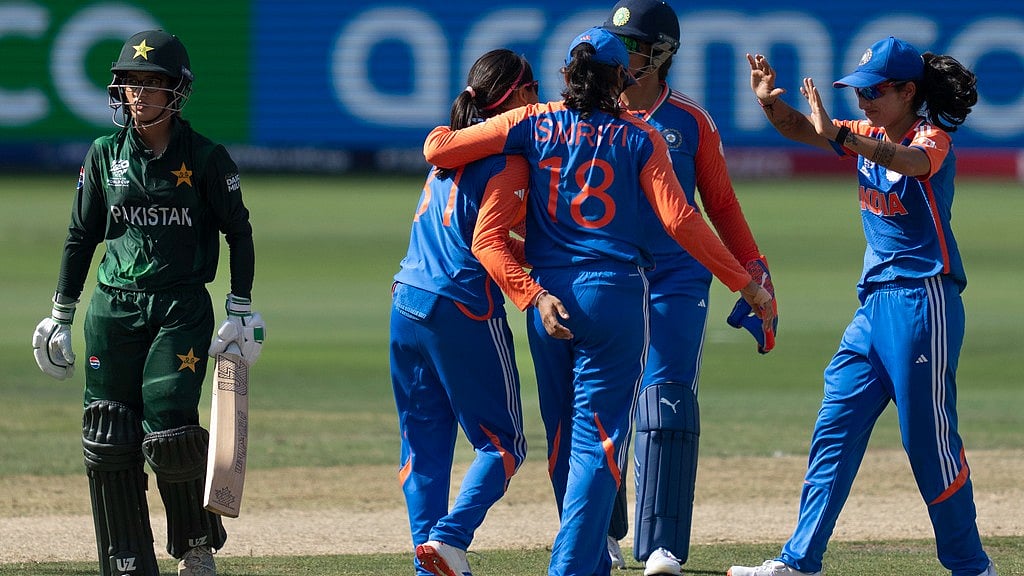

BIRMINGHAM – Before Jemimah Rodrigues left for Birmingham, the watchman at her building stopped her. The message was the same as it always is when India play Pakistan: lose to anyone, just not them. Not this match. Not this rivalry. Never this one.
That exchange – between a middle-order batter ranked among the best in the world and the man who guards her apartment building in Mumbai – says something about the weight India’s women carry into Edgbaston on Sunday for their ICC Women’s T20 World Cup 2026 opener against Pakistan. It says something, too, about how far this team has traveled from the days when India-Pakistan in women’s cricket was a fixture that required explanation. The watchman does not need an explanation.
“Even my building watchman says, ‘Lose to anyone, but not against Pakistan,'” Rodrigues said on JioStar on Saturday, recalling what has become a ritual of expectation before every meeting with their cross-border rivals. “That is the kind of pressure because people love cricket. They love this rivalry.”
What Rodrigues did not say – and what former India assistant coach Abhishek Nayar said instead, on the same broadcast network and on the same day – is that Pakistan may not be the opponent India needs to worry about most at this tournament. The weather might be.
Nayar’s argument is specific and worth taking seriously. England in June is not Dubai in October, where India lifted the ODI World Cup last year before a roaring home crowd in Navi Mumbai. Birmingham is a city where the afternoon can turn from clear to grey inside half an hour, where a match can go from 20 overs to five, and where net run rate – the most unloved, least romantic statistic in cricket – can determine who advances to the semifinal over a team that won just as many games.
“India have to keep the weather in mind,” Nayar told JioStar. “Playing in England, rain is always a factor. Matches can be shortened or washed out. So, they can’t just aim to win. They have to win by big margins. Net run rate could decide who goes through. That means India need to bat first, post big totals, bowl teams out cheaply, and finish games early.”
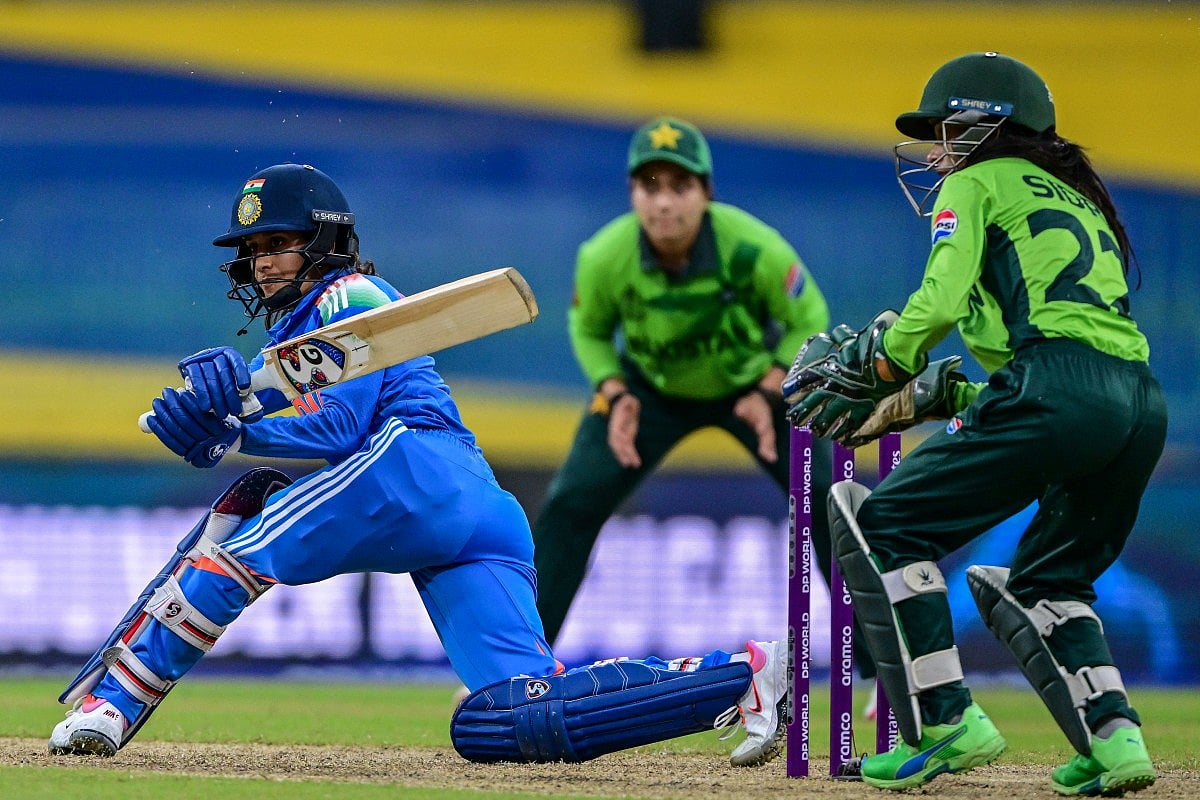
The logic holds. India’s group fixtures – Pakistan on Sunday, South Africa, the Netherlands, Bangladesh, and Australia across the following fortnight – set up in a way where the first three games should yield comfortable victories, and the final two present genuine challenges. Nayar’s point is that you do not want to enter the Australia game still needing a result to qualify. You want to arrive there already through, free to experiment, free to rest, free to make mistakes. That kind of freedom has to be earned in June’s early overs against lower-ranked opposition – by margins that make the arithmetic work if a cloud rolls in over Headingley or the Hampshire Bowl in week two.
India reached this tournament as the team to beat – a status that carries its own peculiar burden. They are the reigning ODI world champions, fresh from a triumph that sent fans across the country into the streets. In women’s T20 cricket, though, the title has eluded them across nine editions. Harmanpreet Kaur leads the side for the fifth time at a Women’s T20 World Cup and knows better than anyone what that blank space on the trophy cabinet means.
The men’s team, for what it is worth, has noticed. Head coach Gautam Gambhir recorded a message for the women’s side before the tournament began. “I’m sure that you’re going to make 140 crore Indians proud,” he said. “Don’t be scared of making a mistake. Every time you’re in doubt, take the positive route. Good luck, bring the cup home.” Shubman Gill, India’s Test and ODI captain, added his own, noting that the women had won it before and would do so again. The newly appointed T20I skipper Shreyas Iyer called on them to “be fearless, be ruthless and play to win.” A year ago, the watchman’s instruction and the men’s video would have felt like parallel, disconnected conversations about the same team. Today they feel like the same conversation.
Rodrigues came into the T20 World Cup on the back of the most important innings of her career – an unbeaten 127 off 115 balls against Australia in the ODI semifinal last October at Navi Mumbai, a chase that had not been done before in a World Cup knockout. That innings changed something in the team’s understanding of what she can do under pressure. She carries that weight to Birmingham along with the watchman’s instruction, and alongside Smriti Mandhana, who has not crossed 40 in her last nine T20 appearances across all competitions but remains the most technically gifted opening batter India possess.
On the Pakistan side, Fatima Sana presents the most credible threat. The Pakistan captain is their most dangerous all-round cricketer – a fast bowler capable of reversing the game in the powerplay, who set a new world record for the fastest half-century in Women’s T20Is earlier this year, reaching 50 off just 15 balls against Zimbabwe. Off-spinner Sadia Iqbal can tie the middle overs. India’s coach Amol Muzumdar was direct about the threat before the match: “Every bowler, on a given day, can be a threat. It’s T20 cricket. It’s the shortest format and a format where things can change very quickly. All you need to do is stay calm, keep your cool, and go out there and deliver what you’re supposed to.”
What India is “supposed to” deliver, in Nayar’s formulation, is not just a win. It is a win that makes the scoreboard unflattering for Pakistan and the NRR ledger flattering for India. That is harder than it sounds against a side with a fast-bowling captain who can take wickets in the powerplay and a top order capable of scoring quickly enough to keep any target honest.
India’s head-to-head record softens the anxiety somewhat. This is a tournament defined by legacies and by the question of which generation of players gets to write itself into history. India have beaten Pakistan in six of their eight T20 World Cup meetings. The two losses – in 2012 and 2016 – have not been forgotten by either side. Harmanpreet’s pre-match briefing style has not changed much since the day she sat Rodrigues and her teammates down before their first India-Pakistan game and said, simply: let’s not deny it. There is pressure. We know the history. We know what the fans expect.
That pressure is part of the preparation now, not something to be managed away. Rodrigues described sessions where the team actively manufactures discomfort – simulating chase scenarios, building the reflexes of calm that tournaments like this one, played under an English June sky, can exhaust. “Everyone says you have to thrive under pressure, but how do you do that? You do it by repeatedly putting yourself under pressure in practice and making those situations as challenging as possible, so that when you go into a match, you feel prepared,” she said.
What the preparation sessions cannot simulate is an overcast Birmingham morning with a reduced-overs match and a run-rate equation that looks different in the fourteenth over than it did at the toss. That is where Nayar’s advice – bat first, post totals, bowl teams out, finish early – meets the match. Whether India will bat first is unknown; the toss has not been held. Whether they will post a total large enough to make the NRR math work in their favour if conditions shift is, as of Sunday afternoon in the Midlands, the question this tournament has not yet answered for them.
The watchman back in Mumbai is not thinking about net run rate. He issued one instruction. The women carrying his message to Edgbaston are thinking about quite a lot more.