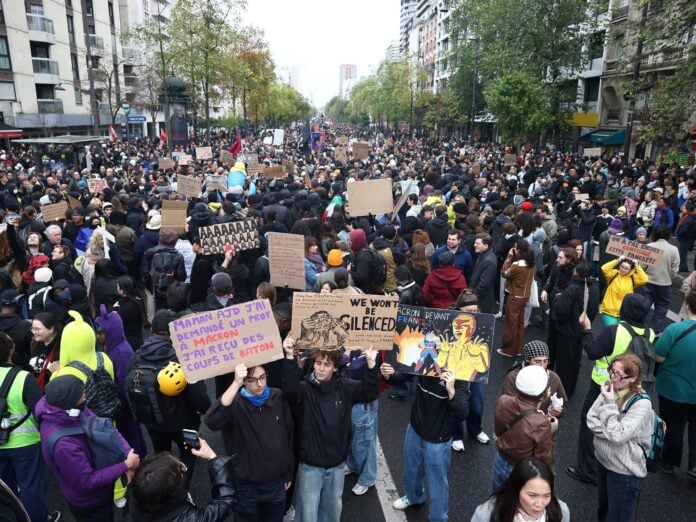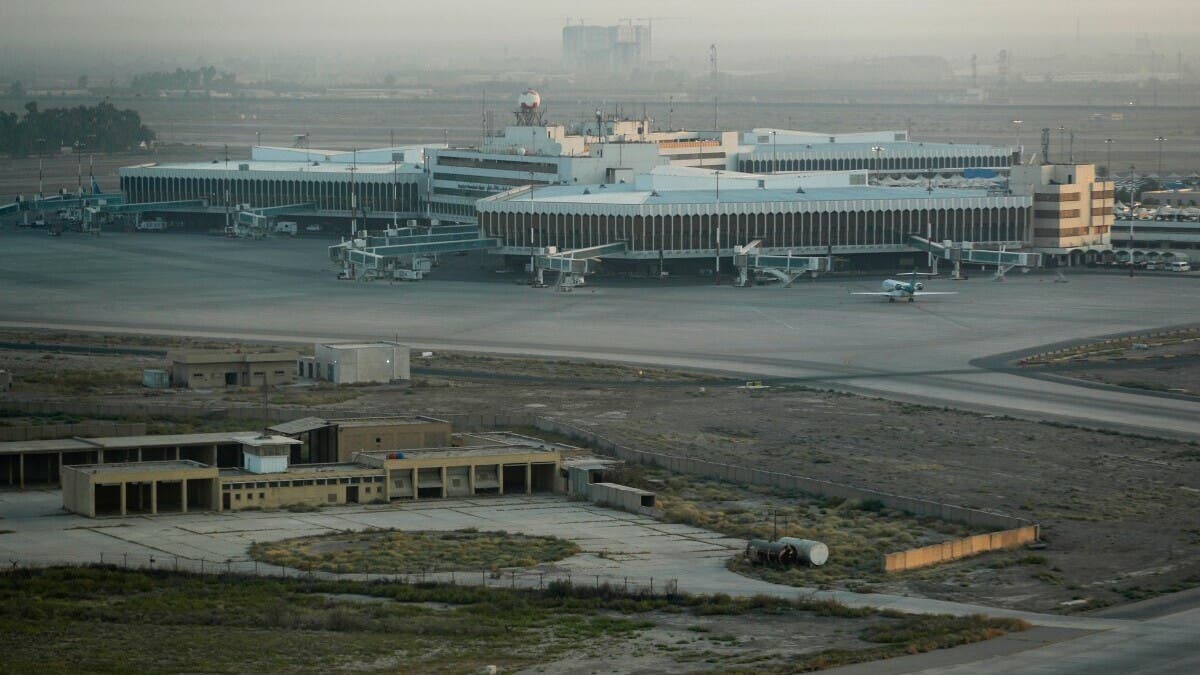

BAGHDAD – The families who blocked roads near Baghdad International Airport two weeks ago, demanding that the government reverse a land-grant deal they said would displace more than 120,000 of them, had no way of knowing the contract they were protesting would soon be dead on its own. On Sunday, Reuters reported that Iraq had cancelled the $764 million public-private partnership to modernize Baghdad International Airport, citing corruption concerns surrounding the project – ending what officials had called the country’s most consequential infrastructure deal in decades.
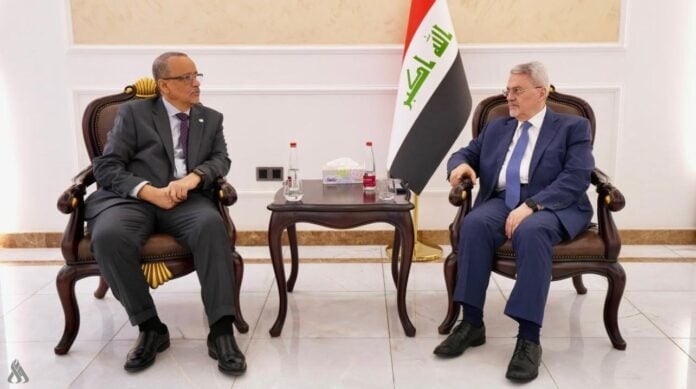
The decision pulls the plug on a 25-year concession awarded in late October 2025 to a consortium comprising Luxembourg-based Corporación América Airports, one of the world’s largest private airport operators, and Iraqi real estate group Amwaj International. The Iraqi Cabinet had approved the deal under Cabinet Order No. 251294 of 2025, with Prime Minister Mohammed Shia’ al-Sudani personally presiding over the contract signing in Baghdad alongside representatives of the International Finance Corporation – the World Bank arm that served as the government’s transaction adviser throughout the procurement process.
What made Sunday’s cancellation particularly striking was precisely what had made the original award look credible. Iraq’s vulnerability to cascading institutional failures has been visible for months. The IFC’s involvement was meant to shield the project from the kind of back-room dealing that has gutted Iraq’s reconstruction budgets for two decades. Instead, the corruption allegations that Reuters cited came from inside the country’s own legislative and civil society structures, and they cascaded faster than the government could contain them.
Baghdad International Airport was designed by Saddam Hussein’s government in the early 1980s. It has endured a decade-long war with Iran, the 1991 Gulf War, international sanctions, and a U.S.-led military campaign that turned its runways into a front line. When relative stability returned after 2010, the airport saw passenger volumes climb – from roughly 2.6 million a year in 2022 to over 3.4 million arrivals in 2023 alone, according to an IFC study commissioned by the Transport Ministry. The airport’s three terminals, built for a different era, were already overwhelmed. The concession was supposed to fix that, eventually expanding capacity to 15 million passengers annually.
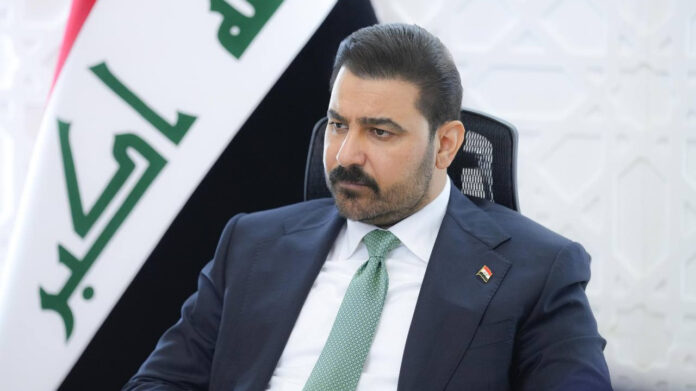
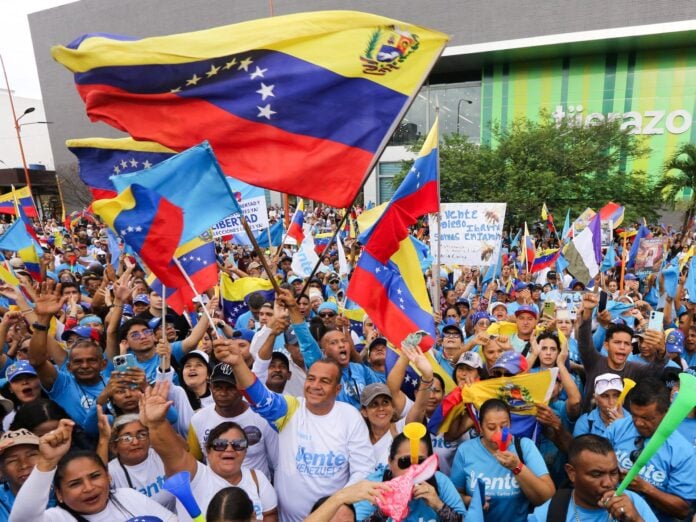
None of that infrastructure ambition survived the corruption cloud that materialized in May. Ayad al-Jubouri, a member of parliament representing the Azm Coalition, disclosed in a formal statement on May 25 that the National Investment Commission had quietly granted an investment license to an Egyptian developer for a massive residential project on 5,800 dunams of state-adjacent land surrounding the airport in Baghdad’s Radwaniyah district. Al-Jubouri alleged that the Egyptian investor operated through a Saudi shell company with no valid Iraqi business registration, and that an illicit bribe of $100 million had changed hands to secure the development rights. Residents gathered by the thousands on May 30 to demand a freeze on all construction planning and an independent judicial investigation, Iraqi News reported.
Whether the Radwaniyah land scandal and the airport PPP cancellation are formally connected has not been established by investigators. What is clear is that the political environment around the airport had become toxic. The project that Sudani’s government held up in late 2025 as a proof of concept for private-sector reform – the first PPP of its kind in Iraqi aviation history – had become, by June 2026, a symbol of exactly the institutional vulnerabilities it was meant to overcome.
Corporación América Airports – which trades on the New York Stock Exchange under the ticker CAAP and operates 52 airports across six countries, including Argentina, Brazil, Italy, and Armenia – had signed an award agreement with the Iraqi government on November 5, 2025. Under its terms, the parties had 90 days to negotiate and finalize the formal PPP agreement, with the possibility of mutual extension. The consortium’s winning bid had offered the Iraqi central treasury 43.05 percent of total annual airport revenues throughout the concession period, outcompeting the runner-up ASYAD consortium, which had offered 38.05 percent. Notably, the deal required no financial outlay from the Iraqi government itself.
The IFC’s advisory role was specifically structured to attract blue-chip international operators nervous about Iraq’s political risk. DLA Piper and Al Tamimi & Company served as legal advisers to the IFC and government on the transaction. The speed of the original tender – from the ministry’s request for qualifications in July 2024 to cabinet approval by late October 2025 – was widely cited as evidence that Iraq’s reform trajectory was credible, Zawya Projects reported. The airport project was expected to serve as a blueprint for similar PPP concessions at Basra, Mosul, Najaf, and Nasiriyah airports.
What those four airports will now look like is an open question. The cancellation announcement did not specify whether the government intends to reopen the tender, pursue a renegotiated deal with the existing consortium, or revert to direct state management. Corporación América Airports had not issued a public statement by the time of publication. The IFC, which co-signed the original contract framework alongside Sudani’s office, has not confirmed its position. Amwaj International, the Iraqi partner in the consortium, manages assets exceeding $6 billion and employs more than 10,000 people; a dissolution of the deal carries significant reputational and financial stakes for the Baghdad-headquartered group.
For Iraq, the pattern is not new, even if the scale is. In 2012, then-Prime Minister Nouri al-Maliki cancelled a $4.2 billion arms deal with Russia, citing graft concerns that emerged after his delegation returned from Moscow. The decision was made without identifying any specific official under investigation. Sunday’s cancellation carries the same structural ambiguity: the corruption allegations are serious enough to kill a deal but not, so far, specific enough to produce named accountability. That gap – between a cancelled contract and a completed prosecution – is precisely where Iraq’s infrastructure reform narrative has repeatedly stalled.
Iraq’s airport infrastructure meanwhile operates in a compounding crisis. Western governments maintain Do Not Travel advisories. Multiple airlines, including Royal Jordanian and Aegean, have suspended or extended suspension of Baghdad and Erbil services after a period of renewed regional instability in 2026. The same airport complex that is now without a modernization deal has been targeted by rockets and drones on multiple occasions since early March. At peak travel seasons, the three existing terminals are visibly overwhelmed. The gap between what Iraq needs and what its governance environment can deliver has rarely been wider – and Sunday’s cancellation measures it precisely.
Whether a new agreement can be structured, and whether the same international investors would return to a tender process that has now ended once over corruption fears, is a question that Sudani’s government has not yet addressed publicly. The more pressing question, for the 120,000 Radwaniyah residents and the millions of passengers who transit through a facility unchanged since the era of Saddam, is whether Iraq’s capacity for institutional reform has stalled again – or merely paused.