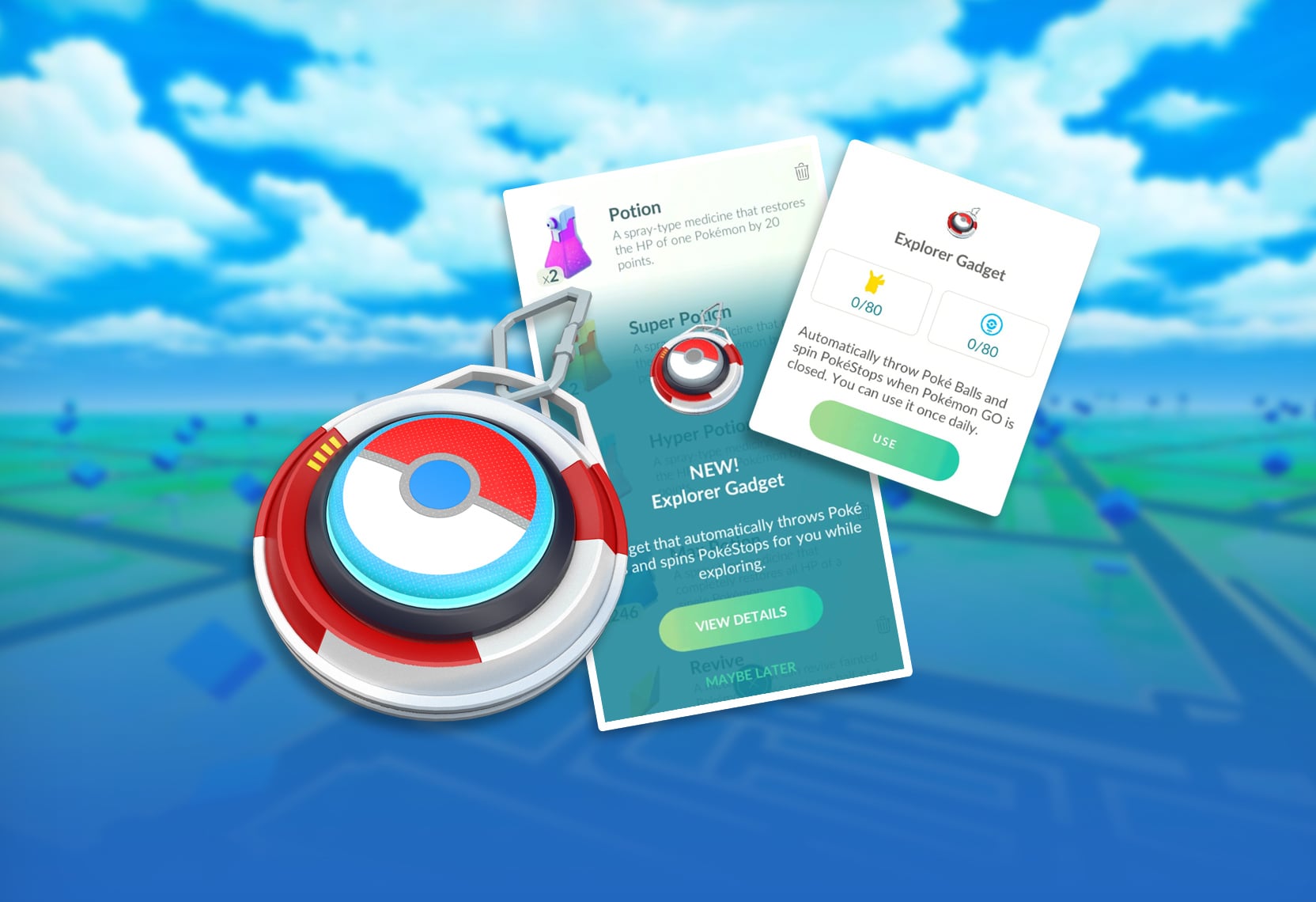

SAN FRANCISCO – For anyone who has spent $99.99 on a Pokémon GO Plus+ — the Bluetooth puck that clips to a bag strap and automatically throws Poké Balls while its owner does something else entirely — this week brought a complicated kind of news. Scopely appears to be quietly testing a built-in version of the same thing, no hardware required. The feature is called the Explorer Gadget. It works. And the company behind it has said absolutely nothing about it.
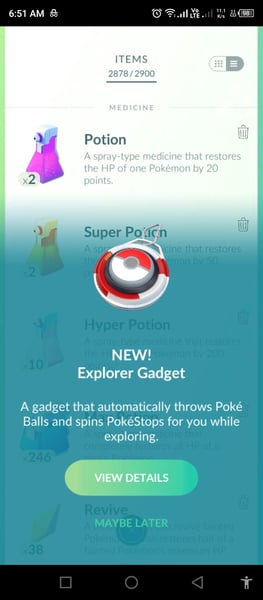
The Explorer Gadget surfaced in Pokémon GO’s code back in March, spotted by PokeMiners, the datamining collective that has been excavating the game’s files since the Niantic era. Its description in the game data read plainly: a gadget that automatically throws Poké Balls and spins PokéStops while you explore, usable once per day. That description, stripped of any pricing context or official framing, set off a weeks-long community debate about whether Scopely was building a quality-of-life gift for the game’s 100 million-plus registered players or quietly constructing another paywall.
As of this week, that question remains open. The feature has moved from datamine to live test, appearing in-game for a subset of players — but with no announcement, no explanation, and a conspicuous inconsistency baked into its early rollout. Some accounts testing the Explorer Gadget can make 35 catches and PokéStop spins per activation. Others see a cap of 80. Whether that gap is tied to Scopely’s Monthly Deluxe Pass, an A/B pricing test, or simply a variable in the beta’s design has not been confirmed by anyone in a position to confirm it.
The test appears to have activated for early testers around 6:00 AM GMT+8, leaving it unclear whether the rollout is region-specific, account-specific, or both. The Explorer Gadget, at present, uses only standard Poké Balls — the same constraint that applies to the physical GO Plus and GO Plus+. Connect a Bluetooth auto-catcher while the virtual gadget is active, according to game files reviewed by community researchers, and the software version deactivates automatically, preventing conflicting inputs. It pauses if your standard Poké Ball supply runs out. It stops when the app is closed entirely.
The GO Plus+ launched in 2022 and retails for close to $100 in most markets. Its appeal is real but specific: it lets players who are commuting, working, or otherwise unable to stare at a screen maintain a stream of catches and item collection. Not everyone can or wants to spend a hundred dollars on a piece of Bluetooth plastic for a phone game. The Explorer Gadget, as a free or even nominally-priced in-app item, would meaningfully broaden access to that style of play. That is the optimistic reading.
The less optimistic reading — and it has been loud on Reddit and Discord since March — is that Scopely will price the feature in a way that makes the GO Plus+ look reasonable by comparison. Scopely closed its $3.5 billion acquisition of Niantic’s games business in May 2025, inheriting Pokémon GO along with Pikmin Bloom and Monster Hunter Now. The deal made Pokémon GO a property of Scopely, which is in turn a subsidiary of Savvy Games Group, the Saudi Arabian sovereign wealth fund’s gaming arm. None of that corporate lineage is inherently cause for alarm, but mobile gaming publishers with major live-service acquisitions tend to look for monetization opportunities, and a feature that reduces dependency on a $100 peripheral is exactly the kind of thing that can be structured as a monthly subscription, a consumable item tied to an energy system, or a premium pass exclusive.
Players who watched Gold Bottle Caps arrive in June 2025 as a limited-event, premium-pass exclusive — locking out free-to-play users from the outset — are not approaching the Explorer Gadget with unconditional goodwill. “I can’t imagine it will be a permanent item,” one player wrote in a widely-shared Reddit thread from March. “It feels like it’ll either be a GO Pass item for a month or a separate subscription thing entirely.”
Scopely has not commented on the Explorer Gadget’s existence, pricing structure, or rollout timeline. It has not acknowledged the datamine. The company did say, in statements following the acquisition, that Pokémon GO would not receive obtrusive advertising and that player location data would not be sold. Those were the questions players asked when the deal was announced. The Explorer Gadget represents a different kind of question — one about how the new owner intends to handle features that were previously only possible through hardware.
The timing carries its own weight. Pokémon GO is approaching its 10th anniversary this summer, having launched in July 2016. A headline quality-of-life addition during the anniversary stretch — Scopely has already committed to a major Pokémon GO Fest 2026 season, including an event in Chicago that drew thousands to Grant Park in early June — would read as a gift to the community at a moment when the publisher needs to build goodwill under new ownership. Whether this is that gift, or the announcement of it is still weeks away, is the part nobody can say.
Pokémon GO reported over 100 million unique players in 2024, generating more than $1 billion in revenue for Niantic before the Scopely deal closed, according to figures cited in Scopely’s acquisition announcement. Those numbers give Scopely substantial reason to treat the feature carefully. They also give the community substantial reason to watch what happens next very closely. What the Explorer Gadget becomes — free tool, pass perk, or subscription tier — will say more about Scopely’s stewardship of the franchise than any amount of official messaging. That answer, for now, is the one thing the company’s beta test has not provided.