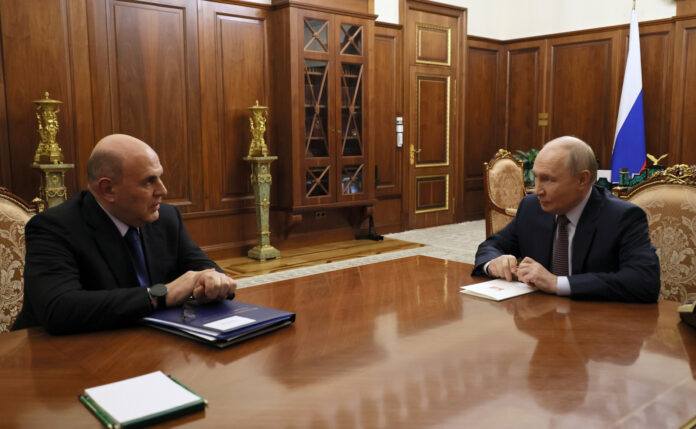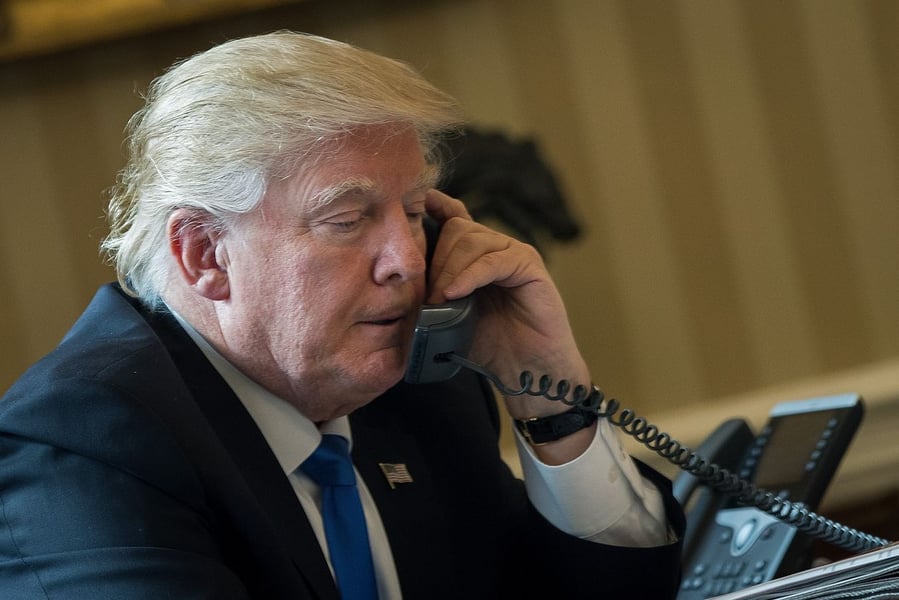

MOSCOW – Vladimir Putin was the first foreign leader to dial the White House on Sunday, reaching Donald Trump before any head of state in Europe or Asia managed to extend a birthday greeting. The Russian president was calling to mark Trump’s 80th birthday, according to Kremlin aide Yuri Ushakov. But what followed the pleasantries went straight to the fault lines of a war that 13 phone calls between the two men have so far failed to end.
The call lasted 55 minutes by the Kremlin’s count, described by Ushakov as “friendly and frank” and “not without a grain of humor.” Trump, writing afterward on Truth Social, put the duration at roughly an hour. He said he and Putin spent most of the time talking about Iran – where Israel and Tehran were still trading aerial attacks as the two presidents spoke – and “much less time” on Ukraine, a topic he said he would address “next week.”
That asymmetry says something about where Moscow thinks the leverage is. For weeks, the Kremlin has watched as the Middle East crisis absorbed American attention and diplomatic bandwidth, pausing a Ukraine mediation track that was already moving slowly. Now, with Trump heading into a G7 summit and under pressure from European partners to take a harder line on Russia, Putin’s birthday call served as a reminder that the line to Washington remains open – and that Moscow intends to keep it that way.
Ushakov said Trump had thanked Putin for congratulating him and confirmed that the Russian leader was the first to call. “Donald Trump was touched by what was said,” the Kremlin aide told journalists, adding that Trump’s wife Melania also conveyed greetings to Putin. Putin, in turn, praised Melania Trump’s role in what he described as the reunification of Russian and Ukrainian children with their families – a reference to an issue that remains deeply contested between Moscow and Kyiv, and that international courts have ruled constitutes deportation.
On Ukraine, Trump told Putin that he was pressing both European governments and Kyiv toward a settlement, including at the upcoming G7 gathering in France. The Kremlin aide said Trump had “once again stressed the need to end the fighting.” Putin, for his part, cited recent Ukrainian strikes inside Russian territory as complicating the path to any agreement – a framing Moscow has used consistently to resist concessions while keeping negotiations formally alive. Russia expressed readiness to continue talks with Ukraine after June 22, the Kremlin said, though the terms under which those talks might resume remain unresolved.
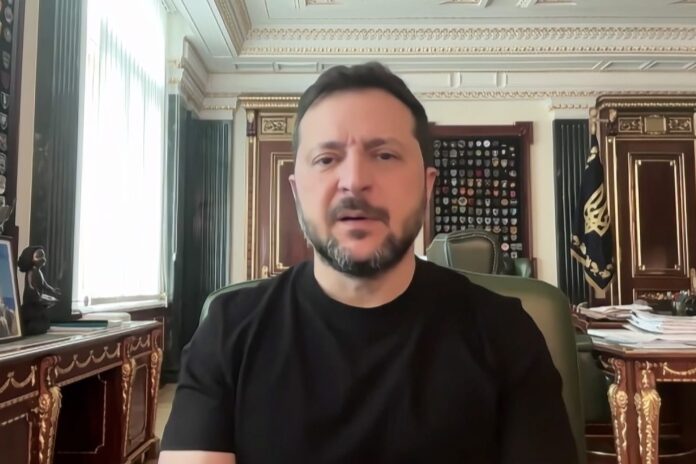
Then came the sharpest line of the day. Asked whether a direct meeting between Putin and Ukrainian President Volodymyr Zelensky was possible, Ushakov delivered Moscow’s answer without qualification: if Zelensky wants a meeting with the Russian leader, “let him come to Moscow.”

The demand is not new – Moscow has made versions of it before – but the timing and phrasing carry specific weight. It came on the same day that Russia confirmed it would proceed with planned prisoner swaps, with both sides exchanging large numbers of detainees on June 14. Ukraine’s released soldiers included severely wounded troops and many captured during the defense of Mariupol in 2022. The prisoner exchange and the diplomatic stonewalling arrived in the same news cycle, which is the Kremlin’s preferred register: a signal of limited goodwill, paired with maximum positional rigidity.
Ushakov also said that Putin acknowledged Trump’s “warrior qualities” – his capacity to withstand pressure and pursue goals despite obstacles. It is the kind of language that tends to play well in Trump’s orbit, and the Kremlin has become skilled at deploying it. Whether it translates into any movement on Ukraine is a different matter. Trump’s June deadline for a peace framework came and went without agreement, and a fourth round of largely inconclusive direct talks between Moscow and Kyiv in Turkey on June 2 left the core territorial and sovereignty questions untouched.
The call was also notable for what Ushakov said it did not resolve. The discussion of bilateral Russian-American relations – trade, energy, the historical WWII alliance that Trump reportedly raised with Putin – remains aspirational. Trump, according to Ushakov, spoke about the wartime alliance between Washington and Moscow and said “this simply cannot be forgotten.” Putin suggested that the shared memory could serve as a foundation. But there was no announcement of any concrete initiative, and an upcoming visit by American envoys Steve Witkoff and Jared Kushner to Moscow was confirmed as coming, without details on agenda or timing.
What the birthday call did confirm is the structural dynamic that has defined Trump-Putin contact since January: high personal warmth, regular communication – Sunday’s was the 13th call since Trump’s re-election – and very little movement on the ground. Russia has continued intensifying drone and missile strikes on Ukrainian cities in the weeks since the Turkey talks. Ukraine’s strikes inside Russian territory have drawn Kremlin protests. Both sides have maintained negotiating positions that Peskov warned Europe it cannot bridge so long as Western weapons keep arriving in Kyiv.
Trump, heading into the G7 and then a broader diplomatic calendar that runs through the summer, told Putin he was prepared to apply pressure on European allies and on Zelensky. Whether that pressure changes the calculus in Kyiv – or whether Moscow’s insistence that any Zelensky-Putin meeting happen on Russian soil is a genuine precondition or a negotiating position designed to be declined – is not something the birthday call answered. That question, like the war itself, has been deferred to next week.
What Russia has not said publicly is whether the Witkoff-Kushner visit will include any new American proposal that goes beyond what has been on the table since spring. That gap – between the warmth of the bilateral conversation and the absence of any disclosed framework – is where the Ukraine war continues to live. Meanwhile, Trump’s own June deadline passed without resolution, and the G7 summit that once looked like a potential inflection point for the conflict now arrives with the fundamental parameters unchanged. The Kremlin knew that when Putin picked up the phone on Sunday morning. The birthday call was not the beginning of anything. It was confirmation that the current arrangement – talk, not move – suits Moscow just fine.