
Twenty-five years after Dil Chahta Hai redrew the map of Hindi cinema, Saif Ali Khan has offered a rare look at what it was like inside the production that changed Bollywood’s visual language, its approach to male friendship, and the career trajectories of everyone involved.
“Farhan was born to direct,” Khan said in a recent interview ahead of the film’s silver jubilee in August. The statement carries weight because Dil Chahta Hai was Farhan Akhtar’s debut as a filmmaker. He was 27 years old when he wrote and directed three of Bollywood’s biggest male stars through a story about growing up that had no villain, no melodrama, and no song-and-dance sequences set in Swiss meadows.
Khan described the 105-day shoot as something closer to a paid holiday than a film production. “We were laughing most of the time because Farhan wore it all very lightly,” he said. “There was no tension, really. We were just told to know our lines.” The remark paints a picture of a set where the director’s confidence was so complete that it dissolved the usual hierarchies of a Hindi film unit.
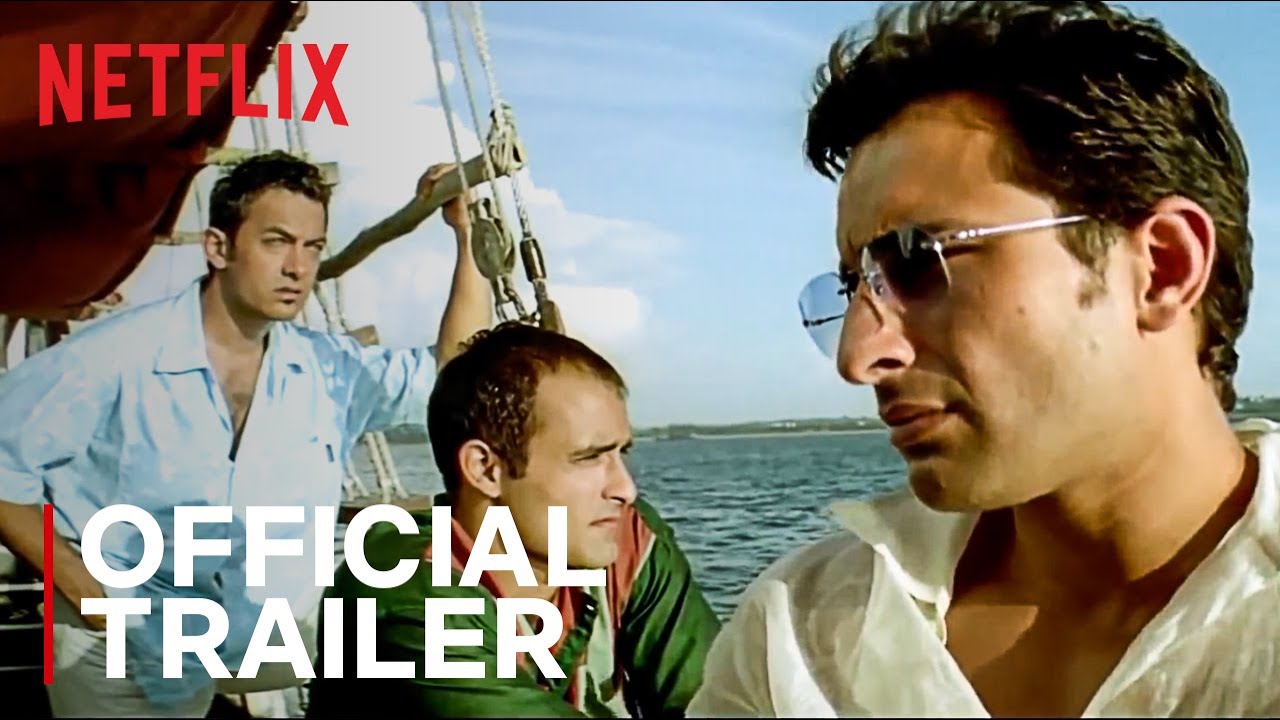
The Goa schedule, which became the film’s most enduring legacy, ran for a significant portion of those 105 days. The beachside sequences, the fort visit, and the Chapora lighthouse scene entered Bollywood’s permanent visual vocabulary and turned Goa from a backpacker’s destination into a pilgrimage site for a generation of young Indians who saw their own friendships reflected in the bond between Akash, Sameer, and Siddharth.
Released on August 10, 2001, Dil Chahta Hai starred Aamir Khan, Saif Ali Khan, and Akshaye Khanna as three Bombay friends whose lives diverge after college. Preity Zinta, Sonali Kulkarni, and Dimple Kapadia played the women who complicated their paths. Shankar-Ehsaan-Loy provided a soundtrack that abandoned the formulaic love ballad in favour of songs that sounded like they belonged in the characters’ world rather than on a stage.
The film won the National Film Award for Best Feature Film in Hindi and established Excel Entertainment, the production house Farhan Akhtar and Ritesh Sidhwani founded to make it, as one of the most influential banners in contemporary Bollywood. Excel went on to produce Dil Dhadakne Do, Gully Boy, and the Don franchise, but Dil Chahta Hai remains its defining title.
For Khan, the film was a turning point. Before Dil Chahta Hai, he was positioned as a second-generation actor coasting on charm. After it, he became the industry’s most reliable comic actor, a shift that led directly to Hum Tum, Salaam Namaste, and eventually his reinvention as a serious dramatic presence in Omkara. Aamir Khan, already an established star, used the film to signal a move toward more selective, director-driven work. Akshaye Khanna delivered the performance that critics still consider his finest.
The 25th anniversary arrives during a summer that has been unusually fixated on Bollywood nostalgia. Aamir Khan hosted a Lagaan cast reunion on June 12, Gadar celebrated its silver jubilee, and the stars of those rival films announced a collaboration. Dil Chahta Hai, which released just weeks after that legendary Lagaan-Gadar clash in the summer of 2001, completes the trinity of Hindi films that defined the early 2000s. All three are now streaming on major platforms, and all three are being revisited by a generation old enough to feel the weight of 25 years passing.
Related Posts