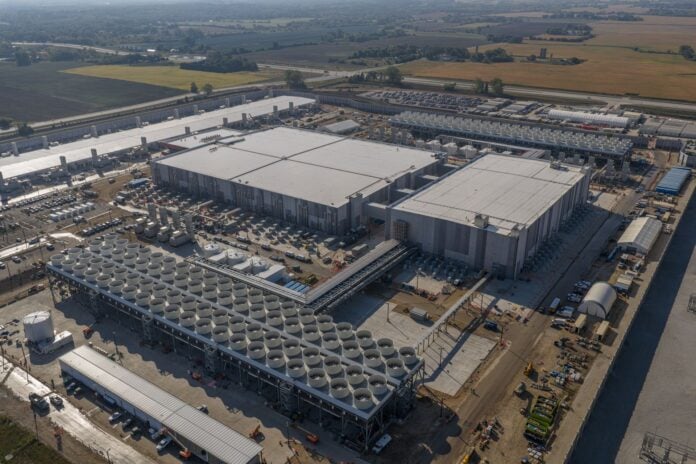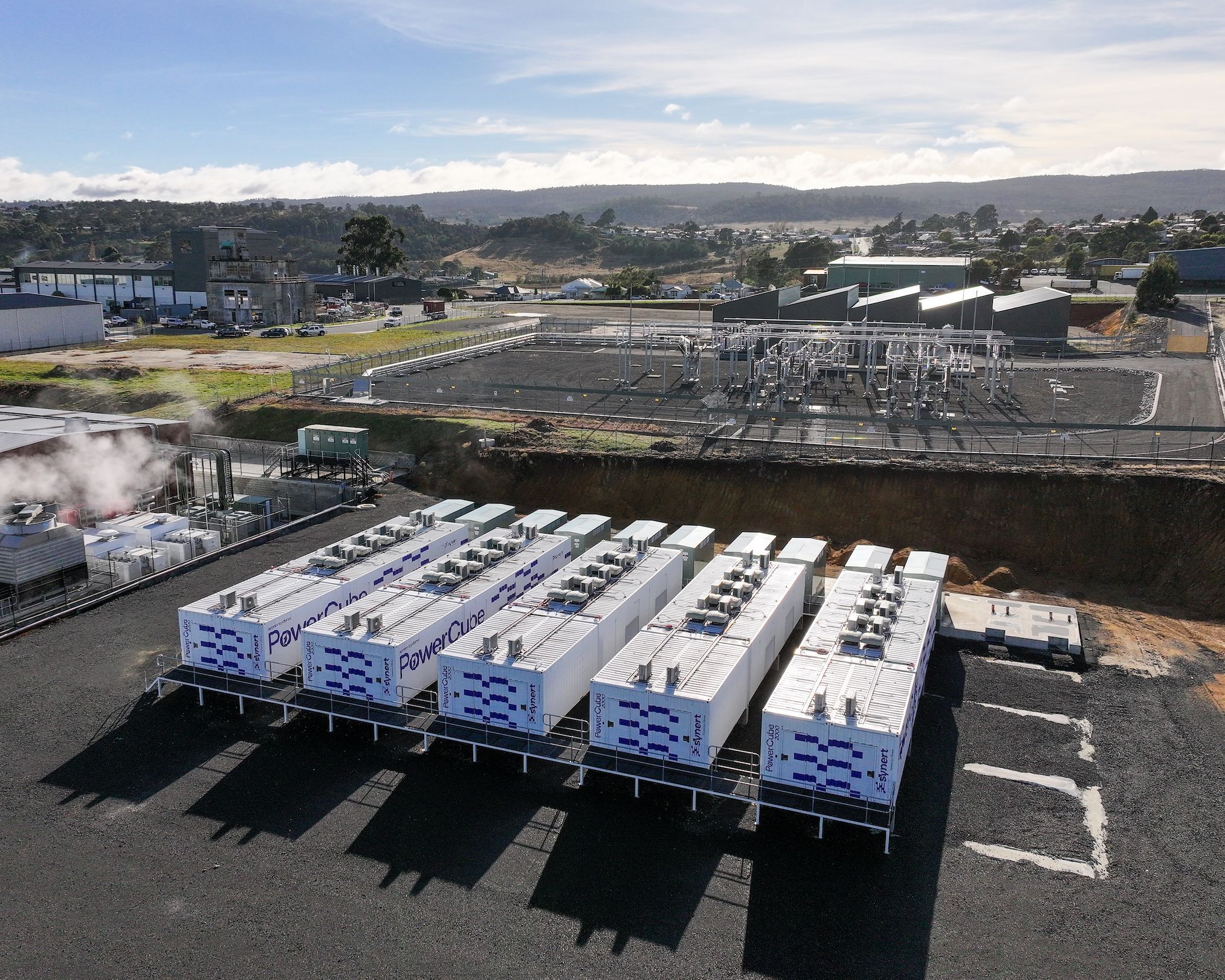

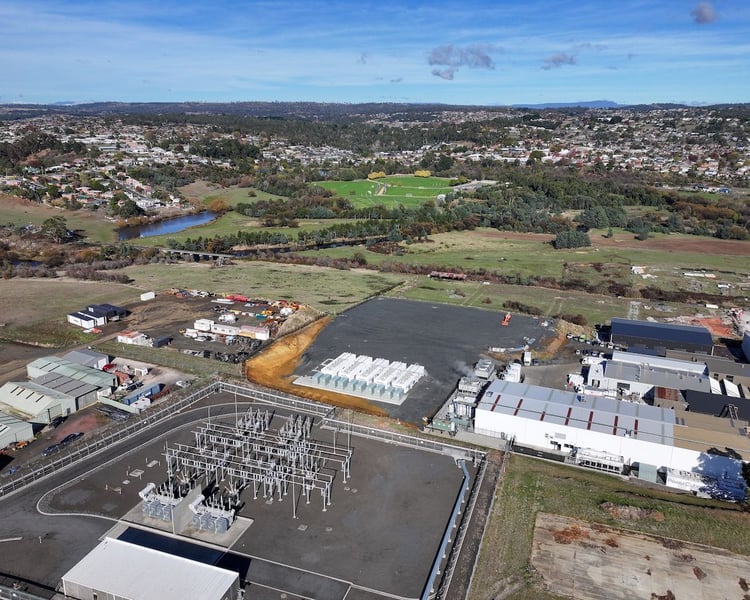
LAUNCESTON — On five hectares of farmland outside Launceston, a computing campus is going up that will, once it is finished, draw more electricity than any other customer in Tasmania. Not a smelter. Not a mine. A building full of chips that make artificial intelligence, owned by a company headquartered in Singapore.
The company is Firmus, and it calls the project Southgate the most cost-effective and sustainable AI facility in the world, powered start to finish by Tasmania’s hydro-electric grid. That is the pitch. The arithmetic underneath it is where the story gets harder. At full build the campus is designed to consume up to 400 megawatts, and the first stage alone carries an investment of about A$2.1 billion. The number of ongoing jobs it is expected to create is around a hundred.
That gap, between the power a machine like this swallows and the work it returns to the place it sits in, is the question Tasmanians have started asking out loud. It became sharper this month as the project moved from announcement to construction. Firmus has signed a multi-year deal with an unnamed global technology customer, locked in a US debt facility led by Blackstone, and begun ramping the first 44 megawatts toward a 90-megawatt opening stage. Somewhere along that curve, the company stops being a tenant on the grid and becomes the grid’s largest single load.
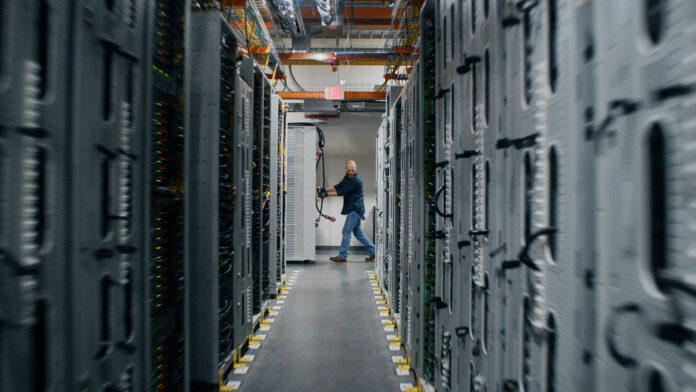
The hardware is the easy part to describe. Southgate is built around tens of thousands of Nvidia’s newest GB300 processors, the same silicon every hyperscaler on earth is fighting to secure, packed into a campus in St Leonards that Firmus says runs about 60 per cent more efficiently than a conventional data centre. Stage one delivers 44 megawatts, then doubles to 90. A second stage adds another 300. The state government has wrapped the site in a bespoke planning category it calls, without much modesty, a world-first AI Factory Zone.
Tasmania’s Premier, Jeremy Rockliff, has framed the deal as the cleanest version of the AI boom on offer. The state, he said when the government approved the AI Factory Zone, is turning its clean energy into opportunity, for jobs, for innovation, and for global leadership in artificial intelligence. Firmus co-chief executive Oliver Curtis went further, betting that Tasmanian hydro would make Southgate the most cost-effective and sustainable AI facility anywhere. Those are claims about the future, made by the people building it, and they rest on an assumption worth poking: that the clean power is simply there for the taking.
It is not, exactly. Tasmania generates most of its electricity from hydro and already sells its surplus to the mainland through the Basslink interconnector. Adding a customer that wants 400 megawatts does not draw on spare capacity so much as redefine what spare capacity means. The experience elsewhere is not reassuring. In Pennsylvania, where data centres have multiplied faster than the grid can absorb them, residential power bills have risen more than 50 per cent since 2020, with analysts pointing squarely at the computing load. Tasmania’s defenders argue its hydro base makes it different. Its critics note that every grid that ended up paying more for AI started out believing the same thing.
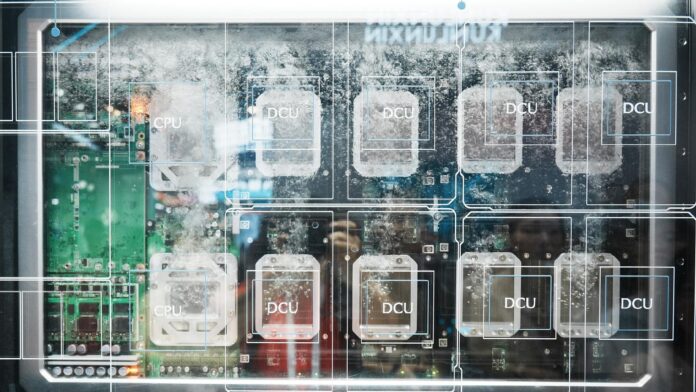
None of this means the project is a bad bet, and the engineering ambition is real. Operators chasing the same green-AI goal are trying stranger things, including a Chinese consortium that has sunk a data centre off Shanghai to cool it with seawater and run it on offshore wind. The pull behind all of it is the sheer scale of demand. Nvidia’s roughly US$100 billion pact with OpenAI is measured not in chips but in gigawatts of new infrastructure, and that hunger is what makes a hydro-rich island at the bottom of the world suddenly valuable.
The harder questions are local and unglamorous. A hundred permanent jobs is a thin return for the single largest claim on a state’s power system, even allowing for construction work and the supply-chain spending Firmus has promised. The company describes its output as a new kind of green AI token, clean because it is made with renewables, but a token’s carbon footprint depends on what the grid would otherwise have done with that electricity, and on this Firmus and the government have published more vision than detail. The customer paying for most of the capacity has not been named.
The politics are catching up to the megawatts. Independent senator David Pocock has argued Australia should tax AI infrastructure more seriously than it taxes gas exports, and a broader debate about technological sovereignty has begun to ask whether hosting other countries’ AI compute on domestic renewables is a national asset or a national subsidy. Those arguments will outlast the ribbon-cutting.
For now the cranes are up and the chips are on order. What no one has shown, in public, is the line that matters most: whether Tasmania can hand 400 megawatts to a data centre without building new generation, leaning harder on the mainland link, or passing some part of the cost to the households already sharing the grid. The AI Factory Zone has a name, a premier, and a customer. It does not yet have that answer.