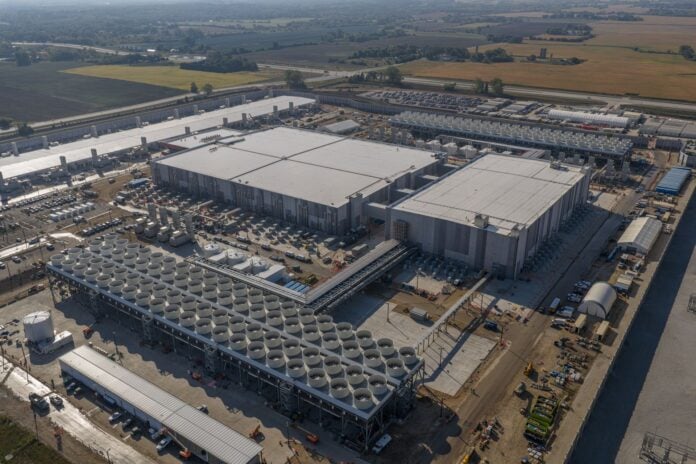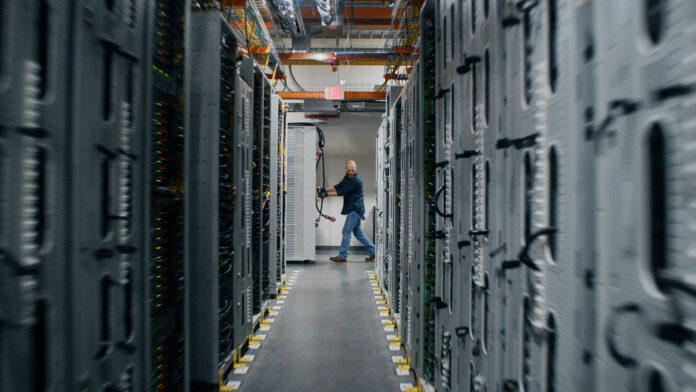

HARRISBURG, Pa. — Residential electricity bills in Pennsylvania climbed almost fourteen percent in the past twelve months, and more than fifty percent since 2020. The reason, according to a Jon Hurdle report for Inside Climate News this week, is the explosion of data-center construction across the PJM Interconnection region. The technical operator that runs the largest electricity grid in the United States is being asked to wire so many new artificial-intelligence facilities into its system that demand inside the PPL Electric Utilities territory alone is projected to grow, within a decade, by the equivalent of two-and-a-half times the entire annual electricity consumption of New York City.
The political fight in Harrisburg sits on top of an arithmetic fight. “Some consumers are now having to choose between paying for their electricity and their medication,” State Representative Elizabeth Fiedler, the Democratic chair of the House Energy Committee from South Philadelphia, said in an event with constituents this week. “That’s not a choice they should have to make.”

The Synapse Energy Economics report Fiedler’s committee is studying projects that consumers could save an average of more than $840 a year by 2030, including $197 in 2027 alone and $2.4 billion across the state by the end of the decade, if the Pennsylvania legislature adopts three changes that have been on the table since 2024: require large-load users like data centers to supply their own dedicated generation, reduce the guaranteed return on equity that utilities are allowed to collect for transmission and distribution, and accelerate the interconnection queue for new clean-energy projects sitting in PJM’s backlog.
Patrick Cicero, an attorney at the Pennsylvania Utility Law Project who represents low-income customers, framed the underlying problem in plain terms. “A significant share of a utility bill isn’t paying for power or pipes,” he said. “It’s paying for a utility’s shareholder profit.” The 9.6 to 10.2 percent return on equity that PJM utilities are allowed under state public utility commission rules is fixed regardless of whether the underlying generation that supplies the bill is cheap solar or expensive natural-gas peaker.
The Data Center Coalition pushed back. Dan Diorio, the coalition’s vice president of state policy, told the Inside Climate News report that “data centers do not raise energy prices, and that data centers pay for all the power they use.” The industry’s view is that PJM’s interconnection queue, not data-center demand, is the binding constraint on rates. Jeff Shields, a PJM Interconnection spokesman, struck a similar note from the operator’s side: “We need to build generation at a faster pace to keep up with rising demand driven by data centers.”
The friction sits at the place where these two readings meet. Building new generation takes years; PJM’s interconnection queue currently has more than two terawatts of clean-energy projects waiting in line, against a regional total deployed capacity of about 180 gigawatts. Data centers, by contrast, can come online inside eighteen months. The mismatch is why, in PPL’s territory and across PJM, coal plants slated for retirement are being kept in service and natural-gas peakers are being run more often — both at costs that, under PJM’s auction rules, are spread across every ratepayer’s bill.

The climate accounting follows. Every coal plant kept on line past its scheduled retirement to serve a hyperscale AI campus emits roughly one and a half million tonnes of carbon dioxide a year, the same figure the International Energy Agency uses for a new Chinese plant. The argument over who pays for those tonnes — utility shareholders, AI companies or low-income Pennsylvanians on fixed incomes — is the argument that CREA published this week from China’s coal build-out, scaled down to a Pennsylvania ratepayer line item.
The Pennsylvania conversation is the leading edge of a national one. Virginia, the largest data-center cluster in the world, is moving through similar legislation. New Jersey, Ohio, Maryland and West Virginia, all PJM states, are watching Pennsylvania’s vote. So is Texas, on a separate ERCOT grid, where the Musk-owned xAI Colossus campus this week drew a separate Inside Climate News report on permitless gas-turbine expansion. The patterns are the same across grids: very large industrial loads negotiated in private with state economic-development offices, modest disclosure of the resulting cost-shift to residential ratepayers, and tariff increases that arrive after the data centers are already online.
Jackson Morris, the NRDC senior strategist quoted in the Inside Climate News piece, called the arithmetic “unique, unprecedented and uncertain.” The same week that Hoover Dam is moving toward a hydropower cliff that will raise rates on its Arizona, California and Nevada customers by an unspecified multiple, PJM is moving toward an interconnection cliff that will raise rates on PPL customers by a more specifiable one. NOAA’s declaration of an incoming very strong El Niño means cooling-load demand on Pennsylvania’s grid is about to climb on top of the AI-load demand, in the same summer.
What Fiedler’s committee is asking the legislature for is the kind of policy the United Kingdom adopted in 2024 and the European Union codified in its data-centre directive earlier this year: a regulated requirement that hyperscale facilities supply their own dedicated, low-carbon generation as a condition of grid interconnection. The U.S. federal energy regulator has not moved to standardise that approach. In its absence, the state-by-state version is the one Pennsylvania is now running. Cicero’s question — whether a utility bill is paying for power or for shareholder return — is the question that, for Fiedler’s constituents on fixed incomes, has stopped being academic.