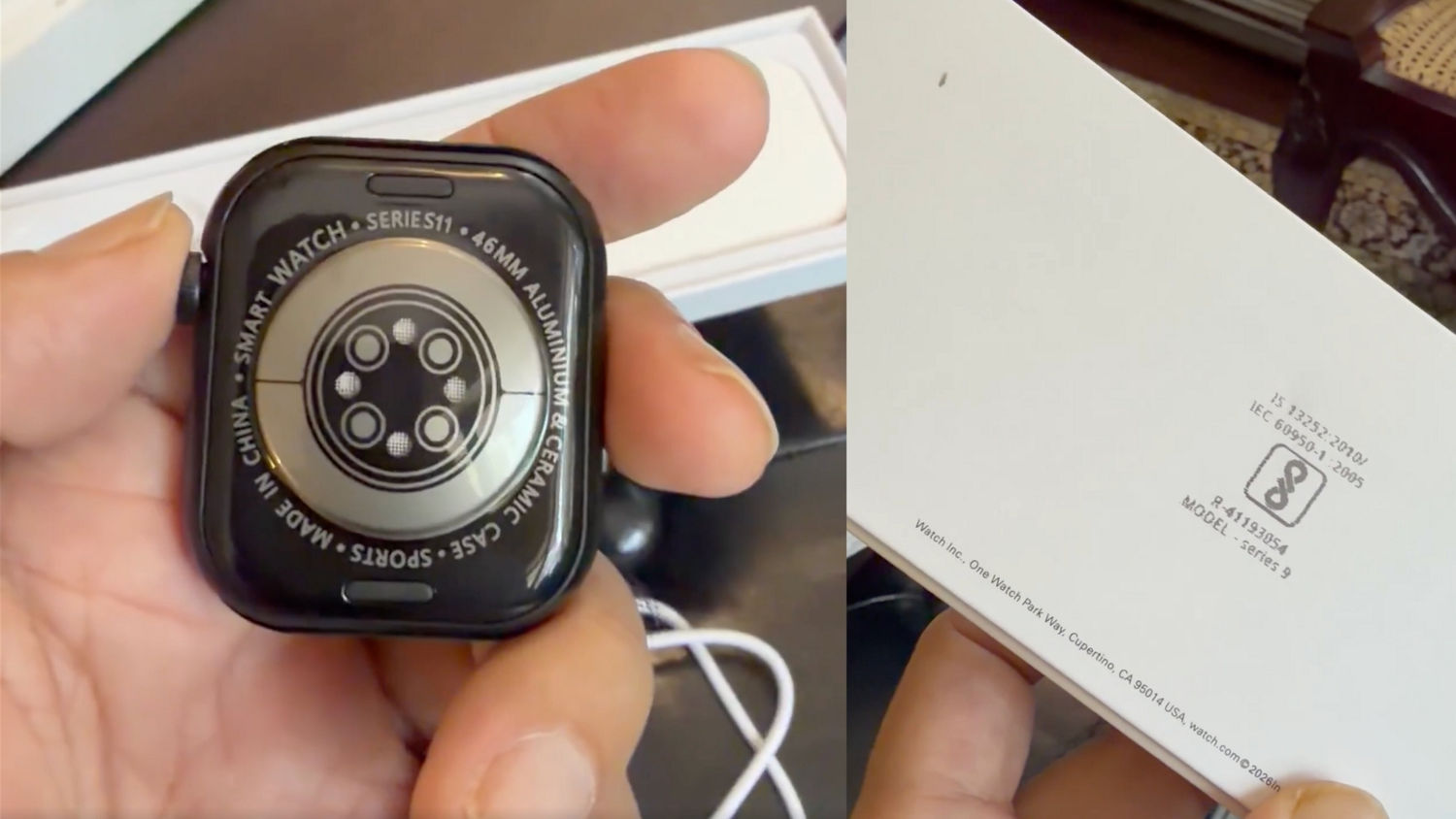

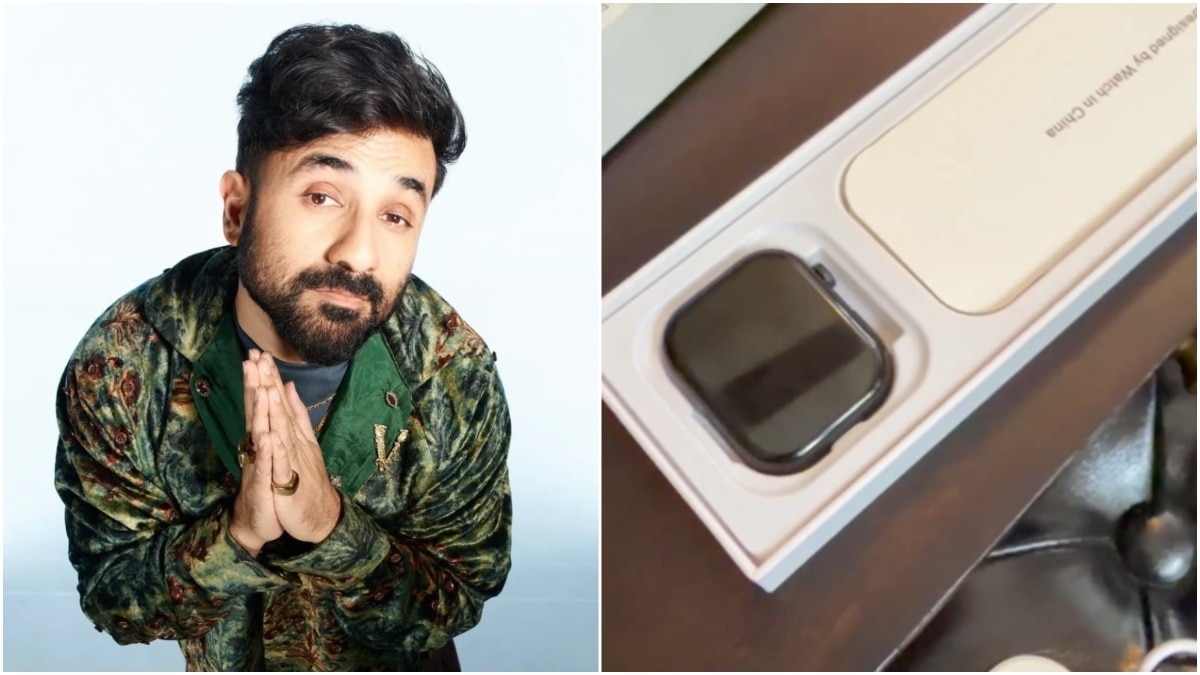
MUMBAI – The box that arrived said Apple Watch Series 11 on the outside. Inside, it said Series 9, without Apple’s name anywhere on it. The phrase printed where the branding should have been read, according to the person who opened it: “Designed by Watch in China.”
That person was Vir Das, the comedian and actor who won the 2023 International Emmy for Best Comedy Series. He had ordered the watch urgently on Monday through Zepto, one of India’s three dominant quick-commerce platforms, for a film shoot. He paid Rs 50,000. He did not get what he paid for.
Das posted photographs of the device on X and Instagram, asking his followers whether all Apple Watches looked like that or whether Zepto was, in his words, “being shady with china copies.” He added that when he called the platform’s customer support, the agent told him there was nothing the company could do. He called it a “full scam.”
By evening, Zepto had reached out directly, and Das posted an update: a genuine Apple Watch had been delivered, the matter was resolved, and he wanted to make clear he did not hold the delivery executive responsible. The company said in a public statement that it had initiated a reverse pickup of the suspect product, that it was investigating with its brand partners, and that it would take “appropriate action based on our findings.” The posts Das originally shared were later deleted.
The speed of the resolution is not the story. What it reveals is.
Zepto and its peers – Blinkit, owned by Eternal, and Swiggy’s Instamart – have spent the past two years expanding aggressively from groceries and household essentials into consumer electronics, a category with a fundamentally different risk profile. A bruised banana costs a few rupees and five minutes of aggravation. A counterfeit smartwatch at Rs 50,000 is a different class of fulfilment failure entirely. The supply chain for fresh produce is tight and largely local. For premium electronics, it runs through a web of third-party brand partners and vendors whose authenticity Zepto, in its own public statement this week, implicitly acknowledged it cannot verify at the point of delivery.
The platform’s response pointed to its OTP delivery system as a safeguard for high-value orders: customers receive a one-time password and are instructed to share it only after verifying that the package is properly sealed and in good condition. What the Zepto statement did not address is the more fundamental question raised by the Das incident: a sealed package can still contain the wrong product. The OTP system verifies that a box arrived intact. It does not verify what is inside the box.
The incident comes at a moment of considerable consequence for Zepto. The company, founded in 2021 by Aadit Palicha and Kaivalya Vohra, confidentially filed for an initial public offering late last year and is preparing for one of India’s most anticipated listings. Its revenue reached Rs 9,366 crore in the fiscal year ending 2025, according to public filings. The company operates more than 1,000 stores across India, with around 1,100 to 1,200 dark stores, according to Storyboard18. A viral celebrity complaint about a counterfeit product – even one resolved within hours – is precisely the kind of story a pre-IPO company does not want circulating.
The broader consumer concern the incident surfaced is not limited to Zepto. A study conducted in the first quarter of 2026, published by Business Standard, surveyed more than 2,590 consumers across 50 cities and examined 12 leading platforms across quick commerce, e-commerce and online travel. It found what it described as a 92-point gap between the best- and worst-performing platforms on consumer trust, and estimated that dark patterns – deceptive design choices that extract money from users – cost Indian online shoppers up to Rs 28,000 crore a year. The authenticity question is distinct from dark patterns, but the underlying dynamic is the same: as platforms scale rapidly and add new product categories, the accountability architecture lags.
Users responding to Das’s post were unequivocal. Several advised buying electronics only through Apple’s official website or an authorised retailer. One wrote that if a platform “can’t send a single banana that doesn’t look like a zombie attack victim,” a premium smartwatch was an unreasonable expectation. The sentiment pointed to something the quick-commerce sector will have to address as it moves deeper into high-value categories: convenience is a strong selling point until a Rs 50,000 product turns out to be something printed “Designed by Watch in China.”
The critical detail that neither Das nor Zepto has publicly addressed is what the investigation with brand partners will actually determine – and whether findings will be disclosed. Das’s posts were deleted after the resolution. Zepto has committed to taking appropriate action but has not said what that means in practice, whether the product was definitively counterfeit or a fulfilment error, or how a device with no Apple branding on the inner box cleared its vendor intake process. The replacement Apple Watch arrived. The explanation has not.
Das has appeared in more than 18 films and six comedy specials, and his social media reach is substantial enough that his complaint generated immediate traction. That visibility almost certainly accelerated Zepto’s response. What happens when the same fulfilment failure – or a structurally similar one – occurs to a customer without an Emmy on the shelf and a large follower count is the question the quick-commerce sector has not yet been required to answer.
The Electronics and IT Ministry has not commented on the incident. The Bureau of Indian Standards, which oversees product quality certification, has not indicated whether counterfeit Apple Watch devices sold through online platforms fall within its current enforcement priorities. These are the institutional threads that remain entirely unexamined – and would need to be pulled before the accountability question can be answered at scale, rather than resolved one celebrity complaint at a time.