
SAN FRANCISCO – The first time most people encounter a flight simulator, it is behind a paywall. Microsoft Flight Simulator 2024 retails at around $70. Professional-grade alternatives run steeper. For hundreds of millions of people who have wanted to know what their city looks like from 3,000 feet, that price tag has been the answer.
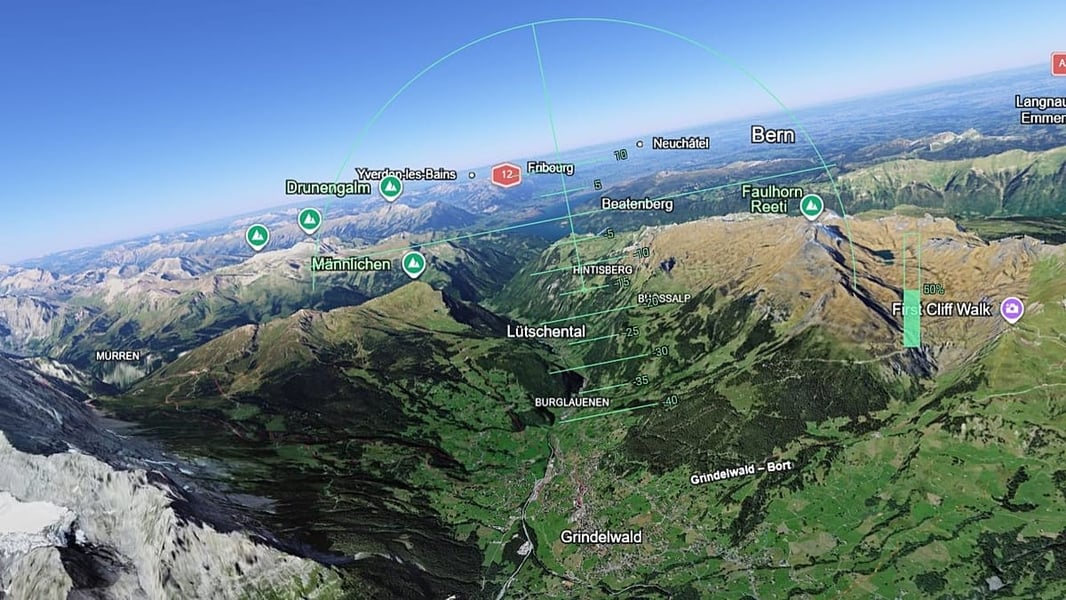
Google changed that on June 12, when it folded a free, browser-based flight simulator into the web version of Google Earth. No installation. No graphics card requirements. No login. Open a browser, navigate to earth.google.com, click Explore Earth, go to the Tools menu, and select Flight Simulator. You are airborne within seconds.
The feature is labeled experimental, and Google has been clear about what it is not: the company’s own documentation states the simulator is “designed for casual exploration rather than high-fidelity aerodynamic training.” There is no taxiing, no instrument panel, no weather simulation. Arrow keys control pitch and roll. Page Up and Page Down adjust speed. The simulation pauses when a crash occurs and restarts without penalty. This is not X-Plane. What it is, though, is something more interesting than a novelty: it is the first time in Google Earth’s history that a flight mode has been available globally in a browser without any barrier to entry.
The history matters here. Google first embedded a flight simulator in its desktop Earth software back in 2007, tucked away as a hidden Easter egg behind the keyboard shortcut Ctrl + Alt + A on Windows. It became popular enough that by 2008, Google had turned it into an official menu option in Google Earth 4.3. For roughly 18 years after that, the feature sat in the downloadable desktop version, accessible only to those willing to install a fairly large application. According to iPhone in Canada, the web release marks the first time the simulator has been fully accessible in a browser. What was an insider’s secret is now a public tool.
The timing is pointed. Microsoft’s Flight Simulator franchise has spent the better part of two years positioning itself as the premium experience for serious virtual aviators – complete with an official Airbus-licensed cockpit peripheral and an expanding library of paid add-on aircraft. That ecosystem is impressive, and it serves a real audience. But it requires money, a capable PC, and a willingness to learn a complex control scheme. Google’s version requires none of those things. The implicit argument is clear even if Google did not make it explicitly: aerial exploration of the planet should not require a $70 entry fee.
For schools, the implications are practical. Geography classrooms have long used Google Earth as a visualization tool. Adding a flyover capability – the ability to bank over the Himalayas, drop altitude over the Nile Delta, or skim the rooftops of Tokyo – turns a passive map into a navigable space. No district IT department needs to approve a new software purchase. The tool works wherever Google Earth works.
https://twitter.com/googleearth/status/1932896789012537765

The technical architecture behind this is not trivial. As users fly, 3D buildings and high-resolution satellite imagery stream in dynamically from Google’s servers. Google’s own developer documentation notes that flying at extreme speeds or over low-bandwidth connections may produce temporary loading delays – which is the honest acknowledgment of the gap between what this is and what a locally-rendered simulator can do. The difference is that Google is absorbing the compute cost on its servers. The user’s machine needs only a browser.
That cost structure is a competitive moat that smaller developers have struggled against for years. One developer, quoted on Digg responding to the announcement, put the problem bluntly: building a web flight game using Google’s 3D tile data would quickly run to a $10,000 cloud bill. Microsoft Flight Simulator 2024 can afford to run on photorealistic imagery because it uses Microsoft’s own Bing Maps 3D data infrastructure. Google now has an analogous reason to offer the same, at zero cost to the end user: it already owns the data.
The flight simulator arrived alongside other recent additions to Google Earth’s web platform, including elevation profiles and expanded file import options – tools that Windows Central noted signal a broader push to bring the professional desktop version’s capabilities into the browser. Whether the flight simulator deepens from its current experimental state – whether Google adds more aircraft types, weather systems, or multiplayer – the company has not said. Google has not disclosed usage numbers since the June 12 launch, and it has not committed to the simulator remaining a permanent feature rather than a limited experiment.
That uncertainty is worth noting. Google has shown in other recent product moves a pattern of launching experimental tools and then quietly withdrawing them if engagement does not reach internal thresholds. The flight simulator currently carries no rollback signal, but the “experimental” label leaves the door open. What is certain for now is that anyone with a browser and a keyboard can fly over any major city on Earth for free, which was not true a week ago.
The feature also revives a question that has run quietly through the virtual geography space for years: what happens when the company that owns the most comprehensive aerial imagery of the planet decides to make it interactive? For Microsoft’s gaming and platform ambitions, the answer is not simple. Google is not trying to be a game developer. But it does not need to be, to complicate the market for anyone who is.
The Easter egg from 2007 has grown up. Whether Google nurtures it further, or leaves it as a pleasant diversion sitting in a Tools menu, the argument it makes just by existing is already harder to ignore.