
BOGOTÁ — Gustavo Petro spent four years making Colombia the loudest voice in the Americas against what he called Israel’s genocide in Gaza. The man who defeated him is promising to put Colombia’s embassy in Jerusalem.
That reversal is sharp, personal, and takes effect on August 7. Abelardo de la Espriella, a criminal lawyer and businessman from Barranquilla who had never held elected office, won the June 21 presidential runoff with 49.66 percent of the vote against Iván Cepeda’s 48.70 percent. The margin was less than one percentage point. Roughly 124,000 votes separated them out of nearly 26 million cast. Not a mandate, but enough.
The National Electoral Council confirmed the result on June 24. A recount concluded on June 25 with the numbers unchanged. Cepeda conceded. Petro has not. In a series of posts on social media, the outgoing president claimed that IP address changes on National Registry servers proved the election had been compromised, pointing to a private logistics firm, Thomas Greg and Sons, as the access point. He alleged that the state of Israel and the United States had arranged the manipulation.
Colombia’s Attorney General, Gregorio Eljach, dismissed the claims without qualification. The European Union’s Electoral Observation Mission, led by Esteban González Pons, described the count as transparent, orderly, and free of irregularities. The mission found no evidence of foreign interference, and the recount found no discrepancies in the numbers.
What Petro’s accusations found, however, was an audience. The election split Colombia along legible lines. De la Espriella dominated diaspora communities and the interior departments, while Cepeda carried Bogotá and the outer coastal regions. That geography tells a story about polarization that a percentage-point margin cannot resolve. Whatever governing majority de la Espriella claims when he is inaugurated as the 48th president, nearly half the electorate voted for the other candidate.
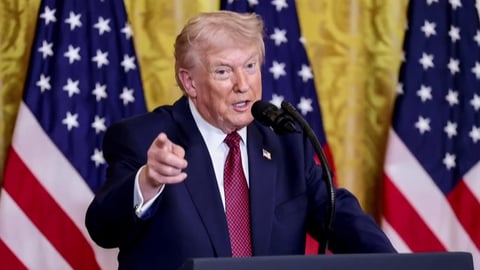
The international picture is less equivocal. Donald Trump, who endorsed de la Espriella during the campaign, told reporters he believed his backing helped secure the victory, as CNN reported. On Truth Social, Trump described the incoming president as “a man who will fight, work, and care for his country, just like me.” Secretary of State Marco Rubio praised the incoming administration’s direction. Israeli Foreign Minister Gideon Saar called de la Espriella “a true friend of the Jewish people and the state of Israel.”

Those endorsements are not incidental. De la Espriella’s campaign ran explicitly on reversing what Petro had built. Colombia broke diplomatic ties with Israel in 2024 over the killing in Gaza, a break that Petro extended to trade by ordering the Navy to enforce Colombia’s coal export ban on Israel after multinationals found legal workarounds. The confrontation reshaped Colombia’s international standing. De la Espriella’s first commitment is to reverse it: restore relations, open the Jerusalem embassy, and, in the phrase he used on the campaign trail, “defend the Judeo-Christian principles that form the foundation of Western civilization,” CBS News reported.
He has also pledged to join Trump’s Americas Counter Cartel Coalition, known as the Shield of the Americas. The regional security framework Washington has been assembling across the continent gains, in Colombia, one of its most strategically significant members: a country with decades of security ties to the United States, a porous border with Venezuela, and deep institutional knowledge of the trafficking networks the coalition is built to target.
The president de la Espriella is replacing made those ties politically radioactive in Bogotá. Petro spent last September having the US revoke his entry visa after addressing pro-Palestinian demonstrators outside the United Nations in New York. That episode compressed, in a single act, how far he was prepared to take the break with Washington. The incoming president’s pledges reverse that trajectory entirely.
De la Espriella’s win is part of a broader regional current. Across Latin America, Washington-aligned or Trump-endorsed leaders have gained ground, a shift that has been met with varying degrees of alarm from left-leaning governments in the region. Brazil’s Lula condemned Washington’s intervention in Venezuela this past January as a violation of sovereignty, a signal of how that current looks from the other side of the fault line. Colombia’s election result is how it looks from the right side of it.
What is not decided is whether the narrowness of the victory will constrain what de la Espriella can actually do. With 12.9 million votes, the most any Colombian presidential candidate has ever received, he carries a historic number into office. With a margin below one point, he carries a country that nearly chose otherwise. Whether the Jerusalem embassy opens, whether Colombia formally joins the Shield of the Americas, and whether Petro’s fraud narrative fades or hardens into a permanent feature of opposition politics are questions August 7 will not settle.
The recount confirmed the numbers. The EU observers found no fraud. The attorney general certified the result. On the day de la Espriella takes office, the country that led the Americas in its condemnation of Israel’s campaign in Gaza will, under its new president, be calling Israel an ally. How much of Colombia agrees with that is, by the margin, the one thing the election could not resolve.