
DUBAI – The Ever Lovely was following the route the agreement was supposed to protect.
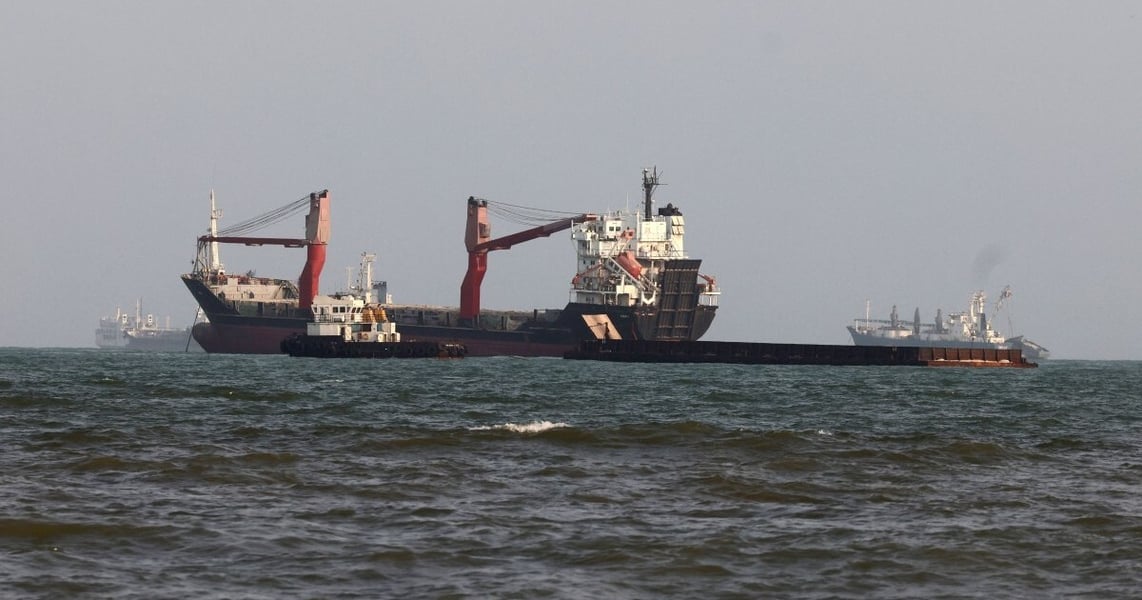
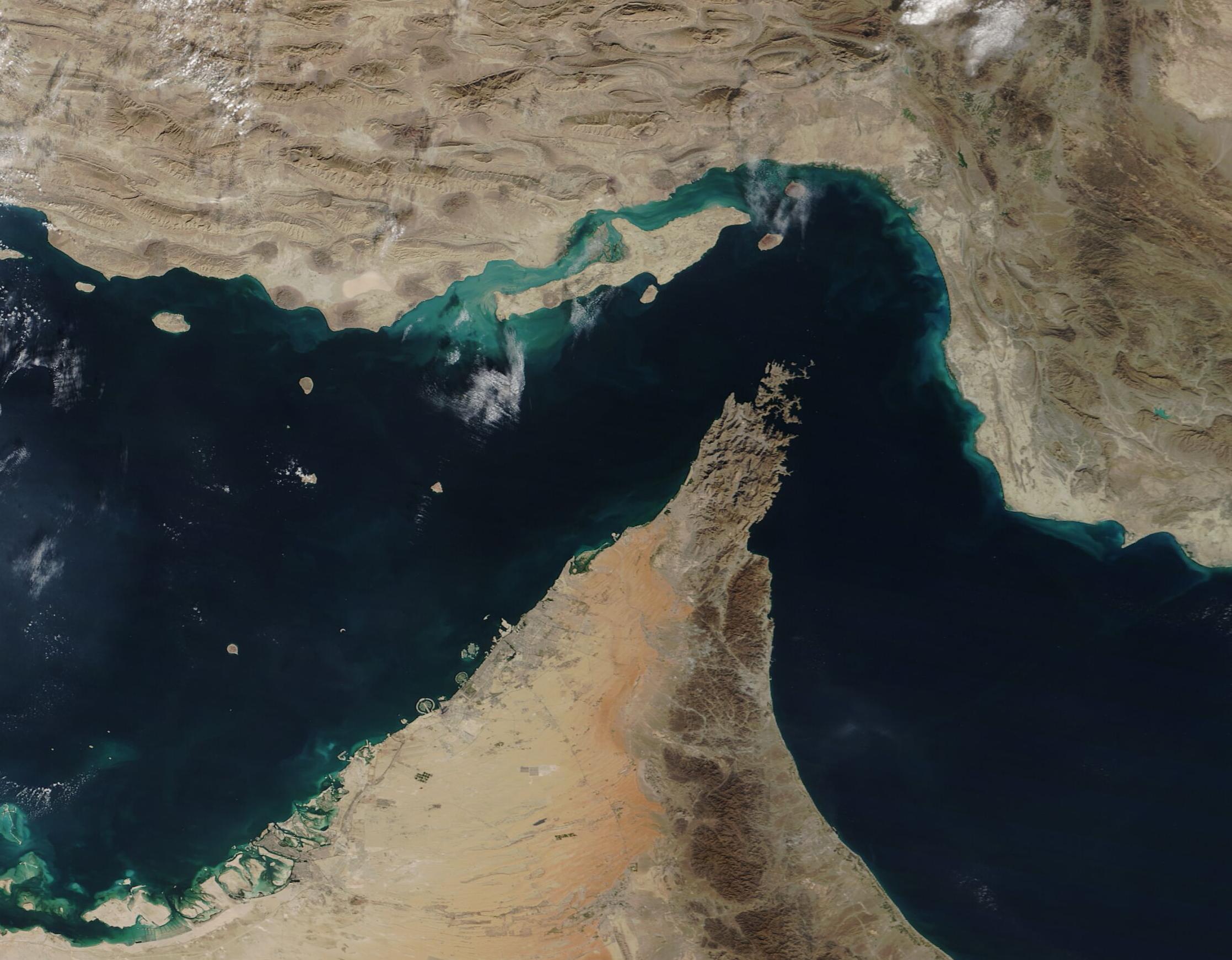
The Singapore-flagged cargo ship had begun its transit through the Strait of Hormuz on Thursday along a corridor hugging the Omani coast – the path that Washington and Muscat had announced as the officially designated lane for commercial traffic to resume after months of war and blockade. An Iranian drone found it anyway, striking the vessel’s starboard side some fourteen kilometers southeast of the port of Dahit and destroying the ship’s bridge. No one died. The deal did not survive the morning.
The attack, which United States officials attributed to Iran’s Islamic Revolutionary Guard Corps, was the first physical confirmation of something Iranian authorities had been stating plainly for days: the only passage through the Strait of Hormuz that Tehran will guarantee is the one Iran designates, on Iran’s terms, approved by the body Iran set up to manage the channel. The corridor Oman announced without coordinating with Tehran was, in the Guard’s language, unauthorized. The drone strike was what unauthorized looks like when the enforcer is not bluffing.
Hours before the strike, Iran’s Revolutionary Guard had rejected the new Hormuz transit corridor as unacceptable and dangerous. Its statement to shipping operators was direct: vessels seeking safe passage must maintain contact with the IRGC Navy and use the routes Iran authorizes, not the ones that Oman or the United States publish without prior coordination with the Islamic Republic. The Persian Gulf Strait Authority – the regulatory body Tehran established to manage the channel – stated that vessels transiting through unauthorized routes bore sole responsibility for the consequences. That language now reads less like a legal caveat and more like an advance notice of what came next.
The United Nations’ International Maritime Organization, which had been running an initiative to shepherd some eleven thousand sailors and their vessels through the strait as commercial traffic crept back after months of war, announced it was pausing that program following the attack, Al Jazeera reported. The practical consequence was to extend the uncertainty that the sixty-day truce was meant to dissolve. Ships that had begun moving back toward Hormuz had fresh reason to wait.
The root of the problem is a familiar one. When the memorandum of understanding was signed in mid-June, the United States described the outcome as an open, toll-free Hormuz for the life of the deal. Iran’s officials described it as a sixty-day transit arrangement managed jointly by Iran and Oman, with Tehran retaining authority over how traffic moves through its waters. Both governments signed the same document and walked away with different accounts of what it said. The route dispute that produced Thursday’s IRGC statement was the first open expression of that gap. The drone that hit the Ever Lovely’s bridge is the gap made physical.
Whether the attack was the result of a deliberate decision at the highest levels in Tehran or whether an IRGC Naval unit was acting on standing orders that were never rescinded after the ceasefire, no one outside a small circle can say. Those are not the same thing. A deliberate order would mean Iran has chosen to enforce its interpretation of the deal by force, a position that would redefine every subsequent round of negotiations. A standing order that no one thought to cancel after the truce was signed would mean the ceasefire never reached the people with their hands on the launch controls. The distinction matters to every insurance underwriter and ship captain trying to determine whether Thursday was policy or an aberration.
Oil markets had already absorbed several rounds of this stop-and-start cycle. The Iran-Israel war has driven inflation to multi-year highs precisely because traders could not price the strait’s status with confidence. Thursday’s attack will not simplify that calculation. Roughly a fifth of the world’s seaborne oil passes through the channel, and each incident narrows the market’s capacity to absorb ambiguity before it prices for a sustained closure.
Iran and Oman were expected to hold talks on what Foreign Minister Seyed Abbas Araghchi described as the future administration of the Strait of Hormuz – language that frames the route question not as a tactical misunderstanding but as a structural matter of governance over the waterway. Those talks now open after an attack that demonstrated Iran’s willingness to act on its own definition of authorization without waiting for a diplomatic resolution.
The Ever Lovely’s crew could not have known, as drone debris scattered across their bridge, that they had become the test case for a dispute between two governments over a document both claim to have read. The ship was on the safe route. That was Thursday’s lesson about what safe means in the Strait of Hormuz: it depends entirely on which authority you asked.
Related Posts