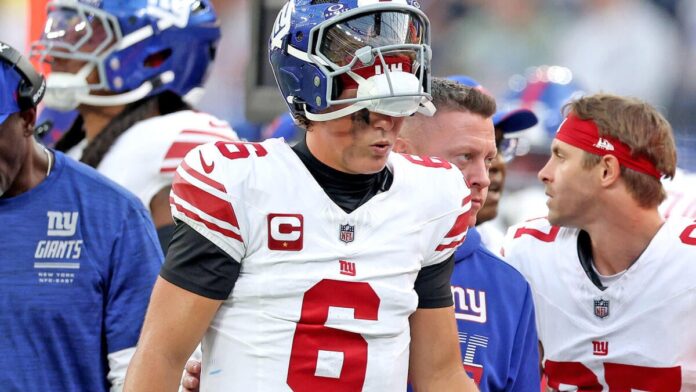

NEW YORK – The NFL ended Brendan Sorsby’s 2026 season before it started, but it did so in a way that his attorney says crossed a legal line.
On June 23, the league informed teams and the quarterback himself that it would not hold a supplemental draft this summer. The announcement was procedurally unremarkable. The NFL holds supplemental drafts infrequently and has the right under the collective bargaining agreement to convene one in any given year, or not to. What made this different was the person it was designed to exclude.
Sorsby, 22, had applied for the supplemental draft eight days earlier, offering the league its first formal opportunity to evaluate whether a player who had bet on his own college team, entered gambling addiction rehabilitation, and lost his NCAA eligibility could be trusted with a professional contract. The NFL’s answer was not a decision on his merits. It was a cancellation of the process itself.
“His application carries with it a lot of issues,” a league source told ESPN. “Core of the game integrity issues.”
The league’s formal letter to Sorsby was more pointed still. His petition, the NFL wrote, was submitted “without any supporting information or documentation, and only after abandoning your recent litigation efforts to avoid NCAA sanctions.” It did not, the letter continued, “demonstrate accountability for your conduct or indicate whether, or how, you would adhere to the League’s rules and policies governing the integrity of competition.”
Sorsby’s attorney, Jeffrey Kessler, countered within hours, calling the NFL’s decision “a violation of the CBA and the law” and vowing to bring the matter immediately to the NFL Players Association. Kessler’s argument, reported by NBC Sports, was procedural: the NFL’s own application asked only for basic biographical information and responses to four yes-or-no questions. Nothing in that process, Kessler said, indicated that submitting close to the June 22 deadline would affect the league’s consideration. “At no point did the NFL indicate that it would need or want to review anything other than the application itself,” he said.
Whether that argument holds is uncertain. The NFLPA would need to find that the league misapplied the CBA in its refusal to hold the draft at all, and the union may be reluctant to press the point on behalf of a player whose gambling record is precisely the issue at hand. Sorsby’s only other option is independent litigation, a path he already tried and retreated from. He withdrew a federal lawsuit against the Big 12 last month after the case became legally untenable.
The story of how Sorsby arrived here begins with his freshman year at Indiana, where he placed 40 bets on his own team’s football games using accounts registered to family members and friends to evade detection. Over the four years that followed, at three universities, those wagers grew to more than $90,000 across thousands of bets on college and professional sports. The NCAA caught up with him in May, issuing a permanent ineligibility ruling after court records detailed the scope of the activity.
On April 27, before the NCAA ruling landed, Sorsby had checked himself into rehabilitation for sports gambling addiction. It was a genuine step, by most accounts, toward the kind of accountability the NFL would later tell him his application failed to demonstrate. Thirty-two days after he entered treatment, the NCAA ruled him permanently ineligible from college athletics regardless.
His response was to file a lawsuit against the Big 12 Conference in Texas federal court, an action he quietly dropped in mid-June after it failed to gain traction, and then to apply for the NFL supplemental draft on June 15. His application arrived at league headquarters seven days before the June 22 deadline.
The NFL’s letter the following Monday did not read like the product of a thorough evaluation. Ran Carthon, the former general manager of the Tennessee Titans, drew the same conclusion in a different register. “Listen, the best thing for this kid, through the eyes of NFL front offices, is to take your punishment and move forward,” Carthon said on CBS Sports. He described that path as the only viable one for a player who still wants a future in the league.
The legal challenge Kessler is threatening would delay that path further, and it would do so through a process that has no guaranteed outcome. The NFLPA has its own interests to weigh, and the league has its own interests to defend. Neither is obligated to make the next ten months easier for a quarterback whose record the NFL has already characterized, in writing, as a matter of league-wide integrity.
Sorsby can enter the NFL through the April 2027 draft. Teams will be watching what he does in the meantime, and the NFL’s letter has already framed what it wants to see: accountability that is visible and documented, not accountability that arrives at a deadline with a short form attached.
The decision also did not happen in isolation. Two Cleveland Guardians pitchers are awaiting a federal trial in November on charges that they manipulated bets on individual pitches they threw during Major League Baseball games, earning gamblers in the Dominican Republic at least $460,000. MLB has since capped bets on individual pitches in response. That case, and the Sorsby case, and a wave of college-betting violations uncovered over the last two years, are part of the same reckoning: sports leagues built their business models on legal wagering and are now confronting, repeatedly, what happens when the people on the field become active participants in the market they were supposed to simply provide product for.
The NFL’s choice to cancel the supplemental draft rather than simply decline Sorsby’s application is a signal about how much weight the league assigns to that problem. Whether the threshold it is setting is the right one, and whether it can survive a CBA challenge, is a question that is still open. Sorsby is unlikely to be the last player to force it.