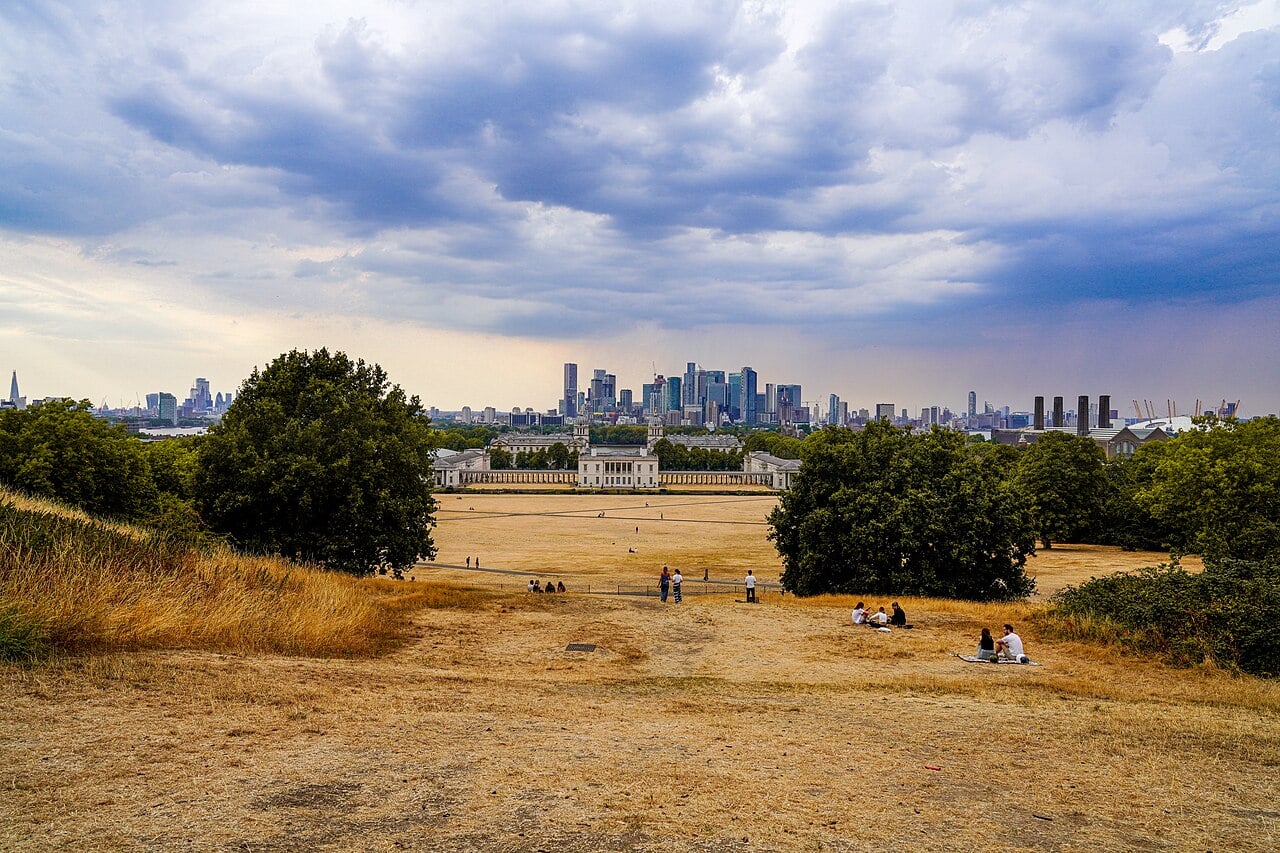

LONDON – Three nights of temperatures that refused to fall below 20°C have left the people most vulnerable to heat already physiologically depleted before Friday even reached its peak: the elderly, those living with heart and lung disease, and anyone without air conditioning. For them, what health authorities are calling a red heat health alert is not a weather advisory. It is a medical situation.
The UK Health Security Agency extended the most severe alert it can issue through 11pm Friday across six English regions: London, the South East, South West, East of England, West Midlands, and East Midlands. All other parts of England remained under an amber alert. It was only the second such declaration in British history. The first came during the July 2022 heatwave, which killed more than 3,000 people according to retrospective counts by the Office for National Statistics. The Met Office confirmed England was under a red extreme heat warning for a record third consecutive day.
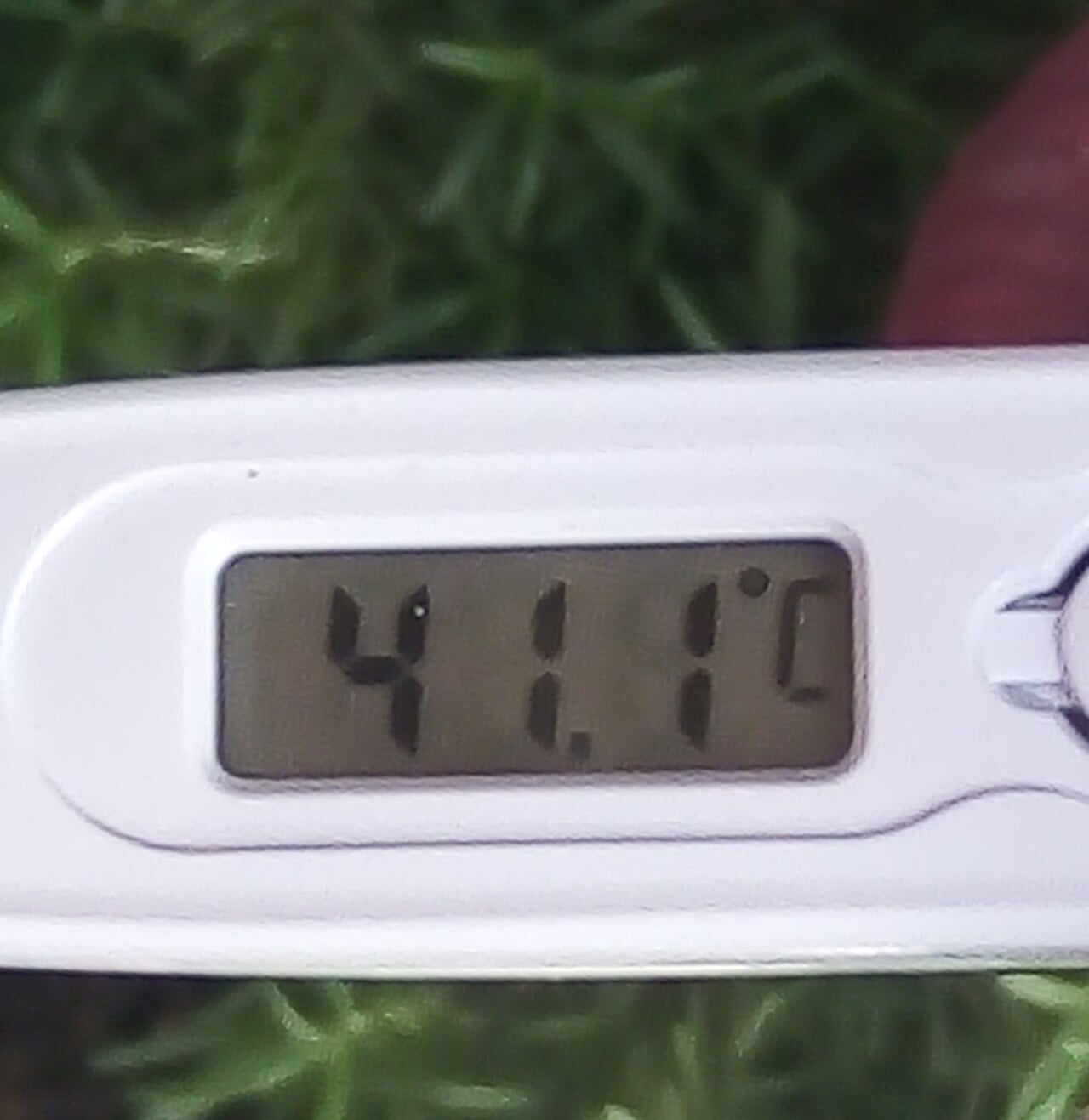
The temperature numbers arrived first. Provisional figures from Wednesday showed Gosport in Hampshire reaching 36.1°C and nearby Wisley in Surrey hitting 36°C, together eclipsing the previous UK June record of 35.6°C, set in Southampton in 1976 and not surpassed in the half-century since. The Met Office has said temperatures could approach 40.3°C on Friday, the UK’s absolute national record, reached in Lincolnshire during the July 2022 event.
But the number itself is only part of what makes this episode dangerous.
Dr Jess Neumann at the University of Reading has explained that elevated humidity, higher than is typical for British heatwaves, is degrading the body’s core cooling mechanism. When atmospheric moisture rises, sweat evaporates more slowly, releasing less heat and leaving the body unable to regulate core temperature efficiently. After three consecutive tropical nights, the cardiovascular and respiratory systems never fully recover between days. The early signs of heat-related illness, including headaches, dizziness, excessive tiredness, muscle cramps, nausea, and confusion, can precede heatstroke rapidly under those conditions. Prolonged humidity and repeated sleepless nights produce cumulative fatigue, particularly severe for older adults, young children, and people with underlying conditions.
The UK Health Security Agency has directed hospitals, care homes, and emergency responders across England to review cooling systems, staffing levels, and patient risk plans. Hundreds of schools closed early across the country. National Rail advised passengers to travel only if necessary due to concerns about rail infrastructure at sustained high temperatures.
What health agencies rarely lead with is the psychological dimension. Dr Chloe Brimicombe of the Royal Meteorological Society has noted that mental health is the least visible impact of extreme heat events. Research shows that for every one degree Celsius rise in average monthly temperature, mental health-related deaths increase by approximately 2.2 percent. Violent incidents rise. Sleep deprivation compounds depression. Three tropical nights in sequence multiply that damage well beyond what a single hot day could produce.
The UK’s experience is part of a continent-wide crisis. Red heat alerts were issued simultaneously across France, Spain, and Italy as a persistent high-pressure system, called an omega block by meteorologists, settled over western Europe. France’s Météo France reported June 23 as the hottest day since records began in 1947, with land surface temperatures in parts of southern France exceeding 50°C as measured by Copernicus Sentinel-3 satellites. Heat alerts were posted by 26 countries, from Ireland to Greece. Europe’s health systems are absorbing this crisis alongside other concurrent emergencies, including the first confirmed Ebola case on European soil from the current DRC outbreak and a dengue surge that crossed five million global cases at mid-year, adding compound pressure on health infrastructure across the region.
Professor Richard Allan, a climate scientist at the University of Reading, noted that long-standing June records are being shattered at a rate that reflects a transformed climate baseline. He described temperatures as “edging dangerously close to levels previously thought almost unimaginable in the UK.” An independent analysis by World Weather Attribution concluded that the heatwave was made approximately two to four degrees Celsius hotter by anthropogenic climate change, or equivalently, about a hundred times more likely than it would be in a pre-industrial climate.
Dr Radhika Khosla, associate professor at Oxford’s Smith School of Enterprise and the Environment, has highlighted that urban populations face compounded risk. British cities were built without passive cooling in mind: the concrete and tarmac absorb heat during the day and release it slowly overnight, which is why tropical nights are worst precisely where the most people live. Outdoor workers, including delivery drivers, construction workers, and agricultural laborers, face the most direct exposure with the least institutional protection.
The mortality count from this event will not exist until autumn. Heatwave deaths in Britain are measured retrospectively by the Office for National Statistics, comparing actual deaths against expected rates for the same period in previous years. After July 2022, that analysis eventually produced a figure of more than 3,000 excess deaths. A comparable count for June 2026 will follow months from now. What the red alert, the school closures, and the hospital guidance are designed to do is change that future number before it is calculated.
What the alert’s expiry at 11pm tonight does not resolve is the question Britain has left unanswered since 2022: whether the country is being built to survive the climate it is now living in. Housing stock designed for a temperate island with mild summers, hospitals without standard air conditioning, and city planning frameworks only beginning to incorporate heat as a structural risk are the inheritance of a different era. The red warning comes down tonight. The conditions that produced it will not.