
CARACAS — In the port city of La Guaira, ten miles north of the Venezuelan capital and the country’s gateway to the sea, the buildings that remained standing Wednesday evening were the ones that had survived the worst earthquake to hit Venezuela in more than a century. The ones that had not were still being counted.
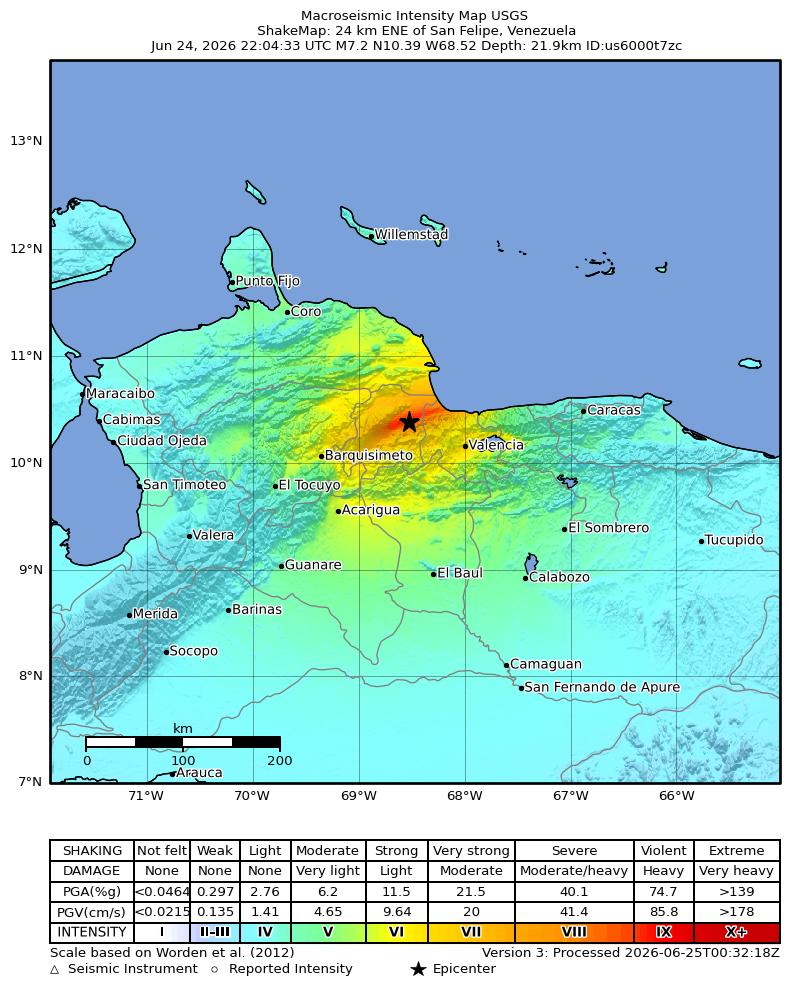
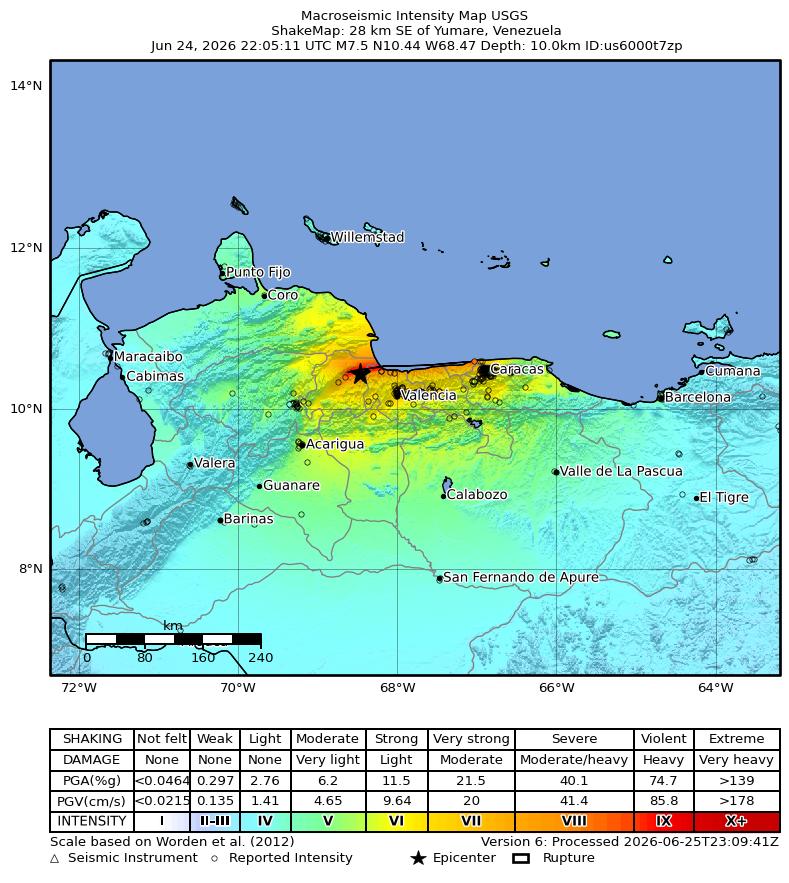
Two earthquakes struck northern Venezuela less than a minute apart just after 6 p.m. local time. The first, a magnitude 7.2, hit near the town of San Felipe, roughly a hundred miles west of Caracas, sending residents of the capital fleeing into the streets as high-rises swayed. Thirty-nine seconds later, a magnitude 7.5 quake struck near Yumare at a depth of ten kilometers – larger than the first and closer to the coast – completing what the US Geological Survey was already calling a seismic “doublet,” a rare phenomenon in which two earthquakes of comparable magnitude rupture the same fault zone in near-simultaneous sequence, NBC News reported.
At least 188 people were dead by Thursday morning, 1,520 injured, and 157 missing, Venezuelan authorities and international relief agencies confirmed. More than 200 people remained trapped in collapsed structures as rescue teams moved through what La Guaira’s governor described as nearly unrecognizable terrain. The USGS’s predictive models – drawing on building density, soil composition, and the documented extent of structural collapse – placed the most likely final toll in the thousands, with a meaningful probability the count would exceed 10,000.
La Guaira absorbed the worst of it. More than a hundred buildings collapsed in the coastal city: hotels, a large industrial warehouse, and row after row of apartment buildings and older residences. Electricity was cut across much of the state. Water was unavailable. Residents who had watched a decade of economic implosion leave their neighborhoods unmaintained were searching rubble by hand in the hours after dark.
The 7.5-magnitude mainshock was Venezuela’s most powerful earthquake in more than a century, surpassing the 1997 Cariaco earthquake and the 1967 Caracas quake that destroyed a dozen residential towers. Scientists studying the Caribbean plate boundary along Venezuela’s northern coast said the fault had accumulated stress for decades; the doublet sequence suggests that stress released in stages rather than all at once, prolonging the duration and intensity of ground motion over a wider area. La Guaira sits on alluvial coastal sediment, the soil type most prone to amplifying seismic force, which is why the city’s structural losses outpaced every other affected area.
Acting President Delcy Rodríguez declared a state of emergency and activated Venezuela’s national civil protection system. Two American urban search and rescue teams mobilized: the Fairfax County, Virginia, team with 80 personnel, six trained dogs, and nearly 70,000 pounds of specialized equipment, and the Los Angeles County team. Mexico dispatched rescue personnel and medical staff. International relief aircraft began arriving at Simón Bolívar International Airport, which operates just outside Caracas near the coastline hit hardest by the quakes.
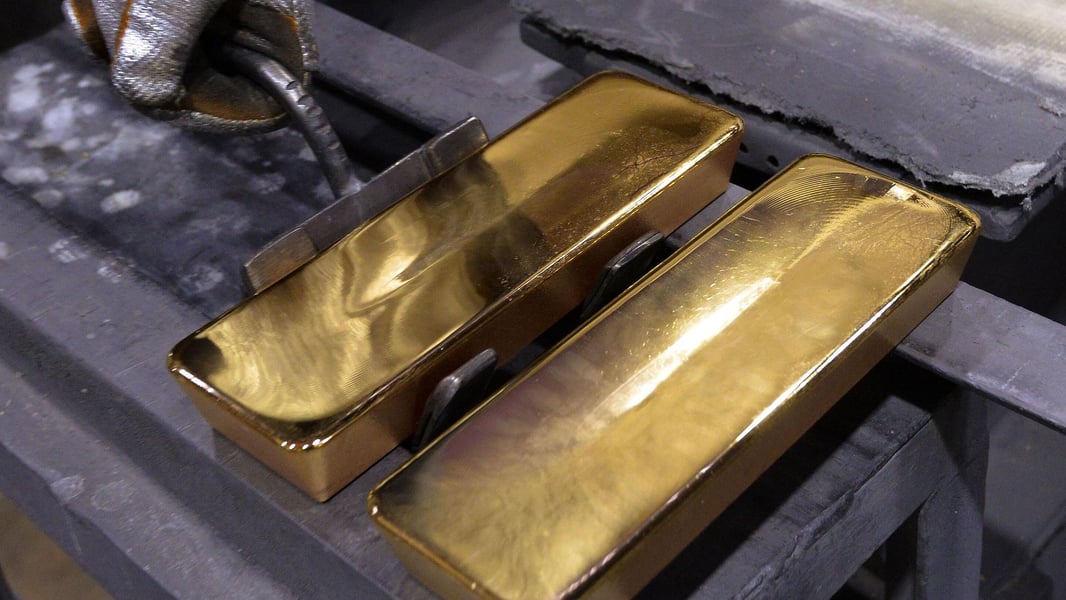
The US deployment arrives in a country whose relationship with Washington changed fundamentally six months ago. Nicolás Maduro, who had led Venezuela since 2013, was captured in a US military operation in January; Rodríguez, who served as his vice president, now leads an interim government. The Trump administration partially lifted sanctions on Rodríguez personally following the transition, and the United States has since become Venezuela’s largest oil buyer, with the estimated value of US-controlled Venezuelan oil exports climbing from $600 million in January to $3.7 billion in April. Eastern Herald reported on the US seizure of Venezuelan gold in March, as Washington began moving Venezuelan mineral resources into American markets. Rodríguez had separately rejected Trump’s suggestion that Venezuela could become the 51st US state, insisting on the country’s sovereignty even as Washington’s economic grip deepened.
Venezuelan American civil society groups sent a public letter Thursday calling on the Trump administration to provide unconditional humanitarian aid and to acknowledge what they called the structural consequences of US sanctions on Venezuela’s capacity to respond. The buildings that collapsed had not been maintained. The hospitals treating the injured had not been adequately supplied. A decade of combined economic mismanagement and sanctions, the letter said, had left Venezuela “operating at diminished capacity” before Wednesday’s earthquakes made that condition visible in collapsed concrete.
Trump acknowledged the disaster on Thursday, calling the death toll “devastating” and pledging the United States would “move quickly” to assist, describing Venezuelans as “new and great friends.” Secretary Rubio separately announced a regional Disaster Assistance Response Team deployment through USAID emergency operations. CNBC reported that administration officials were framing the aid in the context of the expanded oil relationship with Caracas established since January – an administration that spent two years treating Venezuela as an adversary now pledging rapid relief to a country it effectively controls.
The disaster is the third shock to hit Venezuela in a decade. The first was the economic implosion that drove eight million people out of the country since 2014, in what the United Nations described as the largest peacetime economic collapse recorded between 1970 and 2015. The second was the January political upheaval. The third arrived Wednesday night and found a population that had already absorbed two, in infrastructure that both prior crises had weakened.
What comes next depends partly on how many of the 200-plus people confirmed trapped in the rubble as of Thursday morning are recovered alive. Rescue teams work against a window that narrows with every hour. Al Jazeera reported from Caracas that aftershocks continued through Wednesday night, complicating efforts to enter structurally compromised buildings. La Guaira had no power and no water. The full count of those still trapped had not yet been made.
Related Posts