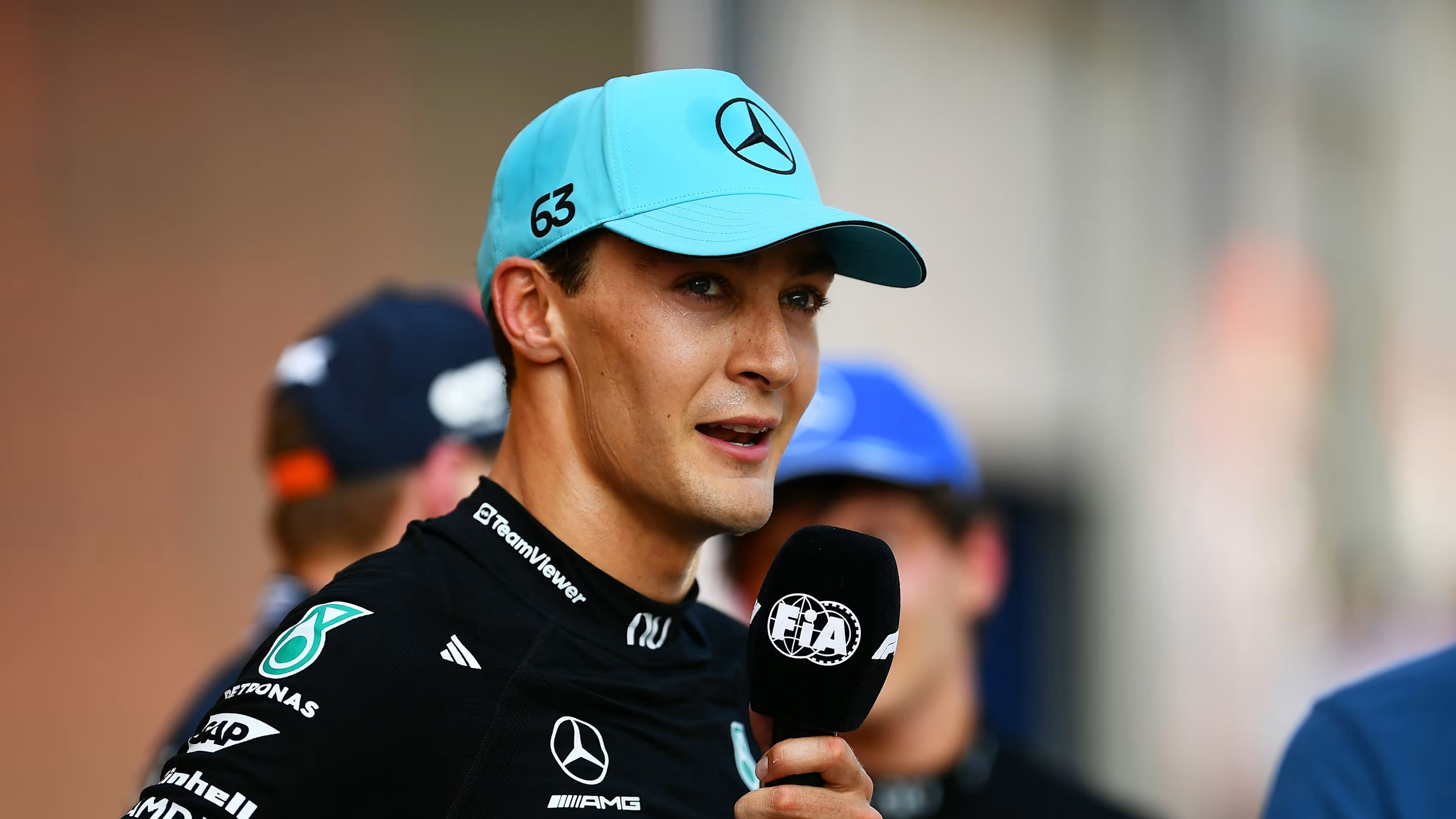

SPIELBERG — The moment Max Verstappen was beaten at the Austrian Grand Prix on Sunday, he did not know it yet. He was one second behind George Russell with 31 laps to run, the gap was shrinking, and the Red Bull had tyres that could theoretically carry him to the end. Then Mercedes pulled Russell into the pits.
Six laps later, when Verstappen finally stopped for his own second set of fresh rubber, he emerged 11 seconds back. The race was over. The rest was procedure.
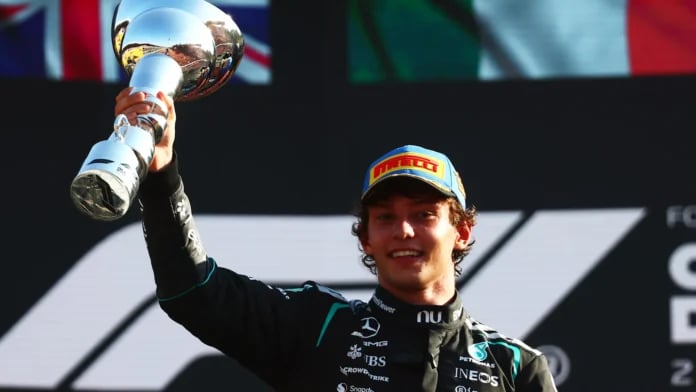
Russell took the chequered flag 1.6 seconds clear of Verstappen, with teammate Kimi Antonelli claiming third to give Mercedes a 1-3 finish that Toto Wolff, with characteristic restraint, described as evidence of a “cold-blooded” driver doing what cold-blooded drivers do. Ferrari, which had put Charles Leclerc and Lewis Hamilton second and third on the grid, was nowhere near the conversation at the end. The Red Bull Ring had been unkind to them in a way that the weekend’s practice sessions had not quite predicted.
The strategic picture going into the race was already tilted. Russell, Antonelli, and the front-runners were locked into a medium-hard-hard two-stop sequence by their tyre allocations — two new hards, one new medium, nothing else available. Verstappen had two new hards and two new mediums, which gave him options the others simply did not have. He could pivot to a more aggressive attack if the race opened up. That flexibility was, by the time Lap 40 arrived, completely neutralised by the speed of a Mercedes decision that did not wait to see what Verstappen would do.

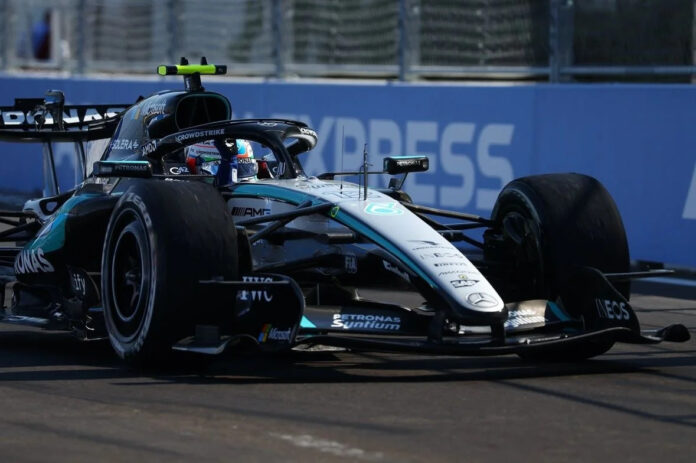
Russell had described his approach to this race weekend as “abnormal” — a deliberate adaptation to the demands of the 2026 Mercedes that he had spent the first half of the season learning to drive differently than every car he had raced before. The new regulations had exposed something: that his natural style was extracting less from the tyres than the car was capable of giving. He had adjusted. Austria was the clearest proof yet that the adjustment had taken.
Antonelli’s afternoon was a study in recovery. He struggled with brakes in the middle phase of the race, which cost him rhythm and very nearly cost him the podium. After his final tyre stop, he reset, found pace that had not been there earlier, and came home comfortably enough to seal the team result that Wolff had wanted. The numbers mattered to Mercedes not only for the constructors’ standings but as a pointed response to Ferrari, whose strategic and mechanical difficulties in Spielberg were significant enough that Wolff allowed himself a quiet observation about the gap between the two teams on this particular Sunday.
Ferrari’s problem in Austria was threefold. Leclerc and Hamilton had the grid positions to be factors; the car’s outright pace in race trim and its tyre degradation rate were not competitive enough to sustain that early promise. By the time the second stops had cycled through, both Ferraris had been overtaken not by misfortune but by the basic arithmetic of pace. They were simply slower, and in a race where the winning margin was built on a six-lap window, slower was decisive.
The championship picture tightened. Russell’s win cut his deficit at the top of the standings to 40 points, a gap that felt much larger a month ago. Verstappen’s second place was not a bad result — Red Bull extracted nearly everything available from the car on Sunday — but the gap closed anyway, which is the precise dynamic Verstappen most needs to avoid as the season moves toward its European finale. A driver defending a large championship lead needs attrition, not compression. Austria gave him the latter.
The race at the Red Bull Ring ended with Russell standing on the top step having made the hardest kind of win look uncomplicated. He held a faster car behind him through the second stint, trusted a pit call made under pressure, and managed tyres that were not ideally suited to what the race asked of him. The driving was what it needed to be. The strategy was sharper. The result was 25 points and a championship race that nobody is ready to call.
Verstappen will have noted the gap. He will also have noted that it took a nearly perfect weekend from Mercedes — strategy, execution, both drivers finishing on the podium — to close it by what it closed. That is either reassuring or a warning, depending on what you think Mercedes is capable of doing again.