
LONDON – A parent placing a child in residential care in England is almost certainly placing that child with a company whose debt structure redirects a portion of the weekly fee to a related fund. They will not be told this. The clinician who referred a sexual assault patient to an NHS referral centre almost certainly does not know that the centre is run by one of two private equity-backed companies that together treat more than half of everyone seen in those facilities across the country. These facts, buried in procurement databases and corporate filings, have now been assembled into a single number: £24.4 billion.
That is how much UK public contractor spending went to companies controlled by private equity groups in a single year, according to a Guardian investigation published Saturday drawing on data from Tussell and PitchBook. It represents roughly one pound in every eleven spent by government on external services: nine percent of all public sector procurement, reaching simultaneously into children’s homes, nurseries, veterinary practices, petrol forecourts, and the emergency care infrastructure of the NHS.
The breakdown runs along two axes. Approximately £14.6 billion flowed through central government procurement; £9.8 billion through local authorities. Local councils are the revealing number, because they are the bodies with the least fiscal flexibility and the fewest alternatives. Nearly ten percent of their external spending goes to private equity-controlled entities delivering residential children’s care and special educational needs provision. The Department for Education alone sends roughly £600 million a year to private equity majority-backed groups.

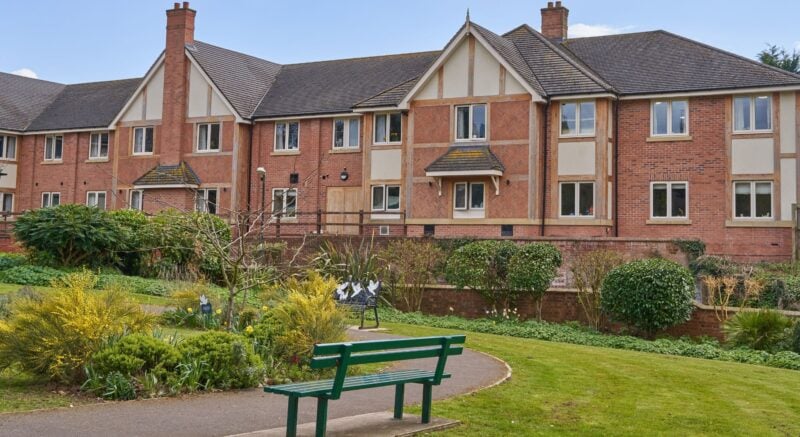
More than eighty percent of residential care homes for children in England operate on a for-profit basis. The financial mechanics of that profit are not straightforward to see. The Centre for Health and the Public Interest found that interest payments per bed at the five largest private equity-backed care home operators amount to £102 a week, approximately sixteen percent of the weighted average weekly fee for residential care in the UK. Those payments frequently go to related companies within the same private equity structure. The operating entity looks thinner than it is; the fund looks further away than it is; the fee paid by the local authority looks like a service cost rather than a return on leverage.
Outside social care, the investigation maps a similar concentration across sectors where consumers have fewer choices than they appear to. Six large groups now own sixty percent of UK veterinary practices; three of those groups are private equity-backed. By 2024, approximately thirty-five percent of all veterinary employees in the country worked for a private equity firm. The Competition and Markets Authority, which has been investigating the sector, found that weak competition and a lack of transparency have caused over £1 billion in consumer detriment. In both care homes and veterinary services, the detriment is structural, not accidental: it is built into the ownership model.
Petrol retail tells the same story in plainer numbers. An estimated twenty-seven percent of UK petrol stations are backed by private equity. Motor Fuel Group, the largest independent forecourt operator, controls approximately 1,546 forecourts, roughly one in five of all petrol stations in the country, and is backed by American firm Clayton, Dubilier and Rice. In nurseries, nine of the ten largest childcare providers are now private equity-backed: Busy Bees is controlled by the Ontario Teachers’ Pension Plan’s buyout arm, while Kids Planet answers to Fremman Capital. The Guardian’s parallel investigation into sectors where private equity plays a dominant role found that the pattern repeats wherever government money meets fragmented markets and limited regulatory oversight.
The accumulation of market position across these sectors did not happen in response to a policy decision. It happened because a succession of governments, over roughly two decades, opened public service contracting to private capital and then did not build systematic mechanisms to evaluate what public value was being delivered in return. The government’s current response has been fragmented by sector. In May, Education Secretary Bridget Phillipson urged the Competition and Markets Authority to investigate private equity’s role in the £9.5 billion government-funded childcare market. The probe is now under way. But no equivalent review has been triggered for care homes, veterinary services, or the NHS referral infrastructure simultaneously.
The wider political picture is in motion. Andy Burnham, the frontrunner for the Labour leadership following Keir Starmer’s resignation on June 22, has proposed significant devolution of public service commissioning to regional mayors, framing it in a speech in Manchester on Saturday as “the biggest shift of power from Whitehall in modern times.” His pitch addresses the geography of who makes commissioning decisions. It does not yet constitute a position on who the commissioned providers should be permitted to be, or under what ownership structures.
What the Guardian investigation does not establish, and what no government has yet commissioned anyone to establish, is whether services delivered under private equity ownership are systematically worse than what preceded them. The financial extraction is documented with specificity. The quality comparison is not. That gap is itself a policy choice, made repeatedly and without acknowledgement, by governments that opened the contracts and did not require anyone to audit what came back.