
SYDNEY — On July 2, 2024, roughly 850,000 Australians who had prepaid for Amazon Prime opened their Prime Video app and found ads running. They had not been given the option to say no. Their contracts did not require Amazon to ask. And when those subscribers discovered that restoring the ad-free experience they had paid for would cost them an extra $2.99 a month, there was no mechanism to claim a refund for the months they had already purchased under different terms. On June 29, the Australian Competition and Consumer Commission filed Federal Court proceedings arguing that what Amazon did was not legal.
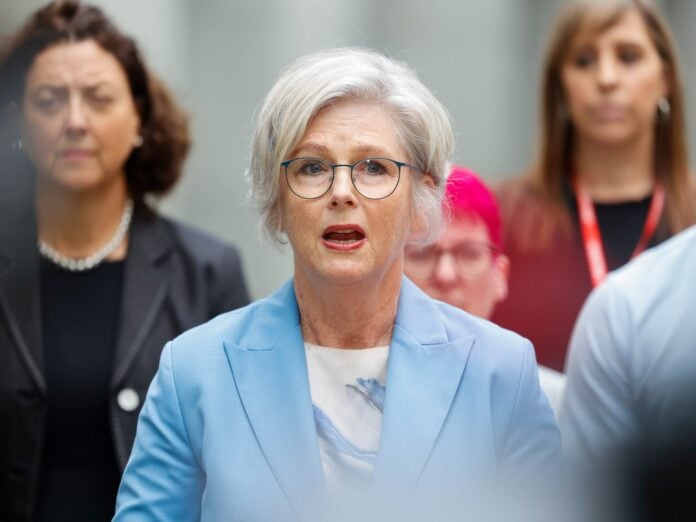
The ACCC is alleging that Amazon AU embedded five unfair terms in the standard-form contracts held by more than one million annual Prime subscribers, terms that the regulator says allowed the company to unilaterally degrade its service and change the conditions of the subscription without offering any form of redress. When Amazon introduced ads to Prime Video in July 2024, it allegedly relied on one or more of those terms to do so. ACCC Chair Gina Cass-Gottlieb made the argument plainly: “We allege that Amazon AU included multiple unfair terms in its contracts with Australian annual Prime subscribers, and it then relied on some of these terms to bring ads onto Amazon Prime Video.”
Amazon’s response was measured. A spokesperson said the company is “reviewing the case filed by the ACCC in detail” and had cooperated with the regulator throughout its investigation. The statement offered no indication of whether Amazon intends to contest the allegations. The case targets two entities: Amazon Commercial Services Pty Ltd, the Australian subsidiary, and Amazon.com Services LLC, the United States parent, which the ACCC alleges made the global decision to introduce advertising and is also liable for penalties.
The legal stakes are shaped by a penalty regime that is less than three years old. Australia’s enhanced framework for unfair contract terms took effect on November 9, 2023, and for the first time attached significant financial penalties to contracts that include unfair terms, not just to the terms themselves. Under the regime, the maximum financial penalty per contravention is the greater of 30 percent of the company’s adjusted turnover during the breach period, three times the value of whatever benefit the conduct produced, or $50 million. More than 600,000 of the affected subscribers had signed up or renewed after that date, putting their contracts squarely inside the new framework. The ACCC has stated this is one of the first contested matters it has taken under the regime.
The specifics of the five alleged terms have not been published in full. What the ACCC has disclosed is that they allowed Amazon to alter the service and change contract conditions without any obligation to refund remaining time on prepaid subscriptions. This kind of term, allowing a service to change what it provides during a paid subscription period without offering consumer redress, appears widely in platform and streaming agreements. What is less common is a regulator with a penalty framework strong enough to contest it in court. Just last month, Apple built an AI agent interface directly into Safari, another sign of how quickly major tech platforms are reshaping their consumer-facing products, often without any formal consent process.
Amazon introduced ads to Prime Video globally in early 2024, starting in the United States, United Kingdom, and Canada before rolling the change out to Australia in July. A class-action lawsuit followed in the US. No federal regulator in the United States has taken Amazon to court over the same conduct. Australia is the first country where a national competition authority has brought the case, and the ACCC’s argument rests on contract law rather than false advertising: the position that the terms themselves were unfair before Amazon ever exercised them. The distinction matters. If the ACCC succeeds, it would not require Amazon to have hidden anything, only that the power it reserved in its own contracts was too broad to be lawful.
Gina Cass-Gottlieb framed the issue around what subscribers actually experienced: “Consumers who wanted to avoid ads were left with no choice but to pay more to maintain the service they’d initially signed up for.” The ACCC is seeking declarations, penalties, and direct consumer redress. The total value it is seeking has not been stated. Subscribers who paid for Amazon Prime in the relevant period and received ads are not automatically entitled to a refund. Any consumer compensation process would need to be ordered by the court and determined separately.
No hearing date has been set and Amazon has not yet filed its defence. For the company, a settlement removes the risk of the court establishing precedent under Australia’s unfair terms regime. For the ACCC, a contested and successful case would set that precedent for every subscription platform operating in the country. How the Federal Court rules will be the first application of Australia’s enhanced framework to a company of Amazon’s scale, on conduct that has played out without regulatory consequence in every other major streaming market where Prime Video operates.