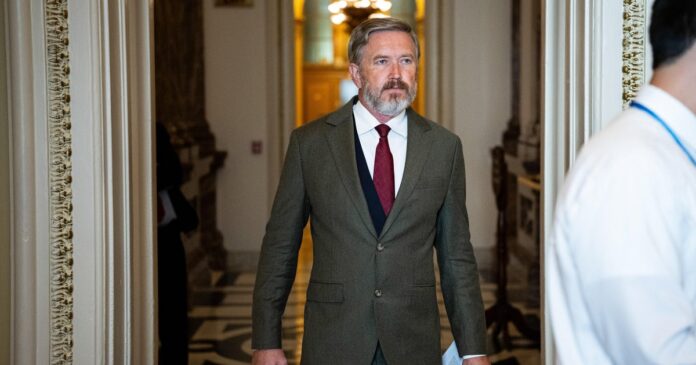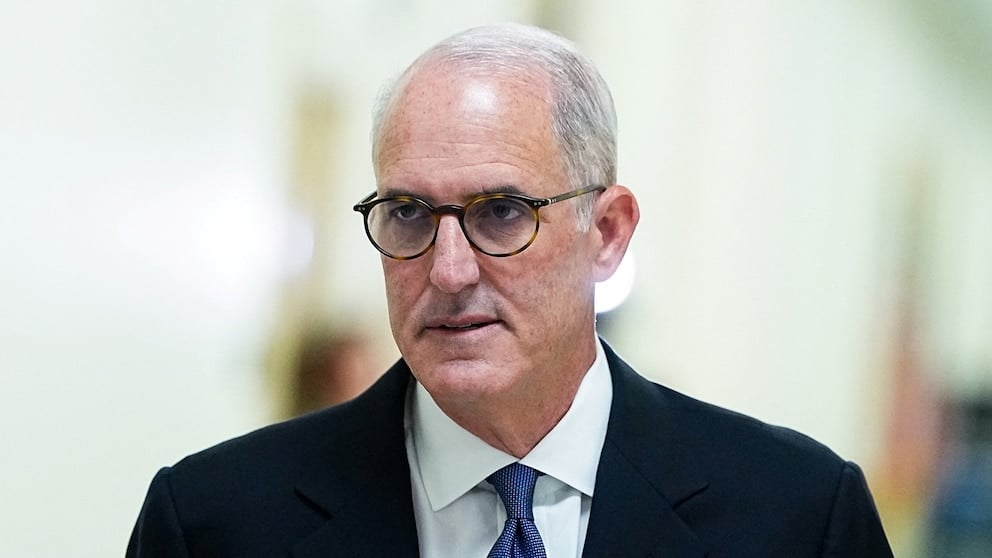

WASHINGTON — Doug Band, a former senior aide to President Bill Clinton, appeared before the House Oversight Committee on Monday as Congress deepened its inquiry into the late Jeffrey Epstein, even as newly released documents described how the convicted sex offender had tried to recruit women from an Ivy League campus into his trafficking network.
Band, who is mentioned more than 200 times across millions of documents released by the Justice Department under the Epstein Files Transparency Act, faced lawmakers who were expected to question him about his relationship with Epstein and his associate Ghislaine Maxwell, whether he had flown on Epstein’s private aircraft, and what he knew about any travel by Clinton to Epstein’s private island in the Caribbean. Clinton has previously denied ever visiting the island.
The released files include email chains between Band, Epstein and Maxwell arranging dinners over roughly a year. In one 2004 message, Maxwell wrote to Band in terms that both men appeared to treat as banter; Band said he did not know about Epstein’s sex crimes at the time of their communications, and has said that he warned Clinton to end the relationship after concluding that Epstein gave off troubling signals.
Band also visited Epstein’s home, though the documented interactions occurred before Epstein was convicted on state charges in Florida in 2008. His lawyer has not responded to requests for comment regarding Monday’s appearance.
The committee hearing unfolded against a backdrop of fresh disclosures about the reach of Epstein’s operation. Documents reviewed by The Daily Pennsylvanian revealed that Epstein cultivated a yearslong relationship with an Austrian woman who enrolled at Penn Carey Law School in 2013 for a Master of Laws degree, a woman he had been pressuring for months to recruit other women for him before she arrived on campus.
The woman, whose identity has been withheld by the student newspaper because she was coerced, was introduced to Epstein in Paris in late 2011 by a fellow legal intern. Her lawyer, Brittany Henderson, said in a statement that the woman was subjected to coercion, physical abuse and verbal abuse, and that she did not comply with Epstein’s recruitment demands. Henderson said Epstein did not assist with her university admission or pay any tuition.
The documents trace a years-long correspondence in which Epstein positioned himself as her mentor while also directing her to find “three new girls” as a form of punishment for an unspecified mistake. He coached her on how to approach women and offered conversation starters. At one point he told her that “if you get one out of 12, you are ok.”
When she asked in 2013 whether the steep cost of attending Penn was worth it, Epstein replied that it was, especially if she found him “interesing giirs there” — a message preserved with its original misspellings in the DOJ files. By the time she arrived on campus that fall, the two had resumed frequent communication. There is no evidence in the documents that she recruited any students, and her lawyer said she did not do so.
Epstein had also sought to build relationships on the Penn campus through other means. Records previously reviewed by the Daily Pennsylvanian showed his efforts to court renowned Penn psychology professor Martin Seligman. Epstein told the Austrian woman to invoke his name with Seligman’s office after she failed to enroll in one of his courses; Seligman has said he has no record of her having been in his class.
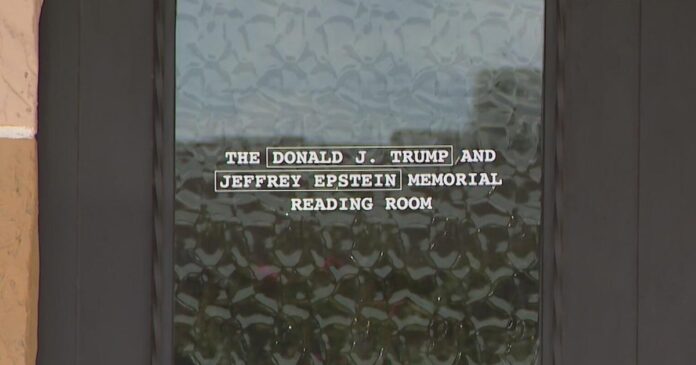
The congressional investigation has simultaneously been shadowed by questions over the Justice Department’s handling of redactions in the files. A 2009 email with the subject line “Trump” — sent from Epstein’s defense attorney Jack Goldberger to Epstein and then forwarded to Maxwell — contains a heavily redacted account of a phone conversation that Goldberger arranged between Donald Trump and attorney Brad Edwards, who at the time was representing some of Epstein’s victims and had been seeking to depose Trump.
According to Democratic Rep. Jamie Raskin of Maryland, who reviewed unredacted versions of the documents on Monday, the email contains a lawyer’s summary of Trump’s statements on that call. Raskin told ABC News he found the redaction “puzzling” and said the content appeared to be at odds with some of Trump’s recent public statements about the end of his association with Epstein — specifically Trump’s claim that he expelled Epstein from Mar-a-Lago. ABC News said it had not independently reviewed the unredacted document, and could not confirm Raskin’s account of its contents. The White House did not immediately respond to a request for comment.
A Justice Department official told ABC News the redacted portion constituted a privileged communication between Epstein and his lawyer. Trump has said separately that he asked Epstein to leave Mar-a-Lago after Epstein hired staff from the club’s spa. Edwards, the victims’ attorney who participated in the 2009 call, recalled in a 2019 interview that Trump said he had been to Epstein’s home and had seen young women there who did not appear to be underage.
The redaction dispute has become a recurring source of friction between Congress and the executive branch. Raskin, the ranking Democrat on the House Judiciary Committee, said lawmakers had found “tons of completely unnecessary redactions” in the materials. Bipartisan lawmakers have identified six individuals whose names, they contend, were improperly withheld. Earlier this year, a federal judge ordered the Justice Department to turn over additional unredacted materials after concluding that the administration had likely violated the terms of the Epstein Files Transparency Act, which required disclosure of DOJ files related to Epstein and Maxwell.
The committee’s inquiry has drawn in a broad range of figures from Epstein’s network. Bill Gates told the panel in a prior session that Epstein had used knowledge of an extramarital affair to blackmail him. Attorney General Pam Bondi said the review of Epstein-related materials had been led by Todd Blanche, and cited executive privilege in declining to discuss communications with the White House about the investigation.
No charges have been brought against Band, who was not accused of knowing about or participating in Epstein’s crimes. The hearing continued a pattern in which witnesses with documented but peripheral connections to Epstein have been called to account publicly, even when the underlying facts of their interactions remain disputed or contextually ambiguous. Epstein died in August 2019 in a federal detention facility; the medical examiner ruled his death a suicide, though the finding has been disputed by his family and some independent observers.
The House Oversight Committee has not announced its next scheduled witness.