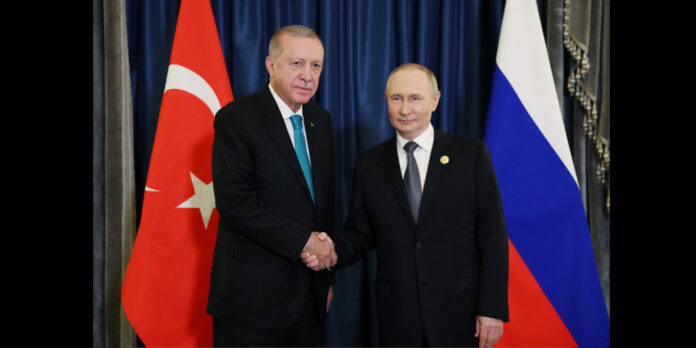

DOHA – Masoud Pezeshkian went on Iranian state television on June 29 and told his audience the money was coming home. Six billion dollars frozen in Qatari accounts, he said, would be released and returned to Iran. Three days later, the deputy foreign minister who had just spent two days in Doha negotiating the mechanism for those same funds described something different: a procurement queue run through Qatar’s Central Bank, delivering goods to Iran based on needs Iran would communicate in advance.
Those two descriptions are not the same arrangement.
The distinction runs through every public statement the three governments have made about the $6 billion since the Islamabad MoU was signed. JD Vance, speaking in Switzerland on June 22, said the United States and Qatar “would have to agree to unfreeze assets” before a single dollar moved – and said the money, if released, would be used to buy American corn, wheat, and soybeans, crediting the concept to Jared Kushner. Qatar’s foreign ministry, two weeks later, confirmed what Vance said by omission: the $6 billion had “yet to be transferred.” What Pezeshkian announced as concluded, Qatar confirmed as not yet begun.
Iran’s own officials are not describing the same mechanism among themselves. Mohammad Bagher Ghalibaf, speaking from Tehran on July 1 as the Doha technical round was still under way, said $12 billion – twice the figure Pezeshkian had cited – would be handed to Iran’s Central Bank to spend “at any price and in any currency worldwide” on “any goods it needs.” He explicitly rejected the characterization that Washington or Doha retained approval authority. The following day, Kazem Gharibabadi – Iran’s deputy foreign minister and the official who was actually in the room with Qatari officials, including the Central Bank – described something considerably more constrained: Qatar had agreed that “based on the needs communicated by our country, the required goods would be purchased and made available to Iran,” Arab News reported.
A queue of goods requests submitted by Iran, approved by Qatar, fulfilled in a currency Qatar controls, is not an asset transfer. It is not Iran’s Central Bank spending $12 billion in any currency at any price. And it is not what Pezeshkian told Iranians was coming home.
The $6 billion itself – the figure cited in the Islamabad MoU and in every Western readout of the negotiations – represents frozen Iranian assets held in Qatari accounts. The $12 billion Ghalibaf cited comes from a different Iranian accounting: Tehran holds approximately $24 billion in frozen assets across multiple jurisdictions, and Iran’s position has long been that half of that should be under Iranian control. The United States, which imposed the sanctions that made those assets inaccessible, has never endorsed the $12 billion figure. The MoU refers to $6 billion. The discrepancy between what Iran’s president and Iran’s parliament speaker said in the same week is not a translation artifact.
Vance’s framing was explicit about the mechanism’s design. If Iran wants access to dollars frozen in Qatar, it submits a purchase request. The US and Qatar approve it. The goods arrive; the dollars never leave the approval chain. Capital Press reported that Vance described the arrangement as “a very, very good and very classic Trump deal” that would “make American farmers richer and feed the Iranian people.” That is a different product than cash repatriation, and a different product than Ghalibaf’s description of Iran’s Central Bank managing a sovereign fund in any currency it chooses.
The oil revenue Iran has already captured in the waiver window is real – between $400 million and $750 million in incremental revenue over the first two weeks, at a 20 percent premium over blockade-era prices. The frozen-assets mechanism has not yet produced a single dollar. That gap matters because Iran’s domestic political audience has been told the deal delivered two things: resumed oil income and returned cash reserves. The oil income is arriving. The cash reserves are, by Qatar’s own account, still frozen.
The practical consequence of this mismatch is not theoretical. Iran’s president told his public that $6 billion was coming home. What the technical negotiation delivered was a purchase-and-delivery mechanism that preserves US and Qatari approval authority over every transaction. If that gap becomes visible inside Iran before August 21 – if Iranians expecting returned money find instead a procurement queue offering soybeans – the deal loses domestic legitimacy at the moment it most needs public tolerance of its constraints.
The Doha round that concluded July 2 left the nuclear inspection file unresolved and the Hormuz toll question unanswered. It produced a communications hotline and partial movement on the asset formula – but “partial movement” is what all three governments are now describing in incompatible terms. Business Standard reported that negotiators spent two days on Hormuz and frozen funds without either side confirming they had bridged differences.
The next Doha round will not convene until after the Khamenei funeral on July 9 – seven days in which the gap between Tehran’s domestic framing and the technical mechanism sits unaddressed. When talks resume, the frozen-assets formula will need to be explicit enough that all three governments can describe the same arrangement in the same terms. Nothing in the current communiqué achieves that. The phrase Gharibabadi used – “based on the needs communicated by our country” – preserves deliberate ambiguity about who approves those needs, in what currency purchases are denominated, and what happens when Iran requests goods the United States considers strategic. Vance’s version answers all three questions in Washington’s favor. Ghalibaf’s version answers all three in Tehran’s favor. The Doha communiqué that both governments cited as evidence of progress answered none of them.