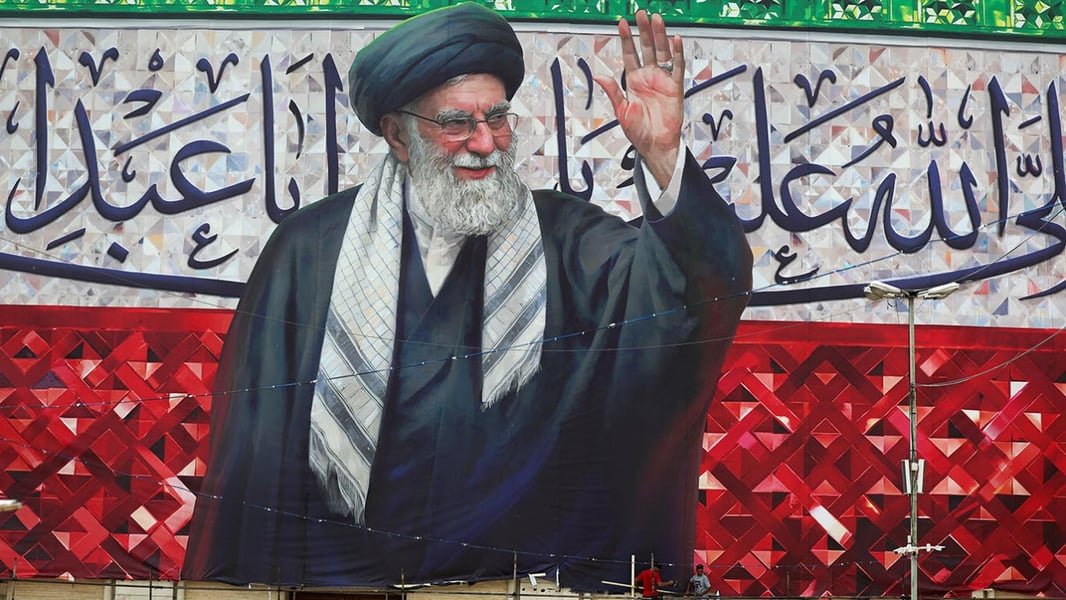

TEHRAN – Iran gave forty countries a chance to say they stood with it on the day it buried its former Supreme Leader. Forty countries sent someone. No European country was invited, and none came. The United States was not there. The guest list from the July 3 ceremony for foreign dignitaries at Ayatollah Ali Khamenei’s state funeral in Tehran is not a mourning protocol. It is a diplomatic ledger of the post-war regional order, organized by tier.
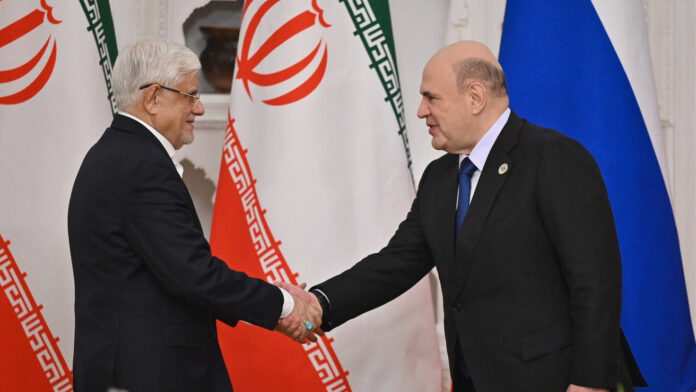
Russia sent Dmitry Medvedev, who traveled to Tehran as Vladimir Putin’s “special envoy.” The designation matters: Putin did not come. He sent his Security Council deputy chairman – a figure senior enough to signal genuine alignment, symbolic enough to protect Moscow from the full optics of a presidential embrace while the Islamabad MoU remains unsigned and the sanctions architecture around Russia and Iran is still in flux. Medvedev led a delegation that included Foreign Ministry officials and religious leaders from the Russian Orthodox Church and both Sunni and Shiite theologians – a configuration designed to signal depth of relationship without committing Putin to a posture that complicates Russia’s separate negotiations with Washington.
China’s He Wei, vice chairman of the Standing Committee of the National People’s Congress, represented Beijing. Bloomberg noted he was the first senior Chinese official to visit Iran since the war began. China had maintained public distance from the conflict throughout – neither endorsing Iran’s Hormuz closure nor criticizing the US and Israeli strikes – and Beijing’s decision to send its first post-war senior official to a state funeral is a signal, not a commitment. He Wei is a legislative official, not a Foreign Minister or State Councilor. The choice is calibrated: China shows up, at a tier that does not require adjusting its formal diplomatic position on the war’s aftermath or the MoU negotiations.
Pakistan Prime Minister Shehbaz Sharif attended in person – the highest-ranking sitting head of government at the ceremony. The presence is striking because Pakistan is simultaneously the primary mediator in the Islamabad MoU framework, which was signed on Pakistani soil and which Pakistan brokered as the channel between Washington and Tehran. Sharif’s attendance at the funeral of Iran’s assassinated Supreme Leader, four weeks before the MoU expires, positions Pakistan explicitly as an aligned party rather than a neutral one. That positioning may reflect a domestic political calculation – Pakistan’s opposition and military establishment have pushed for closer Iran ties – or it may signal that Islamabad has concluded the MoU will produce a deal favorable to Iran regardless of the nuclear file and wants to be standing on the right side of that outcome.
India sent two representatives: Minister of State for External Affairs Pabitra Margherita and retired Lieutenant General Syed Ata Hasnain, Bihar’s governor. Two bodies where other capitals sent one signals effort, but neither is a senior figure in India’s diplomatic hierarchy – not the Foreign Minister, not the National Security Advisor, not the External Affairs Minister S. Jaishankar, who handles all of India’s significant bilateral engagements. India is threading a familiar needle: maintaining its relationship with Tehran – cemented by decades of energy trade and the Chabahar port access India needs for Central Asian connectivity – while not providing the headline that a senior minister’s attendance would create in Washington, where India is managing a separate strategic partnership the US considers its most important bilateral relationship in Asia.
Tajikistan’s President Emomali Rahmon attended. Georgia’s President Mikheil Kavelashvili was there, a presence that stands out: Georgia is an EU candidate country, technically aligned with European values and European institutional frameworks, and yet its president flew to Tehran for a ceremony Europe was explicitly not invited to attend. The Iranian Foreign Ministry’s spokesperson stated plainly before the ceremony that no European country had been invited. The exclusion is not a logistical oversight – it is a deliberate signal that the diplomatic channel Iran is cultivating in the period after the war does not include the European capitals that enforced sanctions, aligned with Washington on the nuclear file, and have spent months pushing for IAEA access Iran has refused.
Cuba sent its Higher Education Minister and a senior Foreign Ministry official. Representatives came from across the Central Asian republics and from several African states. The roster reads as a roster of the non-aligned and the China-orbit states, with Pakistan bridging that alignment to the MoU framework and Russia providing the great-power legitimacy at the top. What it does not include is a single G7 member, a single NATO ally, or a single EU state – not because Iran was unable to attract Western engagement but because Iran chose not to seek it. The funeral guest list is, in that sense, a preview of the coalition Iran is building around the post-deal order it is trying to construct before August 21.
The funeral also consumes the diplomatic calendar. The ceremonies run from July 4 in Tehran through July 9 in Mashhad, where Khamenei is to be buried at the Imam Reza shrine. The next Doha round was agreed to be scheduled as soon as possible after the burial – which means the earliest it can convene is July 10, consuming another week of a 60-day window that opened June 17. Forty-three days remain after the burial. The nuclear file has not started. The Hormuz toll legislation is advancing through Iran’s parliament. The Gulf states are watching the insurance market. And the ceremony that brought forty countries’ officials to Tehran tells you, more precisely than any communiqué, whose side those forty governments have decided to be on when the negotiating window closes.
The new Supreme Leader Mojtaba Khamenei has not been seen in public since his appointment in March. He is expected to appear for the burial. His public posture after July 9 – what he says about the MoU, about nuclear access, about the diplomatic order his father’s funeral illustrated – is the variable that no foreign dignitary who flew to Tehran on July 3 can predict, and that no Doha round can proceed without knowing.