
CINCINNATI — Kroger Co. investors have seen this movie before, and Wednesday’s opening scene did not reassure them. Shares fell nearly 3 percent before the market opened after the country’s largest supermarket operator by revenue agreed to buy Giant Eagle, the family-owned Pittsburgh chain, for $1.65 billion. The market’s verdict was immediate: another grocery acquisition, less than two years after the last one collapsed in court.
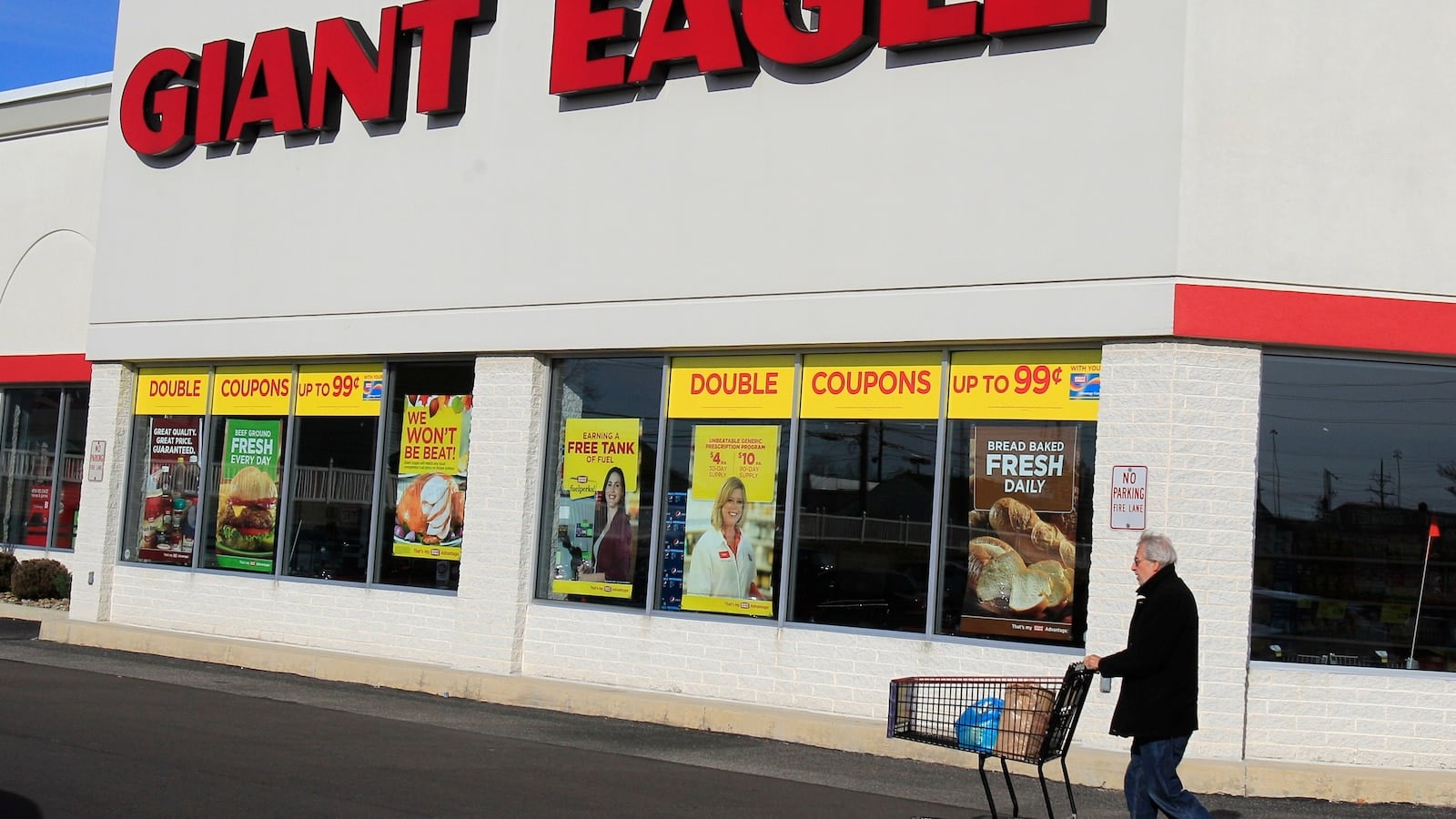
The deal, confirmed in a company statement, pairs $1.25 billion in cash with the assumption of roughly $400 million in Giant Eagle’s outstanding liabilities. Kroger’s board approved the transaction unanimously. Giant Eagle brings 197 supermarkets and 11 standalone pharmacies across northern Ohio, western Pennsylvania, West Virginia, Maryland and Indiana, along with close to $9 billion in annual sales built up since the chain’s founding in 1931. The Associated Press reported the deal is expected to close in 2027, pending regulatory clearance, and that the companies already anticipate divesting a limited number of overlapping stores to satisfy antitrust regulators.
That divestiture language is not boilerplate. It is the sentence Kroger’s lawyers wrote after watching a federal court kill the company’s $25 billion attempt to buy Albertsons in 2024, a ruling that found the combination would have raised grocery prices and reduced competition across dozens of overlapping markets. Kroger walked away from that fight with a terminated merger agreement, a $1 billion breakup fee paid to Albertsons and a strategic question it still has not fully answered: how does the country’s largest traditional grocer grow when its biggest rival is off-limits and Walmart keeps taking market share regardless.
Giant Eagle is Kroger’s answer, at least for now, and it is a deliberately smaller one. Where Albertsons operated nearly 2,300 stores across the country and would have made Kroger a genuine national counterweight to Walmart, Giant Eagle adds a single, regionally concentrated network that barely nudges Kroger’s footprint outside markets it already serves. Kroger chief executive Greg Foran called Giant Eagle “a well-run, high-quality regional grocer with a strong reputation for fresh products, pharmacy, private label and customer loyalty,” a description that reads as much like a hedge against another blocked mega-merger as it does an endorsement of Giant Eagle’s business.
Giant Eagle chief executive Bill Artman framed the sale in terms of scale rather than surrender, telling Kroger’s investor relations team that combining the two companies would let Giant Eagle “deliver better quality and service, better everyday value” than it could achieve independently. What Artman did not say directly, but what the deal terms make clear, is that a 95-year-old family-owned chain competing against Walmart, Amazon and Aldi’s expanding US footprint eventually runs out of room to keep investing in loyalty programs and private-label supply chains on its own. Kroger intends to keep both the Giant Eagle name and its myPerks loyalty program intact after the deal closes, a decision aimed at retaining customer goodwill that a full rebrand would risk destroying.
Kroger is financing the purchase entirely from cash on hand, a detail the company is emphasizing after the Albertsons deal required it to take on substantial new debt for a transaction that never closed. The company expects the acquisition to be accretive to adjusted earnings per share by the second full year after closing and says it will maintain a target debt-to-EBITDA ratio between 2.3 and 2.5 times, alongside its dividend and an existing $2 billion share repurchase program. Kroger has retained RBC Capital Markets and Jones Day as advisers; Giant Eagle is working with Wells Fargo and WilmerHale.
The regulatory path here looks narrower than Albertsons, but it is not guaranteed. Kroger and Giant Eagle overlap directly in Ohio, the one state where both operate a dense store network, and regulators on both sides of the Atlantic have shown this year that they will kill or reshape deals they consider anticompetitive rather than wave them through on the promise of consumer savings. Antitrust enforcers who blocked Albertsons on the theory that grocery competition is measured store-by-store, not chain-by-chain nationally, are unlikely to ignore Ohio overlap entirely. Kroger’s own acknowledgment that some store sales will be required is effectively a pre-emptive concession, similar in spirit to the open-platform pledge Fox Corporation offered regulators when it agreed to buy Roku earlier this year.
What the deal does not resolve is the larger competitive squeeze Kroger has been navigating for years. Walmart remains the largest grocery seller in the United States by a wide margin, and its ability to undercut on price while expanding delivery has steadily eaten into the market traditional supermarket chains once controlled outright. Amazon’s grocery ambitions, though inconsistent, add another layer of pressure that a $1.65 billion regional acquisition does little to blunt. Giant Eagle gives Kroger density in markets it already partially serves, plus a respected pharmacy and loyalty operation, but it does not give Kroger the national scale that made the Albertsons deal strategically ambitious in the first place.
Whether investors eventually reward the smaller, more cautious version of consolidation Kroger is now pursuing, or whether Wednesday’s stock decline reflects a market that has simply stopped believing grocery acquisitions solve Kroger’s underlying problem, is not a question this deal by itself can answer. That verdict arrives only after regulators rule, the deal closes or does not, and Kroger reports what growth, if any, Giant Eagle actually delivers.