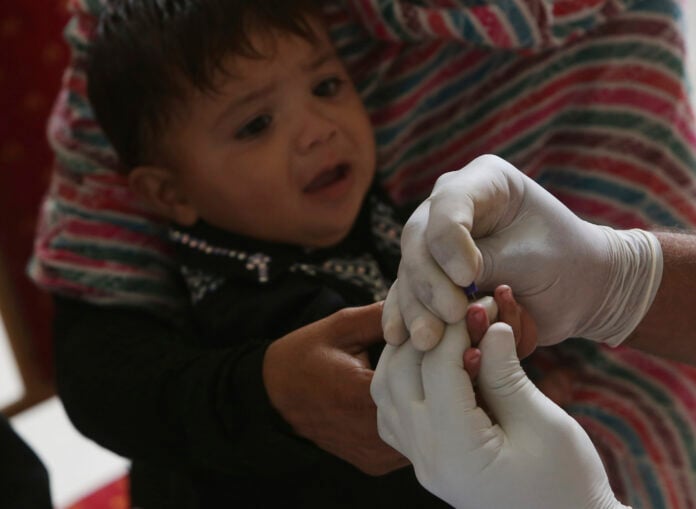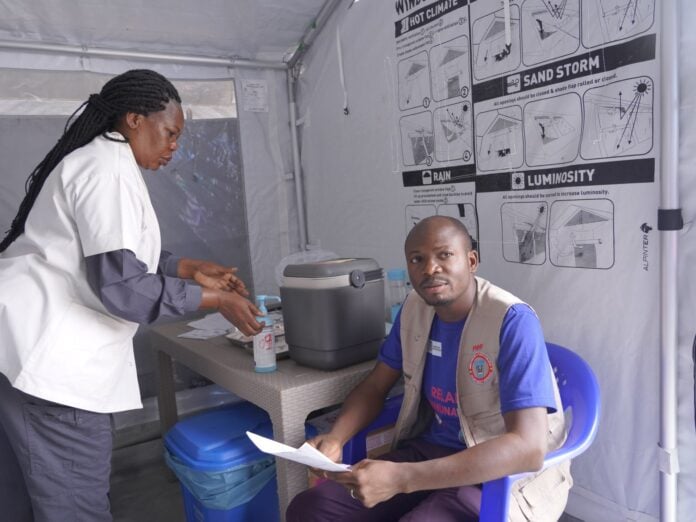

VANCOUVER — The United States’ top health official has spent years telling the public that messenger RNA vaccines cannot be trusted. This week, the most comprehensive independent review of that technology ever assembled reached the opposite conclusion, and it did not hedge.
The review, published in The Lancet, was led by Dr. Anna Blakney, an assistant professor at the University of British Columbia’s Michael Smith Laboratories, alongside Dr. Manish Sadarangani, who directs the Vaccine Evaluation Center at BC Children’s Hospital Research Institute. Their team pulled together laboratory science, clinical trial data and real-world effectiveness studies spanning the full life of the mRNA platform, from how the vaccines are designed and manufactured to how they perform once billions of doses are actually in people’s arms. “After billions of doses, we now have an extraordinary amount of scientific evidence,” Blakney said. “This review affirms that mRNA vaccines are a safe and highly effective platform, supported by rigorous testing and real-world monitoring.”
The numbers behind that verdict are specific rather than reassuring in the abstract. Within 14 to 42 days of vaccination, the shots were 87 percent effective against documented infection, 93 percent effective against hospitalization and 94 percent effective against death. Protection faded over months, as it does with most vaccines, but booster doses restored it, and updated formulations kept pace with new variants. Serious side effects, including myocarditis in younger males, turned up rarely enough that the review’s authors describe the benefit-risk balance as heavily one-sided. The mRNA itself, along with the fatty particle that carries it into cells, breaks down and clears the body within days. It does not alter human DNA, a claim the review addresses directly because it remains one of the most persistent pieces of misinformation about the technology.
What makes the paper more than a defense of COVID-era shots is where Blakney points next. “This is really about what comes next,” she said. “We’re seeing the same platform being applied to cancer treatment and other diseases.” Personalized cancer vaccines, built from a patient’s own tumor profile to train the immune system against cells no other treatment has learned to recognize, sit alongside candidates for influenza, RSV and autoimmune disease in the pipeline the review surveys. None of that is speculative marketing; it is the direct extension of a delivery mechanism the review spends most of its pages proving already works at a scale of billions.
In the university’s own announcement of the findings, Sadarangani did not treat public skepticism as an obstacle to be argued past. “With any new vaccine or medicine, it is important that we clearly and transparently communicate the safety data,” he said, and Blakney went further, arguing that “people should feel empowered to ask questions about their health and what they put in their bodies.” That framing, treating hesitancy as a communication failure rather than public ignorance, runs directly counter to the posture the review implicitly answers.
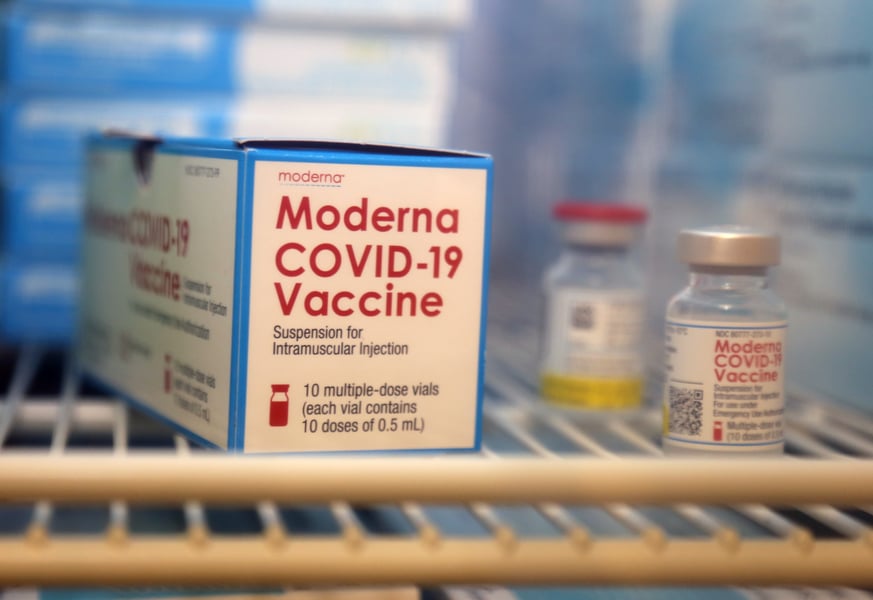
South of the border, that posture has a name and a job title. Health and Human Services Secretary Robert F. Kennedy Jr. built much of his public career on doubting mRNA vaccines specifically, and the agency he now runs has cut roughly $500 million in mRNA research funding since he took office. Even so, the FDA’s own vaccine advisory panel voted 9-0 in June to recommend Moderna’s mRNA flu shot for older adults, weeks after the agency had briefly refused to even review the application. And on the CDC’s own website, a page meant to reassure parents now carries hedging language about vaccine-autism claims that a Senate committee chair pressured the agency to retain, even as AI chatbot users report believing the same myth more, not less, after asking for clarification.
The Lancet review does not mention any of that by name, and it does not need to. Its evidence sits on one side of a gap that American health policy has spent the past year widening rather than closing, between what the federal government’s own scientific panels keep concluding and what its political leadership keeps signaling to the public. The review’s authors are candid that the platform’s promise is not yet evenly shared: expanding manufacturing capacity and cutting costs in low- and middle-income countries remains, in their own words, essential and unresolved, a gap in access that billions of doses in wealthier countries have done nothing to close.
What the review cannot settle is whether any of this evidence changes anyone’s mind. Vaccine hesitancy, as Blakney and Sadarangani both acknowledge, was never primarily a data problem, and a comprehensive Lancet paper joins a long list of comprehensive papers that have not, on their own, closed the trust gap they were built to address.