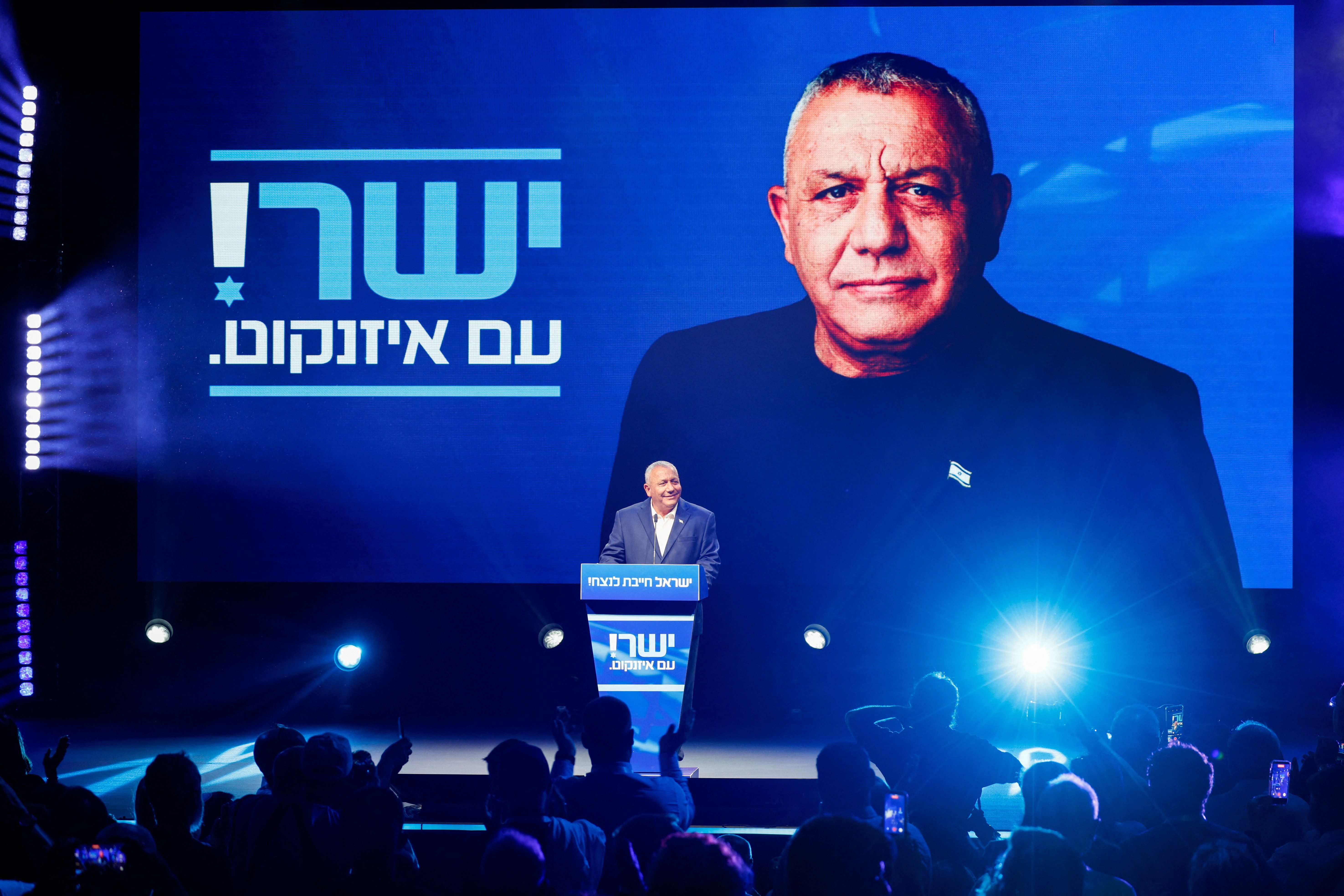

TEL AVIV – For three decades, Benjamin Netanyahu shaped his political identity around a single warning: Iran was on the verge of building a nuclear weapon, and only he understood what that meant. On Tuesday night, in an interview with the right-wing Channel 14 television network, he went further. He said Iran had already obtained atomic bombs – and that he had attacked the country twice to prevent a nuclear annihilation of Israel.
By Wednesday morning, Gadi Eisenkot – a former chief of the Israeli military who announced his candidacy for prime minister the same day – said that was fabrication. “Iran had no nuclear bombs whatsoever,” Eisenkot said at a conference in central Israel, drawing on decades of intelligence access. “He is fabricating reality to frighten the Israeli public.” Naftali Bennett, a former prime minister who governed Israel before Netanyahu’s return, was more direct: “That’s a lie.”
The exchange opens a front in Israeli domestic politics that could prove more consequential than anything in the Doha talks that concluded Wednesday. Netanyahu’s claim is not a misstatement or a rhetorical flourish. If true, it transforms the narrative of the 2026 war into something remarkable: Israel, backed by the United States, launched a military campaign against a nuclear-armed state and prevailed. If false – as his own former military leadership now asserts – it raises a different question entirely: what else about this war was constructed for an audience that was never supposed to ask too many questions.
Netanyahu’s pattern on Iran’s nuclear program has been consistent in its direction but not always in its details. In 2012, he appeared before the United Nations General Assembly with a cartoon drawing of a bomb and warned the world that Iran was near the red line for weapons-grade enrichment. In 2018, his government presented what it said was a stolen archive of Iranian nuclear documents. Throughout those years the frame was imminent threat – not achieved weapon. Tuesday’s Channel 14 interview marked the first time he has publicly claimed Iran crossed into actual possession of an atomic device.
The International Atomic Energy Agency has never confirmed that Iran possesses or possessed an operational nuclear weapon. Its assessments have found enriched uranium at levels that could be further processed, but no assembled device. Iran has consistently maintained its program is exclusively civilian. The US intelligence community’s most recent published assessment, while noting concern about Iran’s enrichment activities, did not conclude Iran had built a bomb. The gap between what Netanyahu told Channel 14 and what international monitoring has recorded is precisely what Eisenkot is calling fabrication.
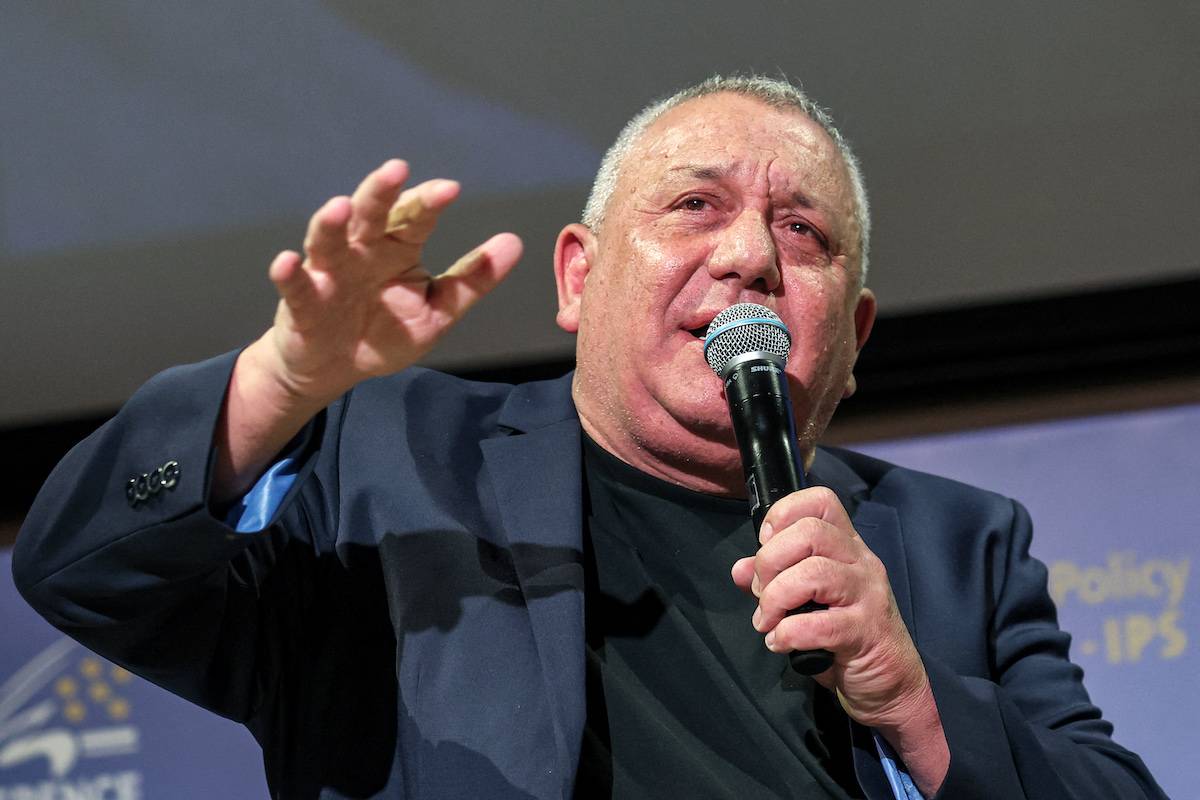
His credentials for making the accusation are not theoretical. As chief of staff from 2015 to 2019, Eisenkot presided over the period in which Netanyahu’s warnings about Iranian nuclear development were most operationally urgent. He had access to the full intelligence picture. His assessment Wednesday was unequivocal – and it came on the same morning he formally entered the race to replace Netanyahu as prime minister, making his denunciation simultaneously a political act and a professional one.
Israel is expected to hold general elections within months. Netanyahu gave the Channel 14 interview as his government navigates both the ceasefire’s 60-day clock and the domestic pressures of a post-war election season. Eisenkot’s announcement on the same day as his rebuttal is not coincidental – it frames the campaign around a question Netanyahu clearly did not anticipate: whether the war he conducted was justified by facts he has now described for the first time, and that his own military chiefs dispute.
There is a dimension to this that sits below the immediate political exchange. Israel – the country Netanyahu governs – is the only state in the Middle East widely believed to possess nuclear weapons, though it has never officially confirmed their existence. Its nuclear facility near Dimona is not subject to IAEA safeguards. Every resolution calling for a nuclear-free Middle East runs into the same response from Jerusalem: silence. Netanyahu has spent his career warning about Iranian nuclear ambitions while leading a government that will not discuss its own. His claim that Iran obtained the bomb while Israel looked on raises questions about what regional nuclear parity would actually require – questions his government has no interest in entertaining.
The MoU’s ceasefire holds, for now. Iran and the United States concluded their Doha session on Wednesday with Trump calling the talks “very good” and both sides agreeing to establish a formal communication channel. None of that process addresses what Netanyahu said on Channel 14, nor what it means that his own former top general publicly rejected it. Iran has maintained throughout the war that it never possessed a nuclear weapon – a position that Eisenkot’s statement now lends, from the most unlikely quarter, a degree of institutional credibility.
Whether any Israeli intelligence assessment exists that supports Netanyahu’s claim – and whether it will ever be made available for independent evaluation – is a question his government has not answered. It did not need to. His audience on Channel 14 did not come to hear about intelligence tradecraft. The election has not been called yet. The war, officially, is on hold. And the man who launched it twice, to stop bombs his own former army chief says never existed, is asking Israelis to remember it as the moment someone saved them.