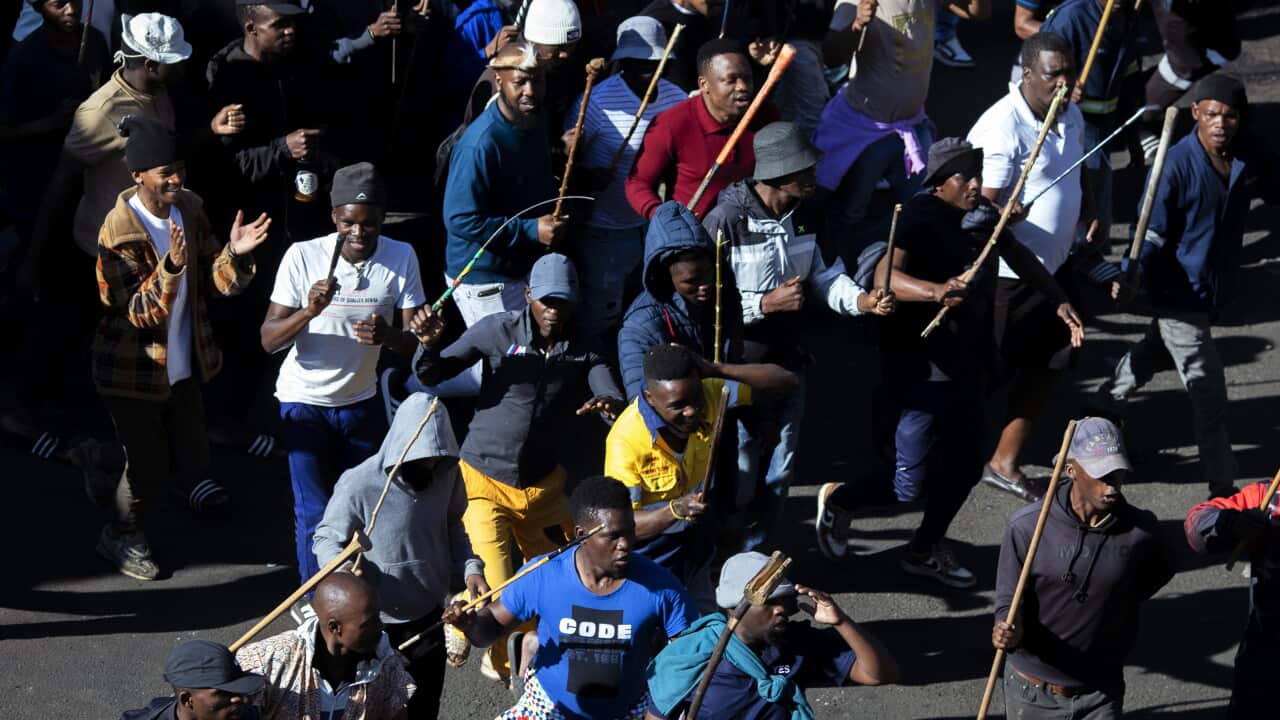

JOHANNESBURG — Siphesihle Mncemeleni had spent most of June 30 indoors at the instruction of family who feared what was gathering outside. Late that night, as anti-immigrant marchers dispersed from the streets of Alexandra, northeast Johannesburg, the 21-year-old stepped out. He did not come back. A bullet killed him before morning, and Johannesburg police opened a murder investigation in a township where similar cases rarely reach court.
His death is one of several marking South Africa’s worst xenophobic outbreak in eighteen years. At least five people — including a Malawian man and multiple Mozambican nationals — have been killed since the movement known as “March and March” organized its June 30 deadline for undocumented migrants to leave the country or face consequences. Mozambique’s government said seven of its citizens had died, with five deaths a direct result of xenophobic attacks. South African police confirmed a lower number, citing ongoing investigations. Neither figure captures the many who left without being counted — approximately 25,000 foreign nationals, by police estimates, had already departed before the deadline even arrived.
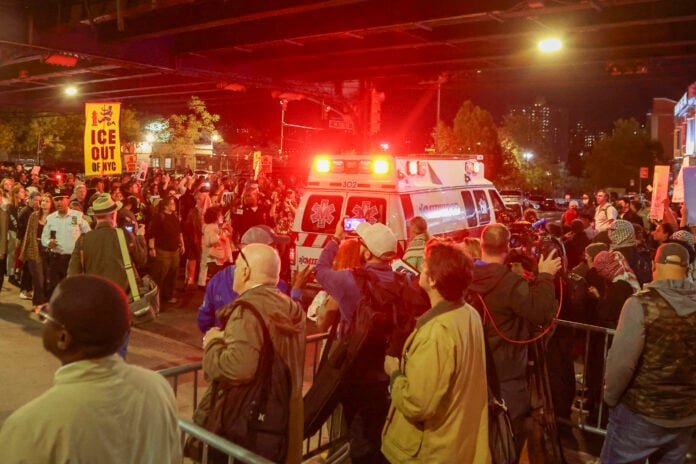
The marches drew tens of thousands across Johannesburg, Durban, Cape Town, Soweto, Thembisa, and more than 120 other locations nationwide. Police made approximately 900 arrests. By their own accounting, 108 of 120 marches were peaceful. In the spaces between organized protest and dispersing crowds, a different kind of violence moved through the gaps.
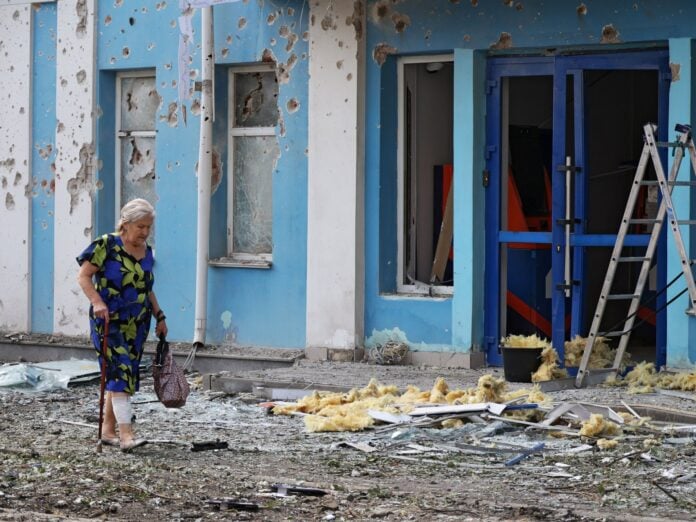
In the Durban township of KwaDabeka, groups began targeting shops owned by foreign nationals hours before the formal march through the city centre. In Alexandra, Katlehong, Malvern, and Jeppe in Johannesburg, crowds conducted door-to-door searches for suspected undocumented migrants, breaking into homes and seizing goods. In Tedstone Ville, east of the city, a Mozambican man described how a mob arrived from a nearby informal settlement appearing to know which houses to target. The violence was not entirely spontaneous.
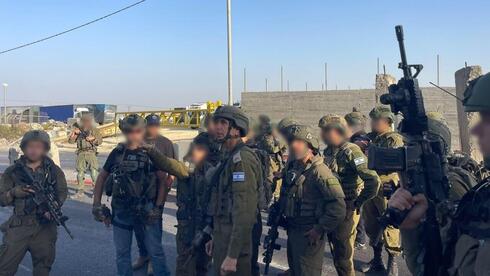
“Do not test the resolve of the State,” Lieutenant General Tebello Mosikili, the acting national police commissioner, said before the protests began. The South African military was placed on standby. Rubber bullets were deployed in Malvern and Jeppe. By July 1, the formal marches had concluded. The looting, harassment, and displacement had not.
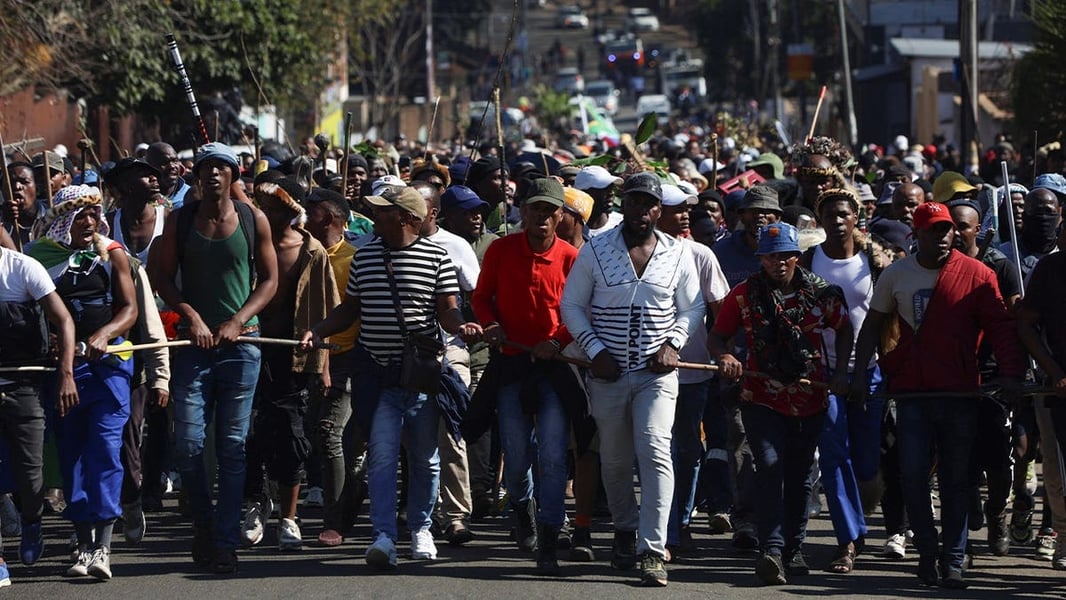
“March and March,” led by Jacinta Ngobese-Zuma, has framed itself as a citizen-enforcement movement demanding the state act against undocumented immigrants it blames for unemployment and crime in communities where youth joblessness can exceed fifty percent. Operation Dudula, a parallel group registered as a political party and led by Zandile Dabula, has pursued similar demands through similar mobilizations. Between them, they have turned a persistent social grievance — unemployment above thirty percent nationally in a country that has absorbed an estimated three million foreign nationals — into a coordinated nationwide campaign the government has been unable to stop through statement alone.
President Cyril Ramaphosa addressed the country in a televised statement on June 7, making clear that immigration enforcement was a function of the state alone, not civilian groups. He announced a Comprehensive Approach for Migration Management, including dedicated immigration courts and 10,000 additional labor inspectors, and reaffirmed that the June 30 deadline carried no legal standing. The announcement did not stop the marches. As previously reported, multiple governments across the region were already flying their nationals home before Ramaphosa spoke.
Mozambique’s foreign ministry described five of its citizens’ deaths as a direct consequence of xenophobic attacks and called on South Africa to investigate and prosecute perpetrators. Malawi had airlifted thousands of nationals sheltering in winter conditions at a deportation site in Durban. Zimbabwe, Nigeria, and Ghana all issued travel warnings and began their own emergency repatriations. What was framed domestically as an immigration-enforcement crisis had become, across the region, a humanitarian displacement emergency.
Human Rights Watch, in a report published May 20, documented a fresh wave of vigilante attacks and described an environment of structural impunity. Its researchers noted that perpetrators of the 2008 xenophobic attacks — which killed more than sixty people and displaced over 100,000 — faced minimal prosecution. The pattern of violence, displacement, and minimal accountability, the group concluded, was repeating itself — a finding that described what June 30 would look like weeks before it happened.
South Africa is home to roughly three million foreign nationals, about four percent of the population. Most came from Zimbabwe, Mozambique, Malawi, and Somalia — the majority without formal documentation, not because they declined to register, but because the Home Affairs office infrastructure to process them was never adequately resourced. Earlier this month, attacks in Mossel Bay had already displaced hundreds of Mozambicans before June 30’s mass mobilization had fully crested. The same institutional failure that fuels the vigilante argument helps create the conditions it claims to be responding to.
Whether “March and March” will accept that its deadline has passed or announce another mobilization — and whether the government will have something concrete to show in the interval — is a question South Africa’s administration cannot yet answer with any certainty. What each successive wave of violence confirms is that the human cost of the gap between political promises and administrative capacity is borne, in the end, by people who came to Johannesburg to work and found themselves sleeping on a Durban field waiting for a flight home.