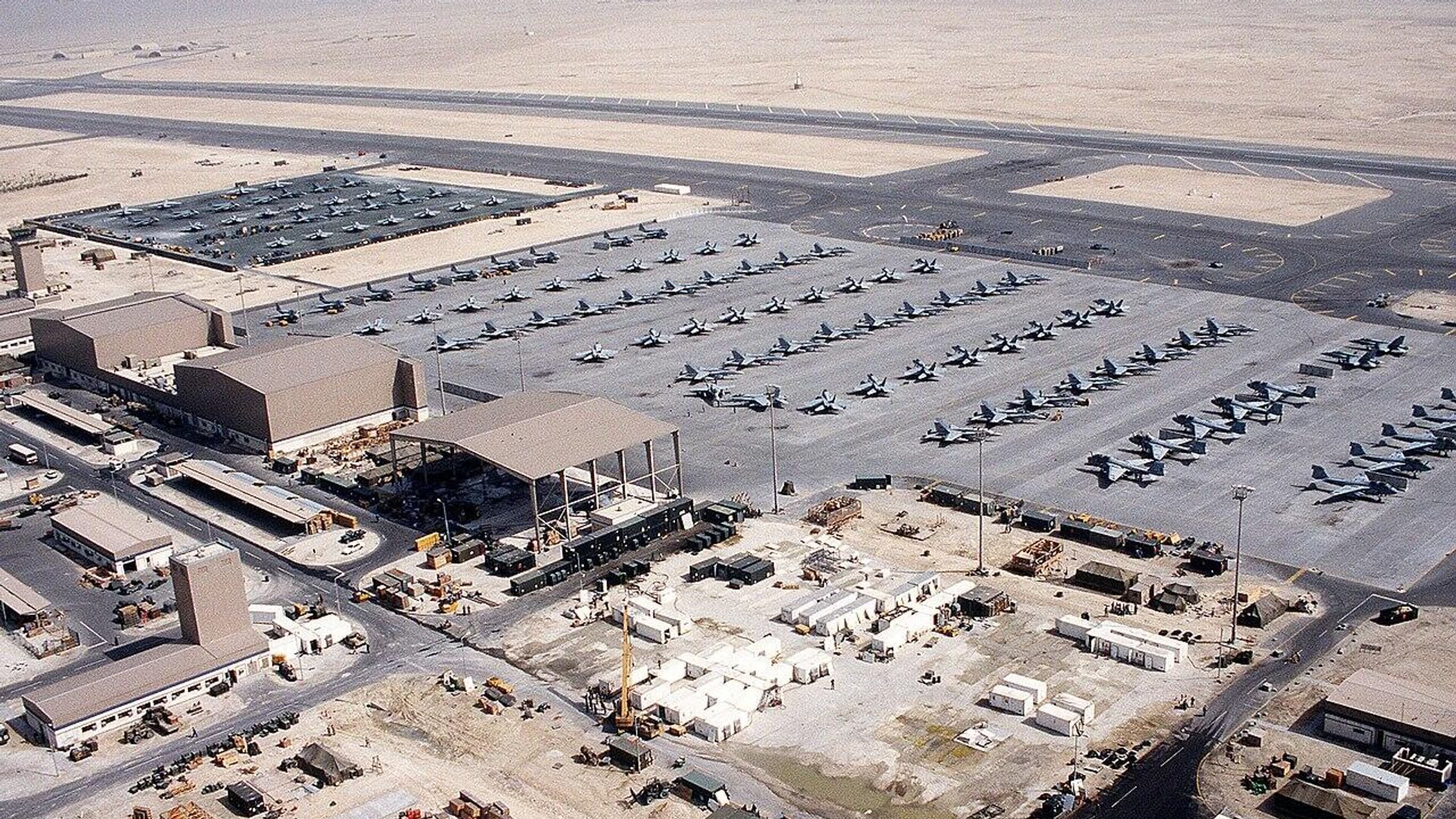

UNITED NATIONS — Three civilians are dead in Bahrain. Another 465 have been wounded. Since February 28, when the wider confrontation began, Iran has fired 203 ballistic missiles and 605 armed drones at the small Gulf kingdom that hosts the US Navy’s Fifth Fleet — a tally Bahrain’s foreign minister laid before the Security Council on Thursday, country by country, weapon by weapon, demanding the council do something about it.
“Bahrain requested this emergency meeting confident that this council will not remain a bystander,” Foreign Minister Abdullatif bin Rashid Al-Zayani told the 15-member body. The session, convened at Bahrain’s request on July 2, was the first time a Gulf state had formally brought the Iran conflict to the council floor since the US-Iran memorandum of understanding was signed in Doha on June 17. The MOU — and the indirect talks it was meant to open — has been paused since July 1, awaiting the end of Supreme Leader Ali Khamenei’s funeral ceremonies.
In New York, the tone was not diplomatic. US Ambassador Michael Waltz accused Iran of pursuing “a cynical, sad, and sick attempt at global blackmail,” pointing to Tehran’s continued disruption of Strait of Hormuz traffic even as Doha-channel negotiations remained notionally alive. “I cannot stress enough the possibility of real transformative positive opportunity for the nation and people of Iran is on the table,” Waltz said in remarks published by the US Mission to the United Nations, “but President Trump’s patience is not unlimited.” It was the sharpest public American signal yet that Washington was running out of tolerance for what it characterized as Iran attacking Arab partners while simultaneously negotiating a nuclear arrangement at another table.
The Bahrain case is not abstract. Al-Zayani told the council that the 808 attacks on his country since February included strikes on civilian residential areas in the capital, Manama. Iran’s campaign in the Gulf has not been confined to Bahrain: Kuwait International Airport was struck, and the UAE’s Barakah nuclear power plant — the Arab world’s first commercial reactor — was targeted in what Al-Zayani described as bringing the region “to the brink of a nuclear safety disaster.”
Waltz also cited a UN Trade and Development report released that week, saying Iran’s Hormuz closure had inflicted lasting economic damage on 61 developing economies. The waterway, through which roughly 20 percent of global oil passes, has been partially closed or subjected to Iranian interdiction since late February. Higher energy costs and elevated food prices have flowed into countries with no stake in the outcome of a US-Iran nuclear standoff, in what Waltz framed as deliberate leverage over a global audience far beyond the region.
Iran’s representative, Amir-Saeed Iravani, rejected the accusations. Tehran was exercising its right to self-defense under the UN Charter, he argued. He said 10 regional countries had facilitated US and Israeli attacks by hosting military bases from which operations against Iranian territory were launched — naming none publicly. The implication: that Bahrain, Kuwait, and the others were not bystanders in a bilateral confrontation but active participants who had chosen a side and were absorbing the consequences of that choice.
Waltz dismissed that framing. Iran was not a victim of regional aggression, he said — it was using civilian economic infrastructure as a weapon against states that had no hand in designing US or Israeli military strategy. He invoked Resolution 2817, adopted by the council on March 11 with 13 votes in favour and cosponsored by a historic 135 countries, which condemned Iran’s “egregious attacks” on Gulf neighbors and Jordan. Iran, Waltz said, was now openly violating obligations it had been formally told to meet.
The council also heard from UN Assistant Secretary-General Elizabeth Spehar, who welcomed the June 17 MOU as “a measure of hope that dialogue and diplomacy can regain momentum” while cautioning that each new strike “increases the risk of miscalculation.” The formulation acknowledged a tension that no speaker in the chamber resolved: the diplomatic framework in Doha is premised on restraint; the military reality in the Gulf is not.
That tension is structural, not incidental. Iran has consistently maintained that its regional force posture — missiles, drones, the Hormuz closure — is a separate file from its nuclear negotiations. Iran’s parliament speaker Mohammad Bagher Ghalibaf acknowledged this week that the Doha negotiations cover a narrow set of commitments around IAEA access and sanctions sequencing. The domestic political pressures the MOU has generated inside Iran — including accusations from hardliners that Ghalibaf and President Pezeshkian staged a “coup” by signing without parliament’s approval — make any expansion of that narrow scope harder to negotiate, not easier.
The US and Bahrain have been circulating a draft Security Council resolution targeting Iranian sea mine deployments and attacks on Hormuz shipping. Whether it advances depends on Russia and China, both permanent members with veto power. Russia’s representative took a line broadly sympathetic to Tehran, according to Iran International, arguing that the presence of American military bases in the region was itself destabilizing. Neither Moscow nor Beijing has publicly committed to a position on the draft.
The Doha talks are expected to resume in mid-July, once the Khamenei funeral ceremonies have concluded. What Waltz’s patience warning means operationally — whether it signals a genuine American deadline, a shift in military posture, or simply leverage for the next indirect round — was not elaborated in New York. Iran’s foreign ministry had not publicly responded to the session by the time of publication. Arab News reported that Bahrain formally demanded the council take binding action under Chapter VII of the UN Charter, the enforcement mechanism that would authorize sanctions or military measures. The council has not indicated when, or whether, it will vote.